Heavy-Duty Industrial Pallet Racking & Shelving Systems
Explore our flagship, structural steel pallet racking systems engineered for high-bay storage density, extreme load capacities, anti-seismic resistance, and aggressive atmospheric corrosion protection.
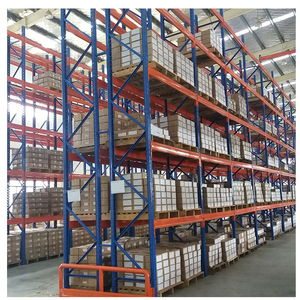
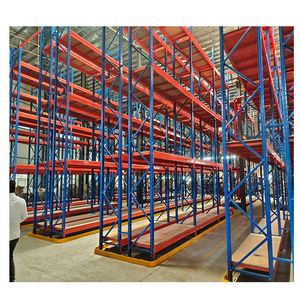
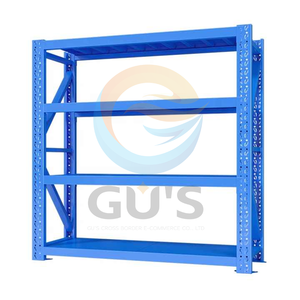
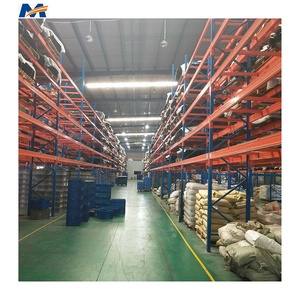
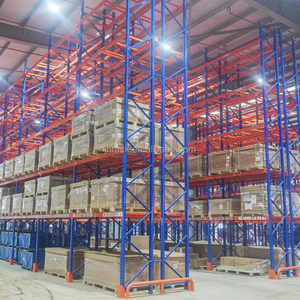
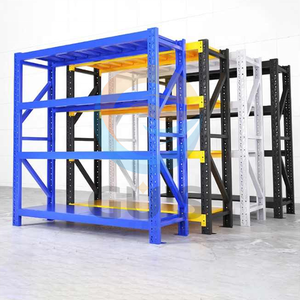
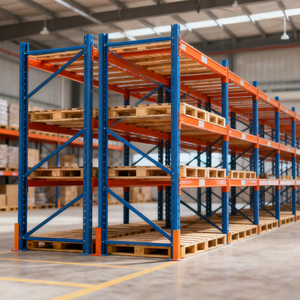
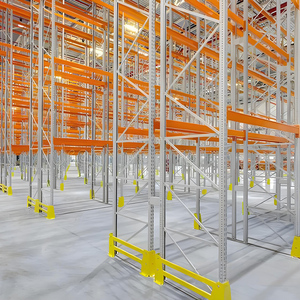
Modern Heavy-Duty Pallet Racking Systems: Metallurgy & Structural Engineering
In modern supply chain management and automated logistics, selective pallet storage racking systems serve as the structural backbone of high-density fulfillment centers. Selecting the correct OEM factory and tier-one wholesaler requires comprehensive structural insight beyond simple volumetric calculations.
High-Yield Steel Profile Metallurgy
Top-tier factories utilize premium cold-rolled Q235B and high-yield Q355B structural steel grade coils. Cold-forming column upright profile designs feature continuous 50mm to 75mm teardrop or omega-style pitch perforations, maximizing moment connection strength and eliminating torsional flexing under heavy eccentric loading conditions.
Seismic Analysis & FEA Verification
Structural integrity must account for dynamic shear forces. Our racking layouts are verified using Finite Element Analysis (FEA) software under ANSI MH16.1, EN 16681, and local earthquake codes (such as NEC-SE-DS). Baseplate embedment depths, post protectors, and anchor bolt shear strengths are computed specifically for active fault zones.
Surface Finishing & Coastal Anti-Corrosion
For high-humidity regions, tropical ports, or sub-zero cold storage units, standard paint protection fails within months. Leading manufacturers apply thermosetting epoxy-polyester powder coatings (60-80 microns thickness) or hot-dip galvanizing under ISO 1461 guidelines, offering extreme resistance to salt spray and chemical atmospheric oxidation.
2025–2030 Global Industrial Racking Procurement Trends
As industrial real estate costs rise globally, warehouse managers are shifting from expansive land acquisition to vertical volumetric optimization and intelligent material handling integration.
1. Convergence with Radio Shuttle & AS/RS Automation
Selective pallet racking is increasingly engineered to integrate seamlessly with automated guided vehicles (AGVs), Vertical Lift Modules (VLMs), and semi-automated four-way radio shuttle channels. Standard racking tolerances have tightened to within +/- 1.5mm to allow laser-guided automated retrieval systems to function without mechanical jams.
2. Direct Factory Wholesaling vs. Intermediary Brokers
Global supply chains demand full transparency and direct-from-factory procurement models. Buying directly from verified original equipment manufacturers (OEMs) cuts total cost of ownership (TCO) by 25–35%, while providing custom engineering stamp calculations, raw material mill test certificates (MTC), and direct warranty coverage.
3. Modular Boltless Assembly & Scalable Footprints
Future warehouse designs demand fast re-configurability. High-demand logistics operators utilize self-locking beam connectors equipped with safety pin latches. This allows warehouse managers to adjust beam levels at 50mm or 75mm increments without specialized machinery, effortlessly matching evolving SKU dimension profiles.
Pallet Storage System Architecture Selection Guide
Compare standard heavy-duty warehouse racking types based on floor space density, SKU selectivity, pallet rotation logic, and ideal industrial application.
| Racking System Type | Storage Density | Pallet Selectivity | Stock Rotation Logic | Max Load / Level | Primary Industrial Use Case |
|---|---|---|---|---|---|
| Selective Pallet Racking | Standard (60-65%) | 100% Immediate Access | FIFO (First-In, First-Out) | Up to 4,500 kg | FMCG, 3PL Distribution, Mixed-SKU Hubs |
| Double-Deep Pallet Racks | High (70-75%) | 50% Immediate Access | LIFO (Last-In, First-Out) | Up to 3,500 kg | Cold Storage, Bulk Goods, Identical SKUs |
| Drive-In / Drive-Thru | Maximum (80-85%) | Low (15-20%) | LIFO / FIFO Option | Up to 2,000 kg | Seasonal Staging, Frozen Seafood, Produce |
| Radio Shuttle Cart Racking | Ultra-High (85-90%) | Automated Channel Access | FIFO or LIFO Automated | Up to 2,500 kg | Automated Cold Chain, High-Volume Logistics |
| Cantilever Racking System | Linear Custom Density | 100% Long Material Access | Any (Flexible) | Up to 6,000 kg/arm | Steel Pipe, Timber, Rebar, Extrusions |
| Industrial Metal Shelving | Medium Hand-Load Density | 100% Picking Access | Manual FIFO/LIFO | Up to 800 kg | Spare Parts, Electronics, Garments, Hardware |
Why Global Procurement Managers Partner With Us
From complete structural layout engineering to post-installation inspection, we deliver end-to-end heavy-duty storage infrastructure backed by rigorous international manufacturing certifications.
Engineering-First Structural Design
We do not sell off-the-shelf guesswork. Every quote includes customized CAD layouts, structural load displacement blueprints, slab punch-shear calculations, and rack safety load tags verified by experienced warehouse engineers.
Rigorous ISO & CE Certified Manufacturing
Our state-of-the-art manufacturing facility features fully automated roll-forming lines, laser cutting stations, and robotic arm welding cells operating strictly under ISO 9001 quality standards and CE compliance certification.
Global Delivery & Professional Field Support
Whether serving port logistics centers, high-altitude mountain warehouses, or agricultural processing hubs worldwide, we coordinate complete export freight shipping, custom clearance packages, site installation guidance, and lifetime inspection support.
Frequently Asked Questions for Warehouse Racking Procurement
Get expert engineering answers to critical purchasing, compliance, structural safety, and maintenance questions.
Request Your Custom Racking Design & Direct Factory Quote
Connect directly with our senior structural engineering team. Send your warehouse floorplan blueprints, product profiles, and load specifications to receive a complimentary 3D CAD layout layout drawing and wholesale pricing estimate within 24 hours.