Heavy-Duty Industrial Storage Product Lineup
Direct OEM/ODM Manufacturing Specs • High Load-Bearing Structural Steel • ISO & CE Certified
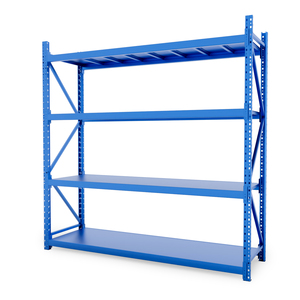
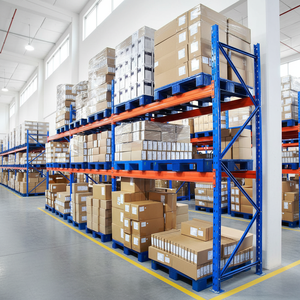
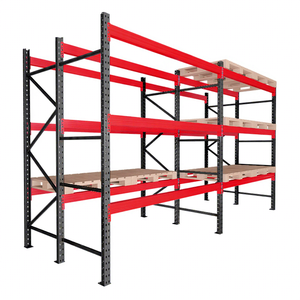
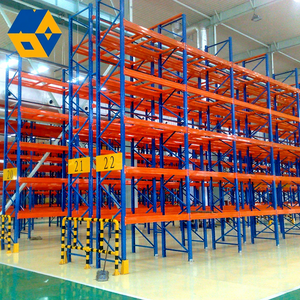
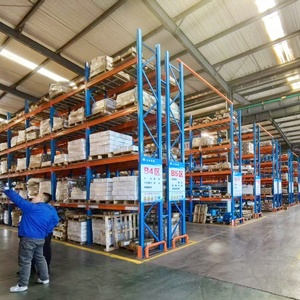
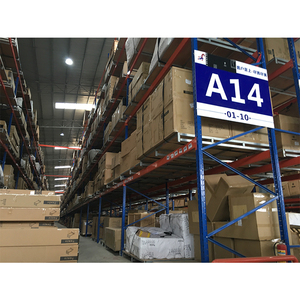
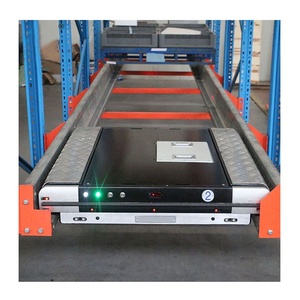
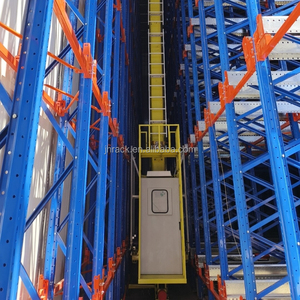
Global Industrial Storage Engineering Whitepaper
Technical Sourcing Architecture, Structural Physics, Seismic Safety, and Strategic Supply Chain Optimization for Procurement Leaders
In modern global supply chain operations, warehouse footprint optimization is no longer merely a physical storage challenge—it is a critical financial leverage point. As an industry-leading industrial shelf rack exporter and wholesaler, our engineering framework merges high-yield metallurgy, Finite Element Analysis (FEA), and advanced material handling science to transform static warehouse floors into dynamic, high-density assets. Modern distribution hubs, cold-storage facilities, and manufacturing plants require storage systems engineered to withstand severe static loads, seismic oscillations, and harsh environmental atmospheres without structural fatigue.
1. Technical Engineering & Metallurgy Standards
The structural integrity of an industrial racking system depends fundamentally on the quality of raw material steel, cold-roll forming precision, and load distribution geometry. As a wholesale manufacturer and exporter, we mandate strict compliance with global structural standards including ANSI MH16.1 (Specification for the Design, Testing and Utilization of Industrial Steel Storage Racks), European EN 15512, EN 16681, and FEM 10.2.02 design parameters.
Cold-Formed Q355B Structural Steel
Unlike standard commercial Q235 steel, our heavy-duty upright columns utilize Q355B high-tensile cold-rolled steel. This material delivers a minimum yield strength of 355 MPa, providing exceptional resistance against buckling, sway, and dynamic impact caused by heavy forklift positioning.
Optimized Profile Geometry
Featuring 11 to 13 distinct bending ribs along the upright cross-section, our structural profiles dramatically increase the moment of inertia ($I_x, I_y$) and torsional rigidity. This allows slimmer material profiles to handle vertical loads exceeding 24,000 kg per frame assembly.
Coastal Anti-Corrosion Finishing
For operations subject to high humidity, cold storage moisture, or salt-laden coastal atmospheres (such as port logistics centers), we provide hot-dip galvanizing to ISO 1461 standards ($>65 \mu m$ coating thickness) and thermosetting epoxy-polyester electrostatic powder coatings.
2. Heavy-Duty Storage System Selection Matrix
Selecting the appropriate industrial rack geometry requires balancing volumetric density against SKU accessibility (selectivity) and throughput requirements. Below is an engineering comparison matrix designed to guide logistics planners and procurement executives toward optimal capital allocation.
| Storage Rack Type | Volumetric Density | SKU Selectivity | Max Load / Level | Handling Machinery | Primary Industrial Use Case |
|---|---|---|---|---|---|
| Selective Pallet Racking | Medium (40-50%) | 100% Direct Access | Up to 4,500 kg | Standard Counterbalance / Reach Truck | High-SKU distribution hubs, retail fulfillment centers, 3PL logistics. |
| Medium-Duty Boltless Shelving | Medium (50-60%) | 100% Manual Access | 200 - 800 kg | Manual / Hand Trolley | E-commerce bin-picking, auto spare parts, industrial maintenance stores. |
| Two-Way Radio Shuttle Rack | Very High (75-85%) | Filo / Fifo Batch | 1,500 kg / Pallet | Autonomous Shuttle + Forklift Staging | Cold storage, food & beverage wholesaling, high-volume seasonal inventory. |
| Automated AS/RS Crane Racking | Maximum (85-95%) | 100% Automated | 3,000 kg / Pallet | Automated Stacker Crane / Conveyor | 24/7 dark warehouses, high-bay pharmaceutical and tech manufacturing. |
| Cantilever Rack Systems | Variable Density | Direct Arm Access | Up to 6,000 kg/Arm | Side Loader / Heavy Counterbalance | Steel pipes, aluminum extrusions, timber, rebar, sheet metal bundles. |
3. Global Procurement & Industry Trends (2025–2035)
The industrial storage equipment sector is undergoing a massive transformation driven by logistics automation, stringent seismic building codes, and international decarbonization mandates. B2B procurement leaders must anticipate these shifting dynamics when designing capital expenditure (CAPEX) budgets for new distribution facilities.
1. AMR & AGV Integrated Floor Layouts
Standard racking is fast adapting to accept Autonomous Mobile Robots (AMRs) and Automated Guided Vehicles (AGVs). Future-proof rack procurement requires wider bottom-level clear spans, integrated rack-leg collision sensors, precision floor-anchor tolerances, and high-flatness concrete slab interfaces (FF/FL numbers exceeding 50/50 per ACI 117).
2. Seismic Resilient & Dynamic Load Compliance
Global logistics sites situated along major tectonic belts (such as the Pacific Ring of Fire, South American coastal corridors, and East Asian fault zones) must adhere to regional seismic structural standards like NEC-SE-DS, Eurocode 8, or US FEMA 460. Upright footplates now feature oversized seismic anchor patterns, ductile base connections, and specialized top bracing bridges to absorb horizontal spectral accelerations ($S_{ds}$) without catastrophic collapse.
3. Sustainable "Green Steel" & Zero-VOC Coatings
Enterprise procurement departments are mandating Scope 3 greenhouse gas reductions throughout their supplier chains. Advanced industrial shelf rack exporters are transitioning toward electric arc furnace (EAF) recycled steel billets and utilizing solvent-free, heavy-metal-free thermosetting powder coatings. This reduces embodied carbon by up to 40% while ensuring complete compliance with REACH and RoHS standards.
Why Global Buyers Trust Our Direct Wholesale & Manufacturing Architecture
As a specialized global manufacturer, exporter, and turnkey engineering partner, we eliminate intermediate trading markups while providing rigorous quality assurance, custom mechanical CAD/CAM engineering, and complete end-to-end export logistics support.
- Custom FEA Stress Analysis: Every proposed layout undergoes simulated mechanical finite element stress modeling to verify beam deflection limits ($L/200$) under maximum rated capacities.
- Certified Metallurgical Traceability: Raw steel batches are certified with Mill Test Certificates (MTC) conforming to EN 10204 3.1, verifying exact yield strength, elongation, and chemical composition.
- Seismic & Slab Load Calculation Packages: We furnish stamped structural calculation reports detailing anchor shear stresses, overturn moments, and concrete slab punch pressure limits.
- Turnkey Container Packaging: Components are bundled using high-density wooden crating, corner protectors, and moisture-sealed plastic wrappings to guarantee zero transport oxidation or transit abrasion.
Enterprise Export Capabilities
Our global engineering service handles complex enterprise orders with precision engineering and total transparency.
- Production Capacity: 6,500 metric tons per month across automated cold-rolling lines.
- Dimensional Tolerances: Precision hole pitch punching within $\pm 0.1\text{ mm}$ over 12-meter upright lengths.
- Quality Control Audits: 100% ultrasonic weld inspection on structural beam connector brackets.
- Global Installation Support: On-site engineering supervision or remote 3D assembly guidance available worldwide.
Industrial Storage Sourcing FAQ
Answers to Common Technical, Metallurgical, and Logistics Inquiries from Procurement Managers
Transform Your Warehouse Density & Storage Efficiency Today
Connect directly with our senior structural engineering team for a complimentary FEA load calculation, floorplan optimization review, and factory-direct wholesale pricing.