Heavy-Duty Industrial Storage & Racking Systems
Certified load capacities, custom structural profiles, cold-rolled steel fabrication, and durable anti-corrosion finishes tailored to international warehousing specs.
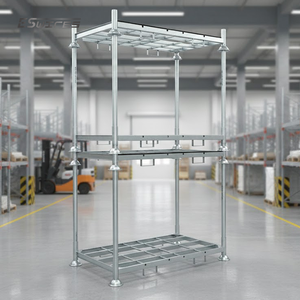
Custom Heavy Duty Post Pallet Rack for Cold Warehouse
Engineered for deep-freeze storage (-30°C). Features stackable post-pallet geometry, heavy cold-rolled structural steel, and specialized low-temperature anti-brittle coatings.
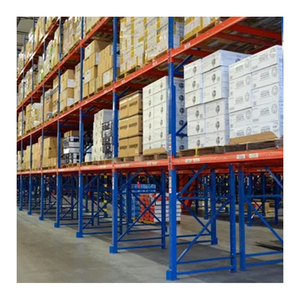
Steel Pallet Storage Rack with CE Certificate Beam Racking
CE-certified adjustable beam racking coated with electrostatic epoxy-polyester powder finish. Engineered for standard unit-load storage and high throughput logistics.
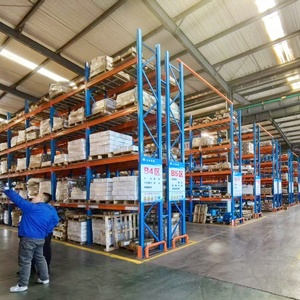
Heavy Duty Selective Pallet Racking (800–3000kg/Level)
High-capacity selective beam racking offering 100% pallet accessibility. Fully customizable upright column profiles with safety lock pins for maximum stability.
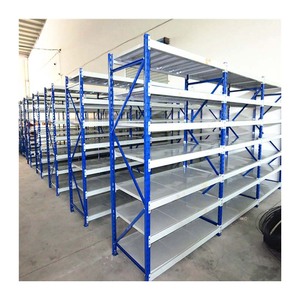
Light & Medium Duty Boltless Steel Warehouse Shelving
Interlocking boltless design for rapid manual assembly. Ideal for e-commerce picking, spare parts archive, and small-to-medium carton storage systems.
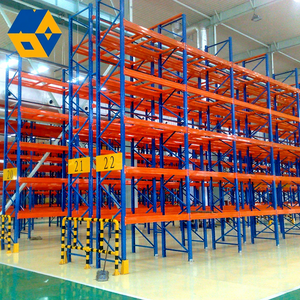
Automation-Ready Selective Heavy-Duty Pallet Racking
Precision-manufactured structural framing designed for integration with automated guided vehicles (AGVs) and warehouse management system (WMS) workflows.
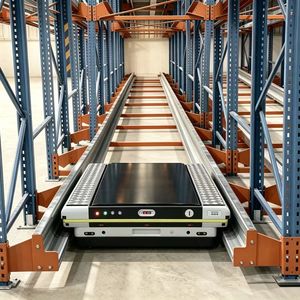
Automated Radio Shuttle High Density Pallet Racking
Semi-automated deep-lane storage system utilizing wireless shuttle carts. Maximizes cubic floor utilization in food, beverage, and cold chain distribution centers.
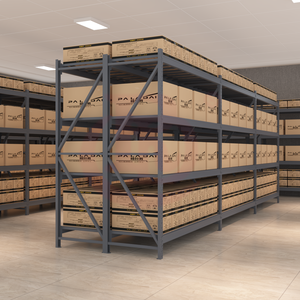
Thickened 5-Layer Mobile Cold-Rolled Steel Material Rack
Dense 15-meter depth motorized mobile rack structure. Mounted on heavy-duty floor rails to open picking aisles on demand, saving up to 50% aisle footprint.
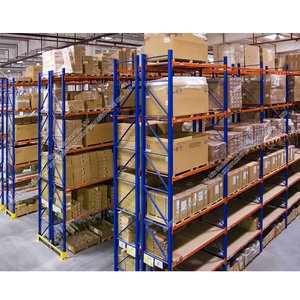
Multi-Tonnage Heavy Duty Industrial Distribution Racking
Configurable industrial storage matrix engineered for multi-ton load profiles (1000kg to 3000kg). Accommodates heavy raw materials, machinery, and palletized goods.
Industrial Storage Engineering: Material Science, Seismic Design & Safety Integrity
Modern warehouse asset management requires strict adherence to structural mechanics, steel metallurgy, and regional seismic criteria. As a premier global manufacturer and direct exporter of industrial racking and shelving systems, our factory bridges the gap between raw material engineering and operational warehouse efficiency. Selecting the correct racking infrastructure is not merely a purchase—it is a critical civil and structural engineering investment that impacts operational throughput, facility safety, and long-term capital ROI.
1. Metallurgy & Cold-Formed Steel Manufacturing Specifications
The foundation of structural integrity in high-bay selective racking and heavy-duty shelving lies in raw steel grade selection. Our production lines predominantly utilize high-tensile structural cold-rolled steel coils matching Q235B and Q355B grades (equivalent to S235JR and S355JR under European Standard EN 10025). Cold-forming continuous roll mills shape upright frames with continuous teardrop or omega profiles, increasing flexural rigidity while optimizing deadweight performance.
- Upright Column Dynamics: Manufactured with multi-stage cold-punched hole patterns engineered to minimize stress concentration factors during maximum vertical load compression.
- Box Beam Construction: Interlocking twin cold-rolled C-channels continuously seam-welded via automated robotic MIG welding setups, providing high torsional resistance and zero weld porosity.
- Safety Factor Thresholds: All structural load ratings incorporate a minimum safety design factor of 1.5 to 1.65 in accordance with ANSI MH16.1 and FEM 10.2.02 (Fédération Européenne de la Manutention) international racking specs.
2. Seismic-Aware Structural Engineering (NEC-SE-DS, ANSI MH16.1 & EN 16681)
Industrial storage systems operating in active seismic zones—such as the Pacific Ring of Fire, South American coastal belts (e.g., Guayaquil, Quito, Machala), and Southern European fracture zones—demand precise dynamic analysis. Unreinforced racking structures subjected to ground acceleration forces risk total catastrophic frame buckling and longitudinal domino collapse.
Our engineering division performs 3D Finite Element Analysis (FEA) modeling to evaluate sway modes, dynamic base-plate shear stress, and horizontal seismic coefficient factors ($C_s$). Design parameters incorporate:
- Enlarged Seismic Footplates: Heavy-gauge anchor plates engineered to distribute overturning moments evenly into the reinforced concrete floor slab.
- Heavy-Duty Mechanical Anchoring: M12 to M16 chemical resin or wedge anchors tailored to the slab's compressive strength ($f'_c \ge 25\text{ MPa}$).
- Horizontal & Vertical Frame Bracing: Bolted bracing patterns utilizing structural C-sections to absorb cyclic seismic energy without plastic structural deformation.
3. Surface Protection Systems: Hot-Dip Galvanizing vs. Electrostatic Powder Coating
Environmental factors significantly dictate structural component longevity. Facility microclimates—ranging from high-humidity coastal ports to ambient sub-zero cold storage facilities—require customized chemical surface treatments.
| Finish Specification | Process Technology | Layer Thickness | Best Operational Application |
|---|---|---|---|
| Electrostatic Powder Coating | Thermosetting Epoxy-Polyester Resin with 9-stage phosphating pre-wash | 60 – 90 microns ($\mu\text{m}$) | Enclosed ambient distribution centers, FMCG warehousing, clean rooms, e-commerce centers. |
| Pre-Galvanized Steel | Continuous zinc-coated steel coil rolling (Z140 to Z275 coating mass) | 15 – 25 microns ($\mu\text{m}$) | Standard industrial shelving, indoor high-humidity manufacturing plants, dry storage. |
| Hot-Dip Galvanizing (HDG) | Molten zinc bath immersion per ASTM A123 / ISO 1461 standards | 65 – 100 microns ($\mu\text{m}$) | Open-air yards, coastal sea-breeze zones, severe chemical exposure, blast freezers (-30°C). |
Why Enterprise Procurement Teams Partner With Us
Direct factory manufacturing strength, certified quality assurance, and end-to-end global project management.
Automated Roll-Forming
Precision automated steel production lines guarantee sub-millimeter punching accuracy, straightness tolerance, and perfect beam connector seating.
Certified Quality Control
Full adherence to ISO 9001, ISO 14001, CE structural certification, and international racking design standards (EN 15512 & R-Mark).
Export Logistics Support
Custom wooden pallet packing, steel strapping, and optimized container stuffing plans that reduce sea freight costs and prevent shipping damage.
Turnkey Engineering & Supervision
From initial CAD layout drafting and structural load verification to remote or on-site installation supervision and safety signoff.
Future Trends in Warehouse Storage Procurement & Racking Innovation
As global supply chains shift toward high-velocity fulfillment, urban micro-fulfillment, and carbon-neutral industrial infrastructure, procurement managers must align equipment specifications with long-term technological trends. Over the next decade, industrial racking and shelving procurement will be dominated by four key market drivers:
1. Convergence of AS/RS & Semi-Automated Shuttle Systems
Static selective racking is rapidly giving way to high-density semi-automated systems such as Radio Shuttle carts, Autonomous Mobile Robots (AMRs), and Automated Storage and Retrieval Systems (AS/RS). Future procurement prioritizes precision manufacturing tolerances—where beam deflection cannot exceed $1/200^{\text{th}}$ of clear span to ensure flawless robotic sensor navigation.
2. Smart Racking & Real-Time Structural Health IoT
Integrating micro-strain sensors and impact accelerometers directly into rack uprights is emerging as a critical safety standard. These IoT devices detect forklift collisions, structural fatigue, and unauthorized over-weight loading in real time, alerting facility managers before structural collapse occurs.
3. ESG Compliance & Low-Carbon Steel Sourcing
Multinational enterprise buyers now audit Scope 3 supply chain carbon emissions. Modern racking factories are adopting scrap-recycled Electric Arc Furnace (EAF) steel and zero-VOC water-based or thermosetting powder coatings to meet global corporate sustainability mandates.
4. Modular Flexibility & Reconfigurable Architectural Profiles
Supply chain volatility demands rack systems that adapt to shifting SKU dimensions. Boltless teardrop designs, adjustable beam pitches (50mm / 75mm steps), and modular mezzanine extensions enable warehouses to scale vertically without purchasing entirely new structural steel framework.
Comparing Warehousing Systems by Storage Density & Selectivity
Evaluate key structural configurations to balance floor space, picking speed, CAPEX outlay, and operational throughput.
| Storage System Type | Volumetric Density | Pallet Selectivity | Forklift Aisle Width Requirement | Capital Expenditure (CAPEX) | Primary Operational Fit |
|---|---|---|---|---|---|
| Selective Pallet Racking | Medium (40% - 50%) | 100% Immediate | 3.5m – 4.0m (Standard Counterbalance) | Low / Baseline | High SKU diversity, retail fulfillment, general distribution logistics. |
| Double-Deep Racking | High (55% - 65%) | 50% Immediate | 3.5m – 3.8m (Deep-Reach Forklift) | Moderate | Homogeneous product lines with 2–4 pallets per SKU profile. |
| Drive-In / Drive-Thru Racking | Very High (70% - 80%) | Low (LIFO / FIFO) | Requires forklift entry inside rack lane | Moderate to High | Cold storage, bulk beverage, seasonal batch manufacturing storage. |
| Automated Radio Shuttle Racking | Maximum (80% - 90%) | High Lane Density | 3.0m (Front staging aisle only) | High (Quick ROI via space savings) | Automated cold rooms, high-density food & beverage exports. |
| Heavy-Duty Cantilever Racking | Custom Linear | 100% Long Products | Depends on material length & handling truck | Moderate | Steel pipes, timber bundles, plastic extrusions, metal tubing. |
Industrial Racking Engineering & Procurement FAQ
Technical clarity on structural design, floor slab compliance, custom fabrication, and international shipping.
How do you calculate the required floor slab load capacity for heavy-duty pallet racking?
Dynamic rack column loads are concentrated onto small footplate areas. A standard racking system carrying 3,000 kg per beam level over a 5-tier bay generates point loads exceeding 6,000 kg to 8,000 kg per upright post. The concrete floor slab must meet structural thickness (typically minimum 150mm to 250mm) and compressive strength ($f'_c \ge 25\text{ MPa}$ to $30\text{ MPa}$) requirements. Soil capacity, slab rebar mesh placement, and expansion joint locations are thoroughly evaluated prior to post anchor drilling.
What seismic standards are applied to custom racking exports?
Our engineering team verifies structural layouts against international and local building codes, including ANSI MH16.1 (USA), EN 16681 (Europe), and regional seismic specifications such as NEC-SE-DS (Ecuador / South America). We calculate base anchor shear resistance, frame sway displacement limits, and top-tier load reduction factors based on local ground acceleration seismic maps.
Which surface treatment is recommended for humid coastal port warehouses?
For high-humidity or saline coastal environments (e.g., Guayaquil, Manta, Machala, or tropical logistics hubs), we strongly recommend Hot-Dip Galvanizing (HDG) per ASTM A123 or high-thickness pre-galvanized components. HDG provides a thick zinc-iron alloy barrier (65–100$\mu\text{m}$) with self-healing sacrificial galvanic protection. Enclosed climate-controlled warehouses can utilize our high-grade electrostatic epoxy-polyester powder coating (60–90$\mu\text{m}$) after multi-stage chemical degreasing and phosphating.
Can your racking systems integrate with automated warehouse software (WMS) & AGVs?
Yes. Our automation-ready racking lines (including Radio Shuttle systems and heavy-duty selective frameworks) are manufactured with tight dimensional tolerances ($\pm 1.0\text{mm}$). We incorporate magnetic guidance strips, optical reflectors, entry guide rails, and specialized floor alignment plates to support Automated Guided Vehicles (AGVs), Autonomous Mobile Robots (AMRs), and crane-based AS/RS systems.
What technical data is required to request a custom racking layout proposal?
To provide a fully optimized CAD layout and structural quotation, our engineering team requires: (1) Warehouse architectural floor plans showing clear ceiling height, column grids, dock doors, and obstruction points; (2) Pallet dimensions (W x D x H) including goods overhang; (3) Maximum weight per loaded pallet; (4) Forklift truck specifications (maximum lift height, turning radius, aisle width requirement); and (5) Operating environment temperature range.
What structural certifications and safety testing do your racking products possess?
All factory production strictly complies with ISO 9001 quality management standards and holds CE marking certification for structural steel components (EN 1090 / EN 15512). Raw cold-rolled steel coils undergo mechanical tensile testing, yield strength verification, and salt-spray corrosion chamber validation to guarantee compliance with global structural building requirements.
Optimize Your Warehouse Density & Structural Safety Today
Consult with our senior structural engineers for custom CAD layouts, seismic load calculations, and direct factory export pricing for your facility.
Get a Quote