Enterprise Pallet Racking Systems
Certified, precision-engineered industrial shelving and heavy-duty storage racking manufactured for global export standards.
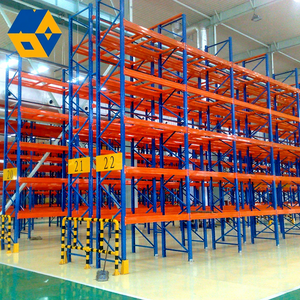
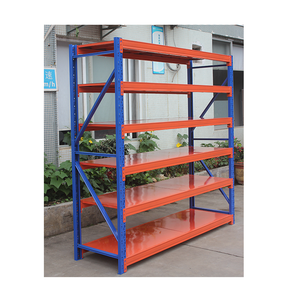
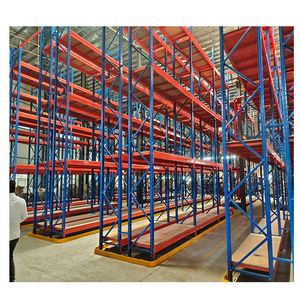
Why Global Procurement Leaders Source Pallet Racking from China
Delivering uncompromised structural integrity, precision cold-roll manufacturing, and end-to-end international engineering compliance.
High-Grade Steel Metallurgy
Our industrial racks utilize top-tier Q235B, Q355B, and high-tensile cold-rolled steel coils certified by certified steel mills. Structural components undergo precise mechanical stress tests to ensure rated load capacities up to 4,000kg per level with a 1.65 safety factor.
International Engineering Standards
Every rack frame and beam configuration adheres to strict global codes, including ANSI MH16.1 (USA), EN 15512 / EN 16681 (Europe), and FEM 10.2.02. Layouts are validated via Finite Element Analysis (FEA) to withstand static, dynamic, and seismic forces.
Coastal-Grade & Anti-Corrosion Finishes
Designed for varied industrial microclimates—from humid coastal port logistics hubs to sub-zero freezer warehouses. Options include thermosetting epoxy-polyester powder coating and hot-dip galvanization for superior rust resistance.
Optimized Export Shipping & Packing
Bundled with steel strapping, corrugated edge protectors, and specialized container loading arrangements to maximize volume density while eliminating transit damage during long-distance transoceanic freight.
Turnkey Engineering & CAD Design
Our structural engineers provide full site surveys, custom CAD layout proposals, slab capacity verification, baseplate anchoring shear reviews, and rack safety signage tailored to your exact floor plan.
Direct Factory Cost Advantage
By eliminating middleman distributor markups, overseas wholesalers gain direct access to OEM/ODM enterprise pricing, predictable lead times, scalable manufacturing, and customized branded structural components.
Future Procurement Trends in Industrial Racking (2025–2030)
Strategic insights for warehouse developers, third-party logistics (3PL) providers, and industrial supply chain directors.
1. Transition Towards High-Density Semi-Automated Infrastructure
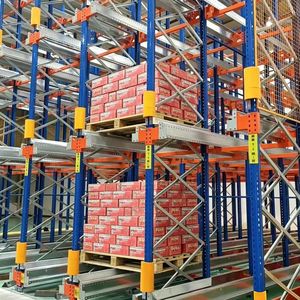
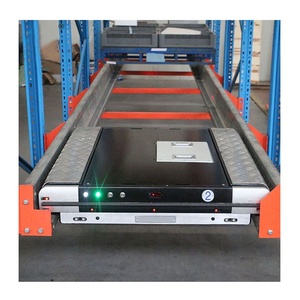
The global warehousing landscape is undergoing a structural shift driven by rising industrial land costs and severe labor shortages across major logistics hubs. Global procurement managers are rapidly moving away from traditional low-density selective racking toward semi-automated radio shuttle systems and Automated Storage and Retrieval Systems (AS/RS). By maximizing clear vertical height and eliminating unnecessary forklift operating aisles, automated shuttle solutions increase storage capacity by up to 80% per square meter while drastically lowering energy consumption in cold storage environments.
2. Seismic Rigor and Real-Time Structural Health Monitoring
Regulatory authorities worldwide—including structural engineering boards across the Americas, Europe, and Asia-Pacific—are enforcing stricter compliance regarding seismic loading standards (such as ANSI MH16.1 and EN 16681). Future procurement tenders increasingly require validated Finite Element Analysis (FEA) modeling, enhanced floor-anchoring bolt shear limits, and dynamic damping baseplate designs. Furthermore, modern high-bay racking systems are adopting IoT-enabled strain gauge sensors and tilt detectors, enabling facility managers to monitor structural stress, detect forklift impact damage in real-time, and automate preventive maintenance protocols.
3. Sustainable Carbon-Neutral Steel Manufacturing
Environmental, Social, and Governance (ESG) mandates are transforming industrial material procurement. Tier-1 enterprise buyers now actively audit carbon emissions across their supply chains. Leading Chinese racking manufacturers are responding by adopting green steel processing methods, utilizing electric arc furnace (EAF) steel coils, and applying low-VOC eco-friendly thermosetting powder coatings. Choosing sustainable racking suppliers helps enterprise buyers meet carbon reduction targets while maintaining structural durability.
4. Modular Adaptability & Supply Chain Resilience
With rapid fluctuations in SKU diversity caused by e-commerce expansion, static racking designs are becoming obsolete. Modern procurement strategies prioritize highly modular, boltless, fully adjustable racking frameworks that can easily transition between Selective, Double-Deep, Carton Flow, or Mezzanine configurations with minimal downtime. Wholesalers and distributors who invest in standardized beam connectors and pitch-adjustable upright frames protect their capital investment against shifting operational needs.
Technological Trends & Technical Performance Matrix
Comparing structural storage systems across critical engineering parameters to guide capital investment decisions.
| Racking System Type | Storage Density | SKU Selectivity | Handling Equipment Needed | Seismic Resistance | Automation Readiness |
|---|---|---|---|---|---|
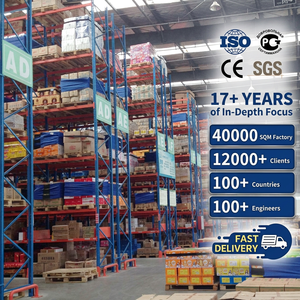
| Selective Pallet Racking | Moderate (30-40%) | 100% Immediate Access | Standard Counterbalance / Reach Truck | High (Standard Bracing) | Manual / AGV Compatible |
| Radio Shuttle Racking | Ultra-High (70-85%) | Batch / Deep Lane | Standard Forklift + Shuttle Bot | Very High (Reinforced Frame) | Semi-Automated / WMS Integrated |
| Drive-In Racking | High (60-70%) | Low (LIFO Priority) | Specialized Drive-In Forklift | Moderate (Requires Top Bracing) | Manual Operation |
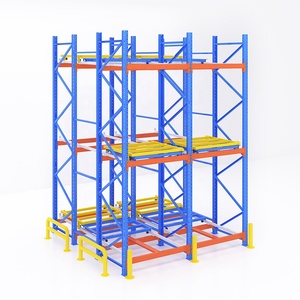
| Push-Back Racking | High (50-65%) | Moderate (2-6 Deep LIFO) | Standard Counterbalance Truck | High (Nested Cart Structure) | Manual Gravity Push |
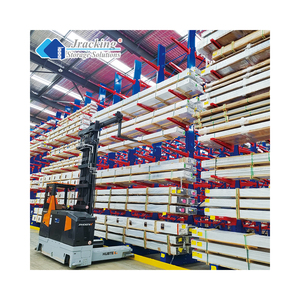
| Cantilever Racking | Specialized Long Load | 100% for Long Profiles | Side Loader / Forklift | Custom Engineered Arms | Manual / Crane Systems |
| AS/RS High-Bay Racking | Maximum (>85%) | 100% Automated Access | Automated Stacker Cranes / RGV | Extreme (Structural High-Bay) | 100% Fully Automated |
*Data indicators reflect standard engineering design parameters. Final structural load calculations depend on concrete slab thickness, upright profile dimensions, beam length, and site-specific seismic hazard coefficients.
Procurement & Engineering FAQ
Addressing the technical, regulatory, and logistics questions asked by enterprise racking buyers and structural engineers.
How do Chinese pallet racking exporters ensure compliance with Western seismic standards (ANSI MH16.1 & EN 16681)?
+
What steel finish surface treatment is recommended for cold storage or humid coastal warehouses?
+
What critical floor plan data is required to request an accurate CAD racking proposal and quote?
+
- Architectural floor plan drawings (DWG/PDF) showing overall dimensions, building column locations, doorways, and dock positions.
- Clear height under the lowest building obstruction (roof trusses, light fixtures, or fire sprinklers).
- Pallet dimensions (Width × Depth × Height including load) and maximum weight per pallet.
- Forklift model specifications, maximum lift height, and minimum aisle turning radius (AST).
- Site location for evaluating local seismic hazard requirements and slab specification.
How are heavy industrial racking products packed to eliminate transoceanic transit damage?
+
What is the typical manufacturing lead time and global delivery process for enterprise orders?
+
Do you provide installation guidance and post-installation rack inspection services?
+
Transform Your Warehouse Storage Efficiency Today
Partner with China's leading heavy-duty pallet racking manufacturer and exporter. Contact our engineering team now for a free CAD layout, structural load review, and competitive direct-factory price estimate.