Featured Heavy-Duty Industrial Racking Systems
Precision-engineered, heavy-duty industrial pallet storage solutions certified to FEM, EN, and ANSI structural safety standards.
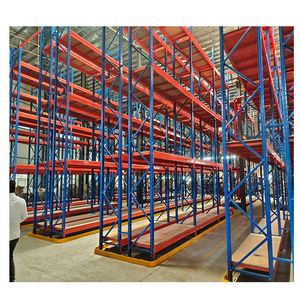
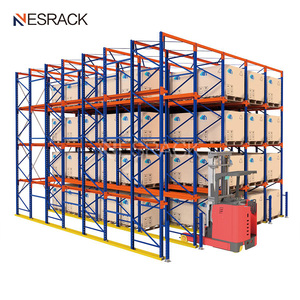
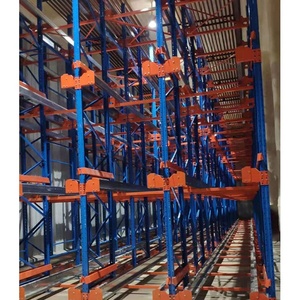
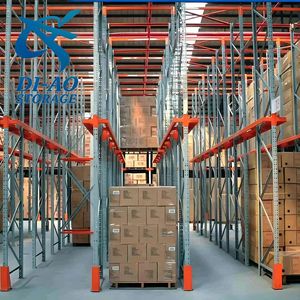
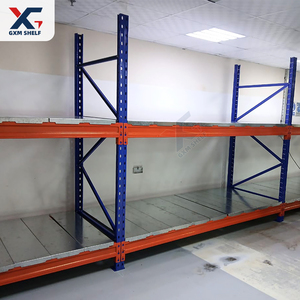
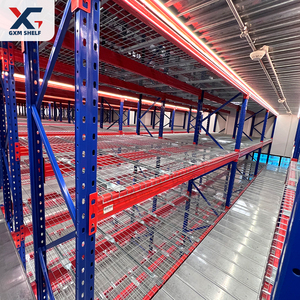
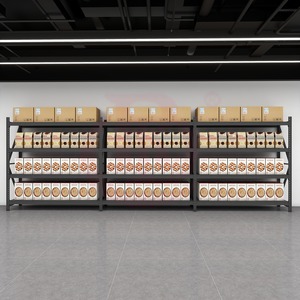
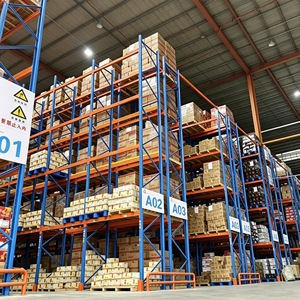
Structural Engineering Excellence in Industrial Storage Racking
As modern global logistics demands higher cubic space utilization, warehouse safety, and seamless integration with automated handling equipment, selecting a qualified China Industrial Storage Racks Exporter & Wholesaler requires rigorous engineering evaluation. Modern rack manufacturing in China has transitioned from traditional labor-intensive cold bending to fully automated, robotically welded, high-precision structural steel fabrication conforming to international design standards including FEM 10.2.02, EN 15512, ANSI MH16.1, and AS4084-2012.
1. Steel Metallurgy & Material Traceability
Premier Chinese rack manufacturers utilize prime-quality cold-rolled structural steel coils sourced directly from state-owned steel conglomerates such as Baosteel, Shougang, and Ansteel. Standard components utilize Q235B (yield strength ≥ 235 MPa) for light-to-medium loads, while high-bay frames and heavy-duty main beams incorporate high-strength Q355B / Q460 low-alloy structural steel to minimize structural deadweight while increasing total payload capacity up to 4,500 kg per beam level.
Every steel heat coil undergoes certified ultrasonic testing, mechanical tensile testing, and chemical composition analysis, ensuring full material traceability from raw billet to installed warehouse frame.

2. Advanced Surface Treatment & Cold-Chain Durability
Corrosion resistance is crucial for tropical coastal distribution hubs, chemical warehouses, and sub-zero cold storage facilities operating down to -30°C. Modern Chinese manufacturing lines apply a comprehensive multi-stage surface preparation process:
- Automatic Shot Blasting (Sa2.5 Grade): Complete removal of surface rust, mill scale, and oxides to ensure maximum mechanical adhesion for subsequent coatings.
- Automated Electrostatic Powder Coating: Utilizing thermosetting epoxy-polyester powders (AkzoNobel or Tiger Coatings), applied via 12-gun automatic reciprocity sprayers to achieve a uniform dry film thickness (DFT) of 60–90 microns.
- Hot-Dip Galvanizing (ISO 1461 Compliant): For extreme humidity, coastal salt-spray environments, or continuous condensation in blast freezers, structural uprights and beam assemblies undergo zinc immersion baths yielding a coating thickness exceeding 85 microns for multi-decade maintenance-free service.
Why Enterprise Buyers Partner with China's Premier Wholesalers
Navigating global supply chains requires more than just low unit costs. Industry-leading enterprise exporters provide complete end-to-end engineering, manufacturing customization, logistics consolidation, and site installation support across South America, North America, Europe, and the Middle East.
Seismic-Aware Design Protocols
Engineered structural calculations tailored to regional seismic hazard acceleration maps (e.g., NEC-15, IBC, Eurocode 8). Uprights feature enlarged base plates, dynamic sway bracing, and chemical anchor bolt layouts capable of resisting severe ground motion.
Automated CNC Roll-Forming
State-of-the-art continuous roll-forming lines with online laser monitoring guarantee pitch accuracy of ±0.2mm over 12-meter upright lengths, eliminating assembly jam-ups during high-bay warehouse erection.
Full Structural Certification
All delivered systems ship with full material test certificates (MTC), finite element analysis (FEA) structural reports, and clear safe working load (SWL) signage for compliance with OSHA and local labor safety inspections.
Turnkey Engineering & Global Shipping Logistics
Direct export sourcing allows buyers to bypass local intermediary markups while enjoying complete design flexibility. Factory engineering teams utilize 3D BIM and AutoCAD software to produce tailored rack elevations, aisle width calculations based on specific forklift turn radii (VNA, Reach Truck, Counterbalance), and point-load slab verification.
Export packaging utilizes heavy-duty wooden dunnage, steel strapping, protective corner guards, and plastic shrink wrap to guarantee zero surface scratch or structural damage during multi-week ocean transit.
Future Sourcing & Procurement Trends in Industrial Storage (2025–2030)
The global warehousing and material handling industry is undergoing a massive transformation driven by e-commerce velocity, rising industrial real estate costs, and labor supply constraints. B2B procurement professionals must align their storage infrastructure strategies with key emerging macroeconomic trends:
Trend 1: Rapid Acceleration Toward High-Density Automated Shuttle Systems
Traditional static pallet racks (such as standard selective or drive-in racks) are increasingly giving way to semi-automated and fully automated dynamic density systems. Procurement managers are heavily allocating capital expenditure toward Radio Pallet Shuttle Racking and Four-Way Shuttle Systems. By eliminating inner forklift aisles, shuttle systems increase warehouse volume utilization by up to 80% while reducing forklift operational damage by keeping heavy machinery outside the rack structure.
Trend 2: Seamless Compatibility with Autonomous Mobile Robots (AMR) & AS/RS
Modern high-bay storage facilities require strict manufacturing tolerances. In automated storage and retrieval systems (AS/RS), racking acts not merely as a steel frame, but as a precision machine guide for high-speed stacker cranes and AMRs. Future-proof racking specifications demand zero-deflection beam designs under full load, precise floor guide rail anchorages, and integrated sensor mounting brackets.
Trend 3: Cold-Chain Logistics Expansion & Anti-Corrosion Advances
With global cold chain logistics expanding rapidly for pharmaceutical, dairy, and frozen seafood supply chains, demand for low-temperature structural steel performance has spiked. Sourcing directors are prioritizing cold-resistant steel formulations that prevent hydrogen embrittlement at sub-zero temperatures, paired with hybrid hot-dip galvanized and powder-coated finishes.
Trend 4: Carbon Footprint Transparency & Green Steel Manufacturing
Global ESG compliance standards require industrial rack exporters to provide Environmental Product Declarations (EPD). Future-focused Chinese suppliers are adopting low-emission electric arc furnace (EAF) steel, eco-friendly zero-VOC powder coatings, and solar-powered manufacturing plants to assist multinational clients in achieving Scope 3 carbon reduction targets.
Next-Generation Product Development Horizons
To keep pace with smart logistics, Chinese industrial storage manufacturers are advancing product development along three core technological fronts:
1. Smart Racking & IoT Structural Health Monitoring
Future heavy-duty pallet racking systems will feature embedded strain gauges, tilt sensors, and wireless IoT nodes integrated directly into upright columns and load-bearing beams. These sensors provide real-time telemetry on structural stress, accidental forklift impacts, and seismic displacement, alerting warehouse managers to structural risks before catastrophic failure occurs.
2. High-Strength Thin-Walled Cold-Formed Steel Profiles
By leveraging advanced finite element analysis (FEA) software, engineering teams are designing complex multi-rib upright column cross-sections (e.g., 11-fold and 13-fold profile geometries). These complex cold-rolled shapes deliver significantly higher section modulus and torsional resistance while utilizing lighter steel gauges, reducing shipping weight and raw material costs without compromising load capacities.
3. Modular Boltless High-Bay Structures
Product development is heavily focused on reducing on-site installation timelines and labor costs. Advanced interlocking beam connectors, wedge-lock base plates, and pre-assembled frame modules allow rapid assembly and simple reconfigurability as business SKU requirements evolve.

Industrial Racking System Comparison & Selection Matrix
Selecting the optimal storage configuration requires balancing storage density, SKU selectivity, forklift accessibility, and capital investment per pallet position.
| Racking Architecture | Storage Density | SKU Selectivity | Forklift Requirement | Cost per Pallet Position | Ideal Application |
|---|---|---|---|---|---|
| Selective Pallet Rack | Standard (40-50%) | 100% Direct Access | Standard Counterbalance / Reach | Low / Baseline | High SKU diversity, fast FMCG turnover |
| Drive-In Racking | High (75-85%) | Low (LIFO) | Standard Reach Truck | Low-Medium | Bulk homogeneous goods, seasonal inventory |
| Radio Pallet Shuttle | Very High (85-90%) | Medium (FIFO/LIFO option) | Standard Forklift (Outside Aisle) | Medium-High | Cold storage, beverage, high-volume bulk |
| Cantilever Racking | Specialized | 100% Linear Access | Side Loader / Standard Forklift | Medium | Pipes, timber, steel bars, long structural profiles |
| AS/RS High Bay System | Maximum (90-95%) | 100% Automated | Automated Stacker Crane / AMR | High (Automated ROI) | 24/7 high-throughput distribution centers |
B2B Procurement & Sourcing FAQ
Direct answers to critical questions asked by global supply chain directors, industrial engineers, and procurement officers when sourcing warehouse rack systems from China.
Request Your Custom Warehouse Layout & Engineering Quote Today
Partner directly with China's leading industrial rack manufacturer. Our structural engineering team will prepare an optimized CAD storage design, seismic load calculation, and competitive factory-direct wholesale quote within 24 hours.