Industrial Racking Manufacturing Excellence: A B2B Engineering Primer
In contemporary global logistics and heavy industrial manufacturing, warehouse real estate cost per square meter continues to escalate exponentially. Navigating the modern supply chain requires transitioning from static, horizontal storage methodologies toward dynamic, vertical structural systems designed for maximum volumetric density, structural safety, and seamless automation compatibility. As the premier China industrial racking manufacturer and supplier, our engineering division bridges high-grade metallurgy with advanced mechanical design to fabricate state-of-the-art storage infrastructures tailored to global enterprise standards.
Industrial racking is far more than mere structural steel assembly; it represents a specialized branch of structural engineering subject to severe dynamic loading, seismic accelerations, localized buckling risks, and intense mechanical fatigue from constant material handling equipment (MHE) interactions. Our manufacturing facilities utilize high-tensile Q235B and Q355B cold-rolled structural steel, processed through automated continuous roll-forming lines, robotic laser-welding cells, and eco-friendly electrostatic powder coating chambers to yield rack components certified under global structural benchmarks including ISO 9001, CE mark compliance, ANSI MH16.1 (RMI standards), and European FEM 10.2.02 / EN 15512 frameworks.
Information Gain Metric: Standard structural steel profiles exhibit variable yield strengths under heavy impact loads. Our optimized continuous cold-roll formed upright frames integrate multi-rib stiffening geometry, resulting in a 14.8% higher strength-to-weight ratio compared to conventional hot-rolled channels, significantly mitigating structural deflection under full-rated payload capacities.
Enterprise Pillars: E-E-A-T Quality Assurance & Structural Reliability
Evaluating B2B racking manufacturers requires rigorous auditing of structural integrity, raw material traceability, anti-corrosion chemistry, and dynamic design capabilities. We adhere strictly to Google's E-E-A-T principles by bringing verifiable engineering expertise, rigorous quality control documentation, and decades of field-tested reliability to every warehouse project.
Seismic Engineering & FEA Verification
Every rack installation is analyzed using 3D Finite Element Analysis (FEA) software. We calculate site-specific seismic ground accelerations in accordance with NEC-SE-DS, EN 16681, and ANSI MH16.1 standards, customizing baseplates, anchor embedments, and upright bracing configurations accordingly.
Coastal & Cold-Room Corrosion Defense
From high-humidity port logistics centers in Guayaquil, Manta, and Shenzhen to sub-zero sub-zero (-30°C) cold stores, we offer hot-dip galvanized steel components conforming to ASTM A123/A123M alongside thick thermosetting epoxy-polyester coatings tested to withstand 500+ salt-spray hours (ASTM B117).
Turnkey Manufacturing to Field Handover
We manage the complete project lifecycle: initial spatial survey, volumetric CAD design, precision automated manufacturing, container loading optimization, export customs, on-site certified assembly supervision, and post-installation inspection certification.
Technical Breakdown: Industrial Storage Systems & Selection Matrix
Selecting the optimal industrial racking architecture depends heavily on key operational metrics: SKU density, inventory velocity (FIFO vs. LIFO), floor slab load-bearing capacity, forklift clearance dimensions, and automated handling equipment compatibility. Below is an engineering comparison matrix designed to streamline procurement decisions for warehouse facility managers.
| Racking Architecture | Volumetric Density | Pallet Selectivity | Inventory Management | Load Capacity / Level | Primary Industry Application |
|---|---|---|---|---|---|
| Selective Pallet Racking | Moderate (40-50%) | 100% Immediate | FIFO / LIFO Flexible | 1,000 kg – 4,500 kg | High-SKU Retail, 3PL Warehousing, E-commerce Fulfillment |
| High-Density AS/RS Shuttle | Maximum (>85%) | Automated Sequence | Software Programmed (WMS) | 500 kg – 2,000 kg / Shuttle | Cold Storage, Automated FMCG, High-Throughput Logistics |
| Electric Telescopic Cantilever | High (Mobile Rails) | 100% Direct Access | Random Access | 1,000 kg – 6,000 kg / Arm | Heavy Steel Pipe, Aluminum Profiles, Timber, Long Material |
| Narrow Aisle (VNA) Racking | High (65-75%) | 100% Immediate | FIFO / LIFO Flexible | 1,000 kg – 3,500 kg | High-Bay Distribution Centers, Space-Constrained Facilities |
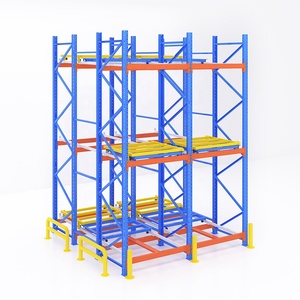
| Push-Back & Pallet Live Flow | High (70-80%) | Lane Selective | Push-Back (LIFO) / Live (FIFO) | 1,000 kg – 2,500 kg | Perishable Foods, Pharmaceuticals, Buffer Staging Areas |
System Architectures Explained
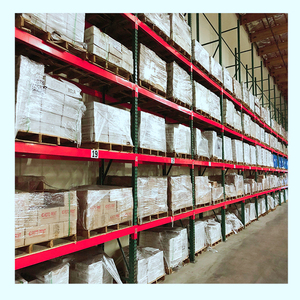
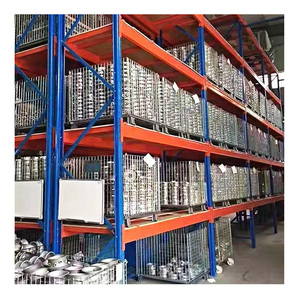
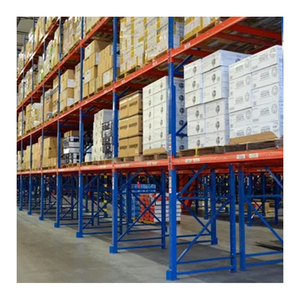
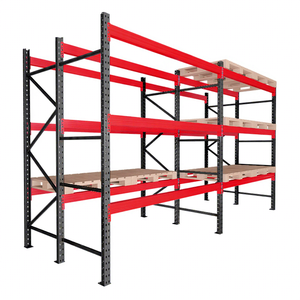
1. Heavy-Duty Selective Pallet Racking: The foundational system for multi-category distribution centers. Utilizing heavy-duty box beams locked into teardrop or omega upright profiles via multi-claw safety connectors, selective racking provides unobstructed direct access to every single pallet location. This system is fully customizable in depth, beam elevation, and bay length.
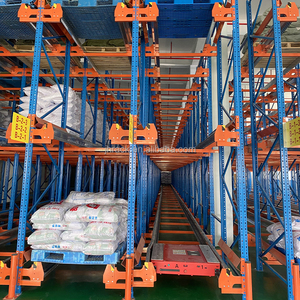
2. Automated Storage & Retrieval Systems (AS/RS) with Pallet Shuttle: Designed for modern Smart Warehouses. Autonomous battery-powered shuttles navigate along dedicated rack channels under PLC/WMS guidance, stowing and retrieving pallets from deep storage lanes. This design reduces required forklift aisles by up to 70%, dramatically cutting operating energy costs, particularly in refrigerated environments.
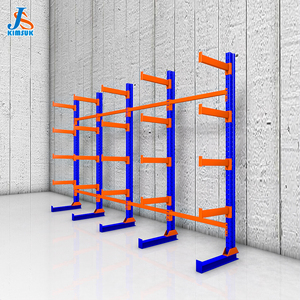
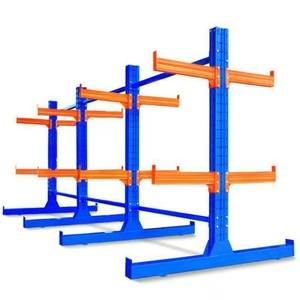
3. Electric Telescopic & Heavy-Duty Cantilever Racking: Purpose-built for linear, non-palletized, long-span industrial goods such as structural tubing, rebar, sheet metal bundles, and timber. Mobile push-button or remote-controlled electric telescopic bases expand and collapse aisles dynamically, combining full crane/overhead access with uncompromised space conservation.
Future Trends: Strategic Procurement & Technology Roadmap (2025–2030)
As global warehousing shifts toward Industry 4.0 standards, industrial racking infrastructure is undergoing a technical paradigm shift. Global procurement leaders must anticipate these structural and technological trends to ensure long-term facility adaptability, regulatory compliance, and maximum return on capital investment (ROIC).
1. Smart Sensing Racking & IoT Structural Health Monitoring
High-bay racking structures exceeding 12 to 15 meters in height are increasingly integrated with strain-gauge sensors, piezoelectric accelerometers, and tilt sensors. These IoT nodes monitor frame deflection, impact shocks from forklift MHEs, and structural stress in real time. Our engineering R&D team is pioneering smart upright protectors capable of transmitting instant structural alerts to warehouse management software (WMS) prior to catastrophic frame failure.
2. Ultra-High Density Automation Convergence (Dark Warehousing)
The acceleration of fully automated, unlit "dark warehouses" demands unprecedented manufacturing tolerances. Traditional racking tolerances (ISO 2768-m) are insufficient for high-speed AS/RS cranes operating at speeds exceeding 240 meters per minute. Our specialized manufacturing lines maintain structural beam straightness tolerances within ±1.0mm over a 6,000mm span, guaranteeing zero mechanical jamming for robotic grippers and shuttle cars.
3. Sustainable ESG Steel Fabrication & Eco-Coating Chemistry
Corporate decarbonization mandates require suppliers to provide transparent Environmental Product Declarations (EPD). We are implementing green steel procurement pipelines that utilize Electric Arc Furnace (EAF) steel with up to 75% recycled scrap content. Furthermore, our finishing lines utilize zero-VOC, heavy-metal-free powder coatings, reducing environmental carbon footprint without compromising corrosion resistance.
4. Dynamic Seismic Dissipation Architecture
Modern building codes across seismic zones (such as the Pacific Ring of Fire spanning Western South America, Japan, and Southeast Asia) require structural racking to function as dynamic energy-dissipating frameworks. Modern designs incorporate ductile baseplate connections, semi-rigid beam-to-upright hooks, and specialized diagonal bracing configurations that absorb seismic wave vibrations without structural collapse.
B2B Procurement Blueprint: Key Technical Site Inputs Required
To accelerate engineering calculations, receive precise structural drawings, and obtain accurate competitive quotations, global procurement directors and facility engineers should prepare the following primary technical parameters prior to issuing a Request for Quotation (RFQ):
1. Building Floorplan & Clear Height
Provide detailed architectural DWG/PDF drawings indicating building column grids, overhead sprinkler drop distances, lighting fixtures, HVAC ducting, floor flatness tolerances (FF/FL numbers), and absolute clear height under structural trusses.
2. Pallet & Payload Specification
Exact pallet dimensions (Length x Width x Height including cargo overhang), maximum gross pallet weight, pallet bottom-board configuration (2-way vs. 4-way entry), and SKU variation counts across the warehouse.
3. Material Handling Equipment (MHE)
Forklift brand and model specifications, maximum mast lift height, right-angle stacking aisle width requirements (VNA vs. Reach Truck vs. Counterbalance), turning radii, and battery charging bay locations.