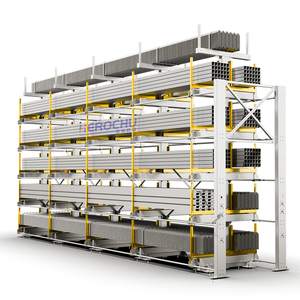
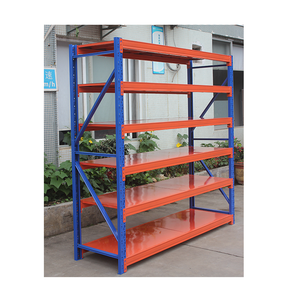
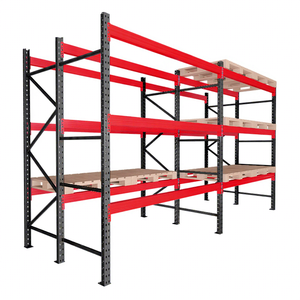
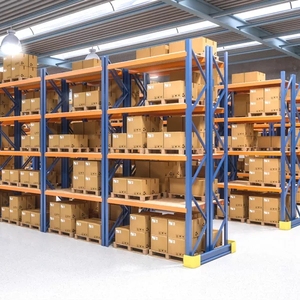
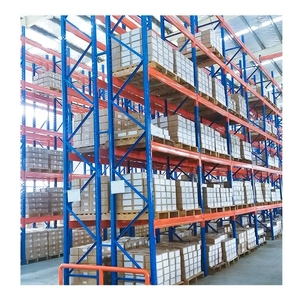
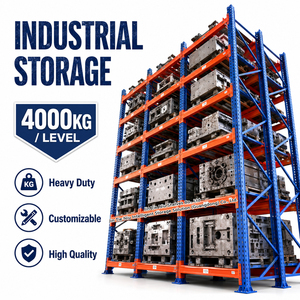
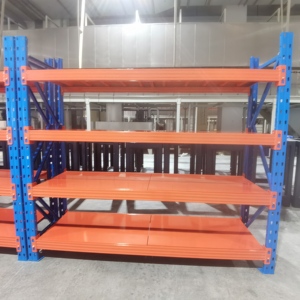
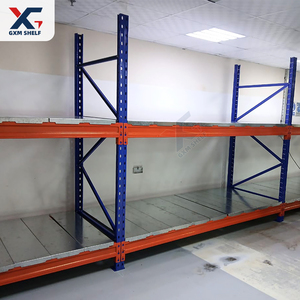
Engineered Storage Racks Portfolio
Direct factory export models rigorously tested for maximum load deflection limits, structural integrity under seismic stress, and harsh industrial environments.
Industrial Whitepaper: Sourcing Heavy-Duty Racking Manufacturers
A technical guide for supply chain directors, logistics engineers, and warehouse operations specialists evaluating global industrial storage rack exporters.
1. The Global Racking Supply Chain: Sourcing Criteria & Engineering Standards
Modern material handling demands robust steel structural integrity, high footprint volumetric efficiency, and full integration with material handling equipment (MHE) such as VNA turret trucks, AGVs, and automated shuttle fleets. When selecting among the world's leading warehouse storage rack factories and exporters, industrial procurement managers must mandate compliance with international design codes:
- ANSI MH16.1 (RMI Standard): The gold benchmark in North America for the design, testing, and utilization of industrial steel storage racks.
- EN 15512 & EN 16681: European standards detailing structural design rules for adjustable pallet racking and rack structures in seismic zones.
- NEC-SE-DS (Ecuadorian Construction Standard): Imperative for equatorial and Pacific Rim installations, governing structural seismic hazard coefficients and baseplate anchor shear resistance.
- FEM 10.2.02: Guidelines for the design of static steel pallet racking systems across complex distribution centers.
2. Evaluation Matrix: Comparing Leading Industrial Racking Manufacturers
To assist enterprise buyers in shortlisting qualified manufacturers, the following matrix compares the core technical capabilities, steel material standards, and regional environmental adaptations across global tier-1 racking exporters.
| Evaluation Parameter | Tier-1 OEM Racking Exporters | Standard Regional Suppliers | Low-Cost Budget Exporters |
|---|---|---|---|
| Steel Grade Selection | Q355B / High-Tensile Cold Rolled Structural Steel | Standard Q235 Steel Profiles | Commercial Grade Recycled Scrap Steel |
| Seismic Resistance Engineering | FEM 10.2.08 & NEC-SE-DS Finite Element Modeling | Basic Static Load Calculation | No Seismic Simulation Capabilities |
| Corrosion Armor Finish | Hot-Dip Galvanized (ISO 1461) & Electrostatic Epoxy (80-100µm) | Standard Spray Paint / Thin Powder Coating (<50µm) | Single-Coat Air-Dried Primer |
| Upright Hole Pitch Accuracy | CNC Automatic Continuous Punching (Tolerance ±0.1mm) | Mechanical Press Punching (Tolerance ±0.5mm) | Manual / Semi-Auto Punching (Varied Alignment) |
| Quality Certification | ISO 9001, CE, TUV Rheinland, RMI Compliance | Basic ISO 9001 | Uncertified Self-Declaration |
3. Enterprise Strengths & Regional Environmental Adaptability
Warehousing environments differ vastly across geographies. A rack layout installed in a temperate inland logistics park requires radically different physical properties than a racking system deployed in coastal regions or high-altitude, seismically active terrain.
Seismic Dissipation Systems
For operations situated along the Pacific Ring of Fire—including coastal and Andean highlands such as Guayaquil, Quito, and Cuenca—every structural layout undergoes site-specific seismic hazard analysis. We engineer enlarged baseplates, heavy-duty wedge anchors, and cross-aisle X-bracing to prevent catastrophic rack collapse during earth movements.
Coastal Marine Anti-Corrosion
High-salinity, high-humidity maritime zones (such as Manta, Machala, or tropical export hubs) accelerate atmospheric oxidation. We utilize hot-dip galvanization conforming to ISO 1461 alongside pre-galvanized beam profiles and high-density epoxy-polyester powder coats to guarantee multi-decade operational lifespans without structural flaking.
End-to-End Turnkey Lifecycle
From initial 3D DWG/BIM layout planning and structural slab capacity verification to professional installation, safety inspections, post-protector retrofitting, and facility expansion, our engineering team manages the complete lifecycle of your storage assets.
4. Future Trends in Industrial Storage & Warehouse Automation (2025–2030)
The industrial storage industry is undergoing a structural transition driven by rising labor costs, land inflation, and the rapid growth of e-commerce cold chains. Sourcing managers must future-proof their warehouse investments by taking note of four major structural trends:
A. Integration with AS/RS & Autonomous Pallet Shuttles
Conventional selective pallet racking is increasingly yielding to high-density Automated Storage and Retrieval Systems (AS/RS) and radio pallet shuttle systems. Shuttle racking increases cube utilization by eliminating fork truck access aisles while maintaining high throughput. Rack tolerances in shuttle systems require sub-millimeter beam deflection controls and precise guide-rail alignment.
B. Green Steel & Low-Carbon Galvanization
Global carbon compliance standardizations (such as CBAM) are compelling top 10 exporters to adopt low-carbon steel production processes. Advanced eco-friendly powder coating lines utilize zero-VOC, heavy-metal-free coatings and closed-loop water treatment facilities, satisfying global ESG mandates for multinational supply chains.
C. Modular Cold-Chain Storage Racking
The expansion of agro-exports (fruit, fresh produce) and seafood (shrimp, tuna) requires refrigerated distribution centers operating at ambient temperatures down to -30°C. Cold-room racking demands specialized low-temperature brittle-resistant steel formulations, drive-in dense configurations, and stainless steel fasteners that maintain shear strength under deep-freeze conditions.
D. Real-Time Rack Integrity Sensing
IoT-enabled shock sensors and strain gauges integrated into rack uprights represent the next frontier in warehouse safety. These systems alert facilities managers in real time whenever a forklift impact exceeds allowable safety thresholds, preventing structural fatigue before visual signs of damage occur.
Four Essential Project Brief Inputs for Fast & Accurate RFQs
To receive an engineered CAD layout and precise cost quotation from our technical team, ensure your project brief includes the following four parameters:
- Building Clear Height & Slab Specifications: Height to the lowest overhead obstruction (sprinklers, truss, lighting) and concrete slab thickness/compressive strength ($f'_c$).
- Pallet Profile Data: Full dimensions (Width x Depth x Height inclusive of cargo overhang) and absolute maximum load weight per pallet position.
- Forklift & Handling Equipment Details: Make, model, maximum reach height, and minimum aisle width requirements (Aisle Turning Radius).
- Site Location & Environmental Conditions: Geographic location (for seismic zone determination) and ambient environment (ambient, cold storage, or coastal high humidity).
Frequently Asked Questions (FAQ)
Expert engineering insights regarding technical standards, regional seismic design, steel selection, and factory export procedures.
Do you design pallet racking for seismic active zones and specific regional standards? +
Which steel finish treatment is best suited for coastal and high-humidity warehouses? +
What structural data is required to generate an optimized CAD warehouse layout? +
How do Double-Deep and Drive-In racking systems compare in volumetric density? +
Do you offer global field installation, safety inspection, and repair services? +
Can your factory supply custom stainless steel or automated shuttle-ready racking systems? +
Transform Your Warehouse Storage Efficiency Today
Connect directly with our senior structural racking engineers for technical consultations, customized CAD design layouts, and direct-factory export pricing.
Get a Quote