Recommended Industrial Storage Rack Systems
Engineered for high load capacities, structural rigidity, and seamless integration into modern logistics facilities.
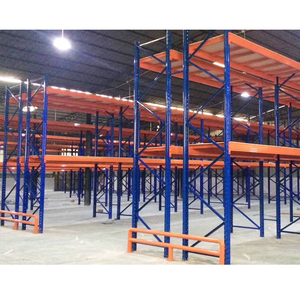
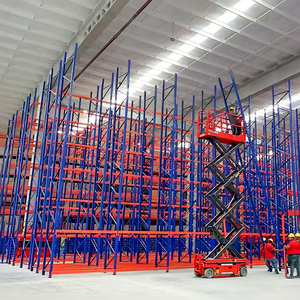
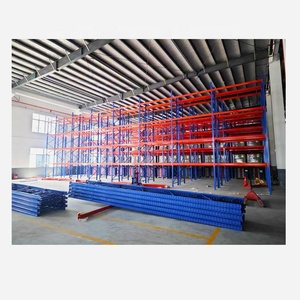
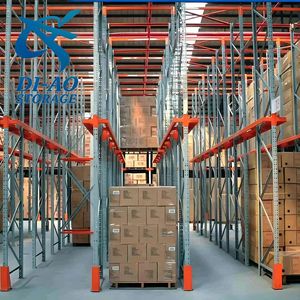
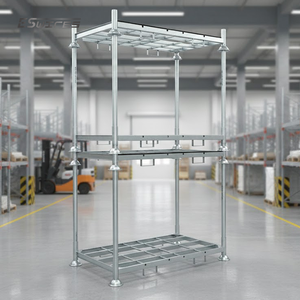
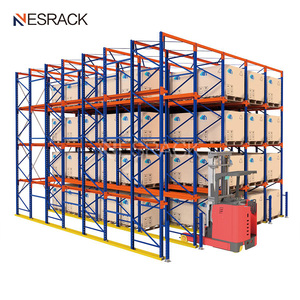
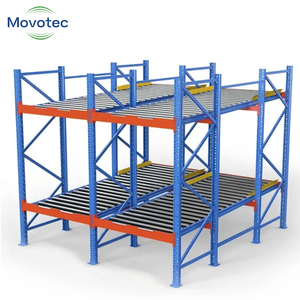
Engineering Architecture & OEM/ODM Manufacturing Capabilities
A comprehensive technical brief on high-performance structural rack manufacturing, load dynamics, and custom logistics engineering.
Precision Steel Roll-Forming & Metallurgical Standards
Modern industrial supply chains demand exceptional structural integrity from racking infrastructure. As a specialized OEM/ODM warehouse pallet storage racks factory, our manufacturing processes strictly utilize high-tensile cold-rolled steel (grades Q235B and Q355B). These structural alloys provide optimal yield strength under dynamic live-load fluctuations and static dead loads.
Every upright column undergoes precision multi-stage continuous cold roll-forming, producing rigid profiles with geometric tolerances as tight as ±0.5mm. Punching patterns are executed on automated CNC punching lines, maintaining uniform pitch spacing (50mm, 75mm, or 76.2mm) to ensure seamless beam connector engagement and load redistribution across the frame assembly.
- High-Tensile Cold-Rolled Steel Coils with Certified Mill Test Reports (MTR)
- Robotic Gas Metal Arc Welding (GMAW) for Upright Frames and Beam End Connectors
- FEA (Finite Element Analysis) Verified Frame Designs under AS 4084, ANSI MH16.1 & EN 15512
- Automatic 18-Stage Surface Treatment with Thermosetting Epoxy-Polyester Powder Coating
Structural Technical Specifications
Upright Profiles: 80×60mm, 90×70mm, 100×70mm, 120×95mm, 140×95mm (Thickness: 1.8mm – 3.0mm)
Box Beams: 80×50mm to 160×50mm dual-C profile interlocking beams with 3 or 4-hook connectors.
Safety Lock Mechanisms: Automatic drop-out prevention safety pins with minimum shear resistance of 10 kN.
Anti-Corrosion Coating: Electrostatic powder coat thickness 60–90 μm or Hot-Dip Galvanizing according to ISO 1461 (minimum 65 μm thickness) for harsh coastal or refrigerated environments.
Industrial Racking Development & Engineering Innovations
How modern material handling technology is reshaping structural design, automation interface, and rack safety standards.
Automated Systems Integration (AS/RS & AGV)
Industrial storage racks are transitioning from passive static shelves to active mechanical interfaces. OEM/ODM custom engineering now focuses heavily on rack tolerances that accommodate Automated Guided Vehicles (AGVs), Autonomous Mobile Robots (AMRs), and high-speed AS/RS stacker cranes. Deflection limits are constrained to L/300 or L/400 to prevent automated sensor faults during high-bay retrieval operations.
Seismic Engineering & Structural Resilience
Modern global building codes (such as the US RMI specifications, European EN 16681, and Latin American NEC-SE-DS standards) dictate rigorous dynamic seismic response spectrum modeling. Structural designs incorporate expanded base plates, high-tensile wedge anchors, horizontal base tie-beams, and ductile framing members engineered to absorb ground acceleration without catastrophic structural collapse.
Cold-Chain & High-Humidity Galvanizing
With global cold-chain logistics rapidly expanding for food processing and biological storage, racks must withstand temperatures down to -30°C and relentless moisture condensation cycles. Advanced hot-dip galvanized coating processes form a metallurgical zinc-iron alloy layer that prevents sub-surface rusting, hydrogen embrittlement, and paint flaking in high-humidity coastal or blast-freezer applications.
Future B2B Procurement Trends in Pallet Storage Racking
Key strategic indicators supply chain directors and warehouse operations managers must evaluate before issuing major CAPEX tenders.
1. Shift from Initial Unit CAPEX to Total Cost of Ownership (TCO)
B2B rack procurement is moving away from lowest-unit-cost bidding toward comprehensive TCO models. High-frequency forklift collisions account for up to 60% of ongoing warehouse repair costs. Smart procurement teams now mandate heavy-duty upright column guards, post protectors, heavy tubular row spacers, and reinforced bottom-upright sections (first 1,000mm height) during initial OEM manufacturing to extend structural lifespan by 300%.
2. Demand for High-Density Modular Flexibility
As industrial real estate costs soar globally, warehouse operators are maximizing vertical air space. Procurement trends show a massive growth in Double-Deep Pallet Racking, Drive-In Storage Systems, and Shuttle Racking Architecture. Buying specifications prioritize modular beam connectors and standardized beam profiles that permit rapid re-configuration as SKU dimensions or inventory management protocols shift between FIFO (First-In, First-Out) and LIFO (Last-In, First-Out).
3. Rigorous Structural Traceability & Certification Mandates
Insurance underwriters and municipal safety authorities are enforcing stringent compliance verification on industrial storage racks. Future-proof procurement requires direct factory origin documentation, mill steel material certificates, ISO 9001 factory audits, CE markings, and verified structural calculations signed by certified professional engineers (PE) verifying slab pressure limits (kPa) and point load distribution.
High-Density Industrial Racking System Comparison Matrix
Evaluate structural performance parameters, space utilization efficiency, and operational suitability across core warehouse racking configurations.
| Racking System Type | Floor Space Utilization | Pallet Selectivity | Stock Handling Protocol | Forklift Requirement | Primary Industrial Use Case |
|---|---|---|---|---|---|
| Selective Pallet Rack | 40% – 50% | 100% (Direct Access) | FIFO / LIFO Flexible | Standard Counterbalance / Reach | High SKU count, general distribution, fulfillment centers. |
| Double Deep Racking | 60% – 65% | 50% Immediate Access | FILO (First-In, Last-Out) | Pantograph Double-Reach Truck | Multi-pallet per SKU, food distribution, paper & packaging. |
| Drive-In / Drive-Through | 75% – 85% | Low (Per Lane Access) | LIFO (Drive-In) / FIFO (Drive-Through) | Standard Counterbalance Truck | Cold storage, high-volume homogenous goods, beverage. |
| Gravity Roller Flow Rack | 70% – 80% | Lane Face Selectivity | Strict FIFO Automated Flow | Standard Load & Unloading Forklift | Perishable items, pharmaceuticals, high-throughput staging. |
| Very Narrow Aisle (VNA) | 65% – 75% | 100% (Direct Access) | FIFO / LIFO Flexible | Guided VNA Turret Truck / Articulated | High-bay warehouses with constrained footprint & high ceiling. |
| Cantilever Racking | Custom Density | 100% Arm-Level Access | Direct Selectivity | Side Loader / Standard Counterbalance | Long, bulky stock: timber, steel tubes, PVC pipes, sheet metals. |
Frequently Asked Questions (FAQ) for B2B Procurement
Expert engineering answers addressing manufacturing timelines, structural safety, custom design parameters, and site deployment.
1. What engineering parameters are required to generate an accurate OEM/ODM racking design?
To provide an engineered drawing and structural bill of materials, our design team requires: (1) Warehouse architectural floor plans showing clear height under sprinklers or steel trusses, column locations, dock doors, and floor slab specifications; (2) Pallet dimensions (W × D × H) including overhanging load; (3) Maximum weight per pallet; (4) Operating forklift specifications, specifically aisle width turning radius (Ast) and maximum lift height; (5) Facility operating temperature (ambient, chilled, or blast freezing); and (6) Local seismic hazard parameters.
2. How do you guarantee the structural safety and load-bearing capacity of your storage racks?
All structural designs undergo Finite Element Analysis (FEA) computer modeling to simulate ultimate limit states and serviceability limit states under static and dynamic loads. Our structural racking designs comply strictly with international safety standards, including ANSI MH16.1 (USA), EN 15512 (Europe), and AS 4084 (Australia). Each system is manufactured using certified mill-grade high-tensile steel with a structural safety factor of 1.65 for steel members and 1.9 for beam connections.
3. What surface finish should I choose for my facility: Powder Coating or Hot-Dip Galvanizing?
For standard dry, climate-controlled warehouses, high-grade thermosetting Epoxy-Polyester Powder Coating (60–90 microns) provides durable impact resistance, color customization for inventory identification, and cost efficiency. For cold-storage environments (-30°C), outdoor staging areas, or high-salinity coastal ports, Hot-Dip Galvanizing (HDG according to ISO 1461) is strongly recommended. HDG coats all internal and external hollow steel surfaces with a corrosion-resistant zinc layer that lasts decades without peeling.
4. Can your racking systems be installed in seismic active zones?
Yes. Our engineering department specializes in seismic-aware racking configurations. We analyze ground acceleration metrics (PGA values) according to your local seismic building code (e.g., US IBC, European EC8, or Latin American NEC-SE-DS standards). Seismic modifications include oversized heavy-duty base plates, double wedge-anchor configurations, reinforced frame bracing patterns, heavy horizontal frame ties, and ductile beam-to-column connector locks.
5. What is the standard production lead time and international export packaging standard?
Standard manufacturing lead time for custom OEM/ODM racking orders is 14 to 25 calendar days upon structural drawing approval. Products are bundled according to international sea-freight safety protocols: upright frames and beams are nested on heavy timber skids, secured with high-tensile steel strapping, corner edge protectors, and wrapped in moisture-barrier stretch film. Small hardware (safety pins, base plates, anchors) is packaged in heavy-duty wooden crates or steel-reinforced cartons.
6. Do you supply installation support and post-installation load placards?
Yes. Every factory shipment includes comprehensive CAD assembly manuals, step-by-step installation instructions, and anchor torque specifications. For large-scale projects, we can dispatch certified installation supervisors on-site or provide remote video engineering support. Furthermore, we supply official, code-compliant aluminum Load Safety Signs (placards) detailing maximum beam level capacity, frame capacity, and safety operating rules to keep your facility inspection-ready.
Why Partner with Our Direct Racking Manufacturing Facility
End-to-end industrial storage engineering, rigorous quality assurance, and global turnkey export capabilities.
Full OEM/ODM Customization
We do not push standard off-the-shelf inventory. Every upright profile, beam length, wall tie, and frame depth is custom-engineered to match your exact warehouse dimensions, pallet specs, and material handling equipment.
Direct Factory Cost Advantage
By eliminating middleman distributors, trading markups, and third-party logistics agents, our direct manufacturing model delivers factory-direct pricing, guaranteed steel raw material quality, and full control over delivery scheduling.
Turnkey Project Engineering
From initial concept site survey, 3D CAD modeling, structural FEA calculations, precision manufacturing, international shipping logistics, to final commissioning—our engineering team handles every milestone.
Ready to Optimize Your Warehouse Storage Capacity?
Consult with our senior structural racking engineers today. Get a customized 2D/3D CAD layout, structural load analysis, and factory-direct pricing tailored to your logistics requirements.