High-Density Storage & Industrial Racking Solutions
Explore our structural OEM/ODM push back rack architectures, radio shuttle integration, and heavy-duty industrial storage systems certified for global enterprise logistics.
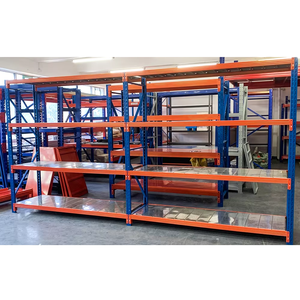
Customized Load-bearing Capacity Galvanized Warehouse Racking
Engineered with cold-rolled Q235B steel sheet metal shelving, hot-dip galvanized for extreme wear and high payload warehousing.
View Details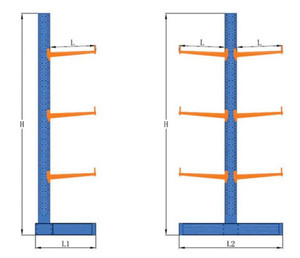
CE Certified Heavy-Duty Cantilever Racking System
Designed for oversized long loads, steel profiles, and piping. Features pin-connected adjustable arms and high seismic load ratings.
View Details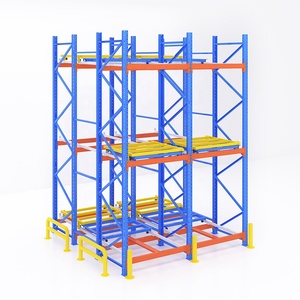
High-Density Pallet Live Push Back Racking System
Nested cart LIFO dynamic storage maximizing floor utilization up to 75%. Eliminates dedicated aisles and optimizes throughput.
View Details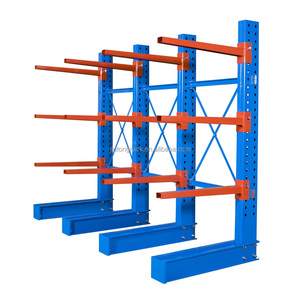
Economical Modular Cantilever Racks for Wood & Timber
Heavy-duty modular steel span storage architecture specifically configured for lumber yards, furniture plants, and building materials.
View Details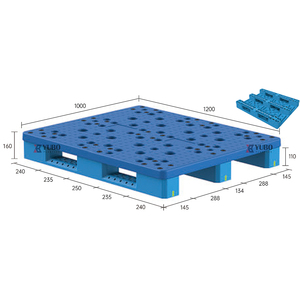
Heavy-Duty 4-Way Entry 1200x1000 Stackable Plastic Pallet
High-impact HDPE structural plastic pallets tailored for automated push back nesting systems and cold-chain rack compatibility.
View Details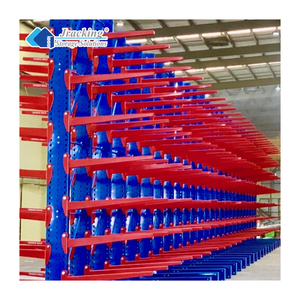
Cold-Storage Certified Pipe Cantilever Racking System
Corrosion-proof galvanization and low-temperature structural steel alloys engineered for freeze environments and industrial pipe storage.
View Details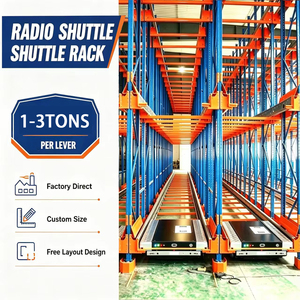
Customized Radio Shuttle High-Density Warehousing System
Semi-automated pallet retrieval solution combining heavy structural steel framing with IoT-guided shuttle buggies for ultra-dense storage.
View Details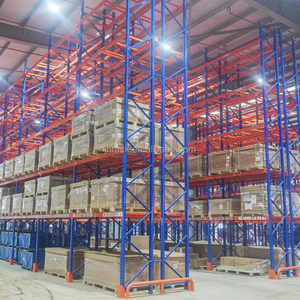
Corrosion-Protected Heavy-Duty Selective Pallet Racking
Epoxy-powder coated upright frames and beam assemblies designed to resist saline and coastal atmospheric degradation in industrial hubs.
View DetailsOEM/ODM Engineering Whitepaper: Mechanical Dynamics of Push Back Racking Systems
In modern supply chain architecture, floor space optimization directly dictates operational profitability. As an established OEM/ODM Push Back Rack Factory & Global Exporter, our engineering matrix focuses on resolving the inherent density-versus-accessibility trade-off. Push Back racking systems utilize inclined structural rails combined with nested, telescoping carts that flow under gravity. By utilizing a Last-In, First-Out (LIFO) inventory management framework, facilities can store pallets from 2 to 6 deep, drastically reducing aisle footprint requirements while maintaining individual lane selectivity.
1. Kinematic Cart Mechanics and Incline Optimization
The mechanical reliability of a push back system depends on precision engineering of the pitch incline and friction coefficient of the trolley bearings. Our structural engineers utilize a calculated slope gradient ranging between 2.0° and 2.7° (approximately 3.5% to 4.7% grade) depending on pallet weight distribution and bottom-deck configuration:
- Telescoping Nesting Carts: Heavy-gauge structural steel carts nest seamlessly on low-profile structural steel tracks. When a forklift loads the first pallet, it rests on the top nested cart. The second pallet pushes the first cart back, exposing the second cart beneath it, and so on up to 6 pallets deep.
- Flow Speed & Resistance Regulation: Gravity-driven return dynamics require strict control to prevent kinetic energy buildup. Integrated speed controllers and elastomeric safety dampeners ensure smooth deceleration as pallets index forward during unloading.
- Anti-Pop-Out & Alignment Safety Catch: Custom-engineered structural flanges prevent cart dislodgement during aggressive forklift insertion, protecting operator safety and preventing load binding.
2. Structural Steel Metallurgy & Seismic Load Verification
Structural integrity starts with material specification. Our manufacturing facilities utilize cold-rolled high-tensile steel grades (Q235B and Q355B structural steel compliant with EN 10025 and ASTM A1008). Every push back upright frame is mathematically modeled using Finite Element Analysis (FEA) to withstand static dead loads, dynamic forklift impacts, and seismic force vectors.
Building upon international building standards such as ANSI MH16.1 (Specification for the Design, Testing and Utilization of Industrial Steel Storage Racks) and EN 16681, our racking designs incorporate enlarged heavy-duty base plates, anchored with high-shear expansion bolts into reinforced concrete slabs. This structural rigidity is crucial for facilities operating in high seismic hazard zones (such as the Pacific Ring of Fire or Latin American coastal regions subject to NEC-SE-DS standards).
OEM/ODM Customization Capabilities
How our factory delivers custom-tailored push back systems for global enterprise integration.
Custom Lane Profiles
Tailored cart sizes engineered to accommodate non-standard pallets, plastic skids, full-width steel tubs, or varied bottom-deck configurations without jam risks.
Cold Storage Certification
Specialized low-temperature synthetic lubricants, stainless-steel cart bearings, and heavy galvanized coatings operational down to -30°C (-22°F).
Corrosion Protection
Factory options including pre-galvanized Z-steel channels, heavy hot-dip galvanization for coastal humidity, or high-durability electro-static epoxy powder coating.
Strategic Procurement & Future Development Trends (2025–2030)
The global industrial material handling landscape is rapidly shifting toward high-density automation and climate-resilient engineering. Supply chain leaders evaluating OEM/ODM Push Back racking systems must align procurement strategies with three key technological trends:
1. Integration with Automated Guided Vehicles (AGVs) and AMRs
While traditional push back systems rely on driver-operated counterbalanced or reach trucks, next-generation facilities are integrating Autonomous Mobile Robots (AMRs). Custom OEM push back carts are now manufactured with precision laser-alignment targets and mechanical auto-docking alignment plates, enabling robotic fork attachments to load and push back pallets with millimeter accuracy.
2. Hybrid Push Back & Radio Shuttle Infrastructures
Facilities handling thousands of SKUs with varying turnover speeds are adopting hybrid warehouse topologies. Deep-lane Radio Shuttle systems manage super-high-volume fast-movers, while OEM Push Back systems take over medium-turnover SKUs (2 to 6 pallets per SKU). This hybrid layout maintains peak storage density while preserving 100% picking face availability across picking aisles.
3. Lifecycle Costing (TCO) and Decarbonized Steel Supply Chains
Global enterprise exporters are prioritizing sustainability metrics. Our OEM manufacturing process incorporates recycled structural steel scrap processed in modern Electric Arc Furnaces (EAF), reducing embodied carbon footprint per pallet location. Combined with lifetime maintenance-free sealed cart bearings, total cost of ownership (TCO) is reduced by up to 35% compared to complex motorized automated storage systems.
Technical Purchasing FAQ for Global Supply Chain Managers
Clear, engineering-focused answers to common queries during push back rack design and procurement.
How does Push Back racking compare to Drive-In racking in terms of operational ROI?
What happens if a damaged or poor-quality wooden pallet is loaded into a push back cart?
Can OEM/ODM Push Back systems be designed for high humidity or coastal seaport warehouses?
What parameters are required from procurement teams to receive a preliminary CAD design?
What structural safety compliance certificates are supplied with overseas factory shipments?
Why Global Logistics Leaders Partner with Our OEM/ODM Manufacturing Plant
As a dedicated structural steel rack manufacturer and global exporter, we bridge the gap between heavy structural engineering and high-volume industrial production. Our manufacturing facilities are equipped with automated robotic welding arms, multi-station roll-forming lines, and continuous powder-coating tunnels capable of handling thousands of tons of structural steel monthly.
- End-to-End Engineering Control: From raw coil slitting to FEA stress analysis and international container packing, every step is managed under strict ISO 9001 quality protocols.
- Seismic-Aware Design Capabilities: Layouts engineered for site-specific ground acceleration parameters (including NEC-SE-DS, Eurocode 8, and ASCE 7 seismic standards).
- Global Export Logistics Support: Turnkey container loading, bundle protection against marine moisture, and complete installation guide documentation for overseas field engineering teams.