Heavy-Duty Industrial Pallet Racking Systems
Custom-engineered OEM/ODM warehouse storage systems manufactured with high-tensile cold-rolled steel, designed for maximum volumetric density, seismic stability, and heavy pallet capacities up to 4,500kg per level.
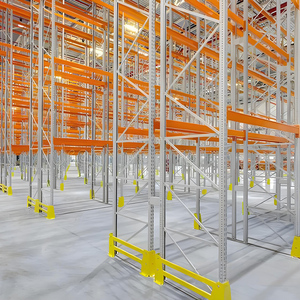
Heavy Duty Pallet Racking System Industrial Storage Shelving Racking Warehouse Shelves Warehouse Picking Shelves Rack
Feature: Multi-tier manual picking & pallet storage integration
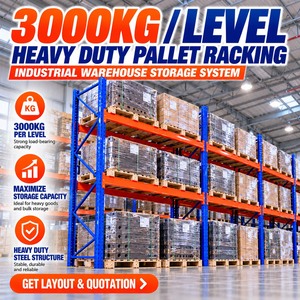
3000kg Per Level Heavy Duty Warehouse Pallet Racking System
Structure: Double-C Box Beams & Reinforced Uprights
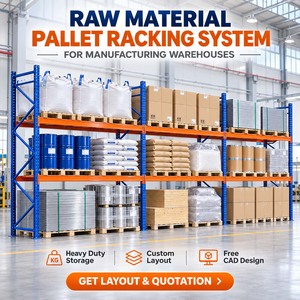
Pallet Racking System for Manufacturing Raw Material Warehouses
Safety Factor: 1.65 Structural Load Factor (ANSI MH16.1)
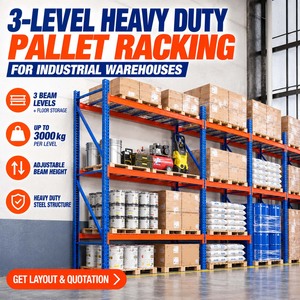
3-Level Heavy Duty Pallet Racking System for Industrial Warehouses
Pitch: 50mm / 75mm Adjustable Beam Heights
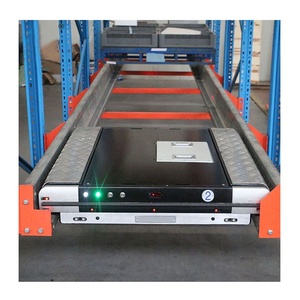
Multi-Level Automatic Warehouse Racking River-Type Pallet Two-way Radio Shuttle Rack for Storage Iron Steel Material
Density: High-Density FIFO / LIFO Deep Storage
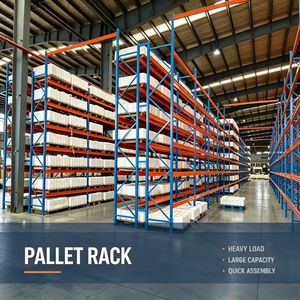
Selective Pallet Racking With Adjustable Steel Beam, OEM for Forklift Palletized Goods Warehouse Storage
Forklift Compatibility: Reach Trucks, Counterbalance, VNA
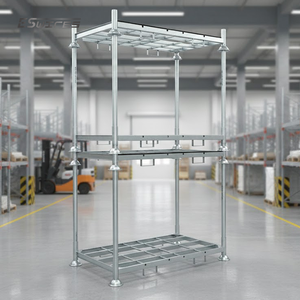
Customized Premium Material Heavy Duty Post Pallet Rack for Cold Warehouse
Finish: Hot-Dip Galvanized Anti-Corrosion Finish
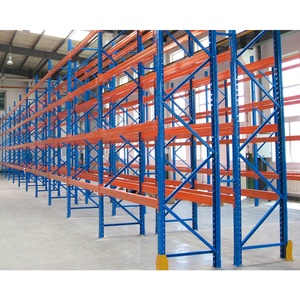
Customized Pallet Rack for Warehouse with Rack Safety
Compliance: EN 15635 Operational Safety Approved
Why Enterprise Supply Chains Partner With Us
As a primary manufacturer and global exporter, we combine advanced material science, automated cold-roll forming lines, and rigorous finite element analysis (FEA) to engineer bespoke storage systems that withstand extreme operational stress and seismic activity.
Custom OEM/ODM Engineering
From custom beam profiles and column geometry to non-standard pitch adjustments (50mm, 75mm, 76.2mm), our engineering team utilizes CAD and 3D ANSYS FEA modeling to match your exact floor loading, pallet overhang, and material handling truck parameters.
Q355B Structural Grade Steel
We source certified high-tensile cold-rolled steel coils (Q235B & Q355B grade). Cold-roll forming produces superior yield strengths (up to 355 MPa), delivering exceptional strength-to-weight ratios that cut freight overhead while increasing total bay weight limits.
Seismic-Checked Integrity
Engineered to satisfy stringent global standards including ANSI MH16.1, RMI, FEM 10.2.02, and EN 16681. Every design includes structural slab shear analysis, floor anchor pull-out verification, and site-specific seismic zone calculation coefficients (PGA up to 0.4g).
Advanced Surface Finishes
Choose from micro-porous thermosetting epoxy-polyester powder coating (60-80 µm) for ambient logistics centers or hot-dip galvanizing (HDG according to ISO 1461, 80-120 µm coating thickness) to prevent structural oxidation in coastal humidity and sub-zero cold storage.
Precision Robotic Welding
Beam connector brackets and baseplates are welded using automated Panasonic 6-axis robotic welding cells. This ensures consistent weld penetration, eliminates human thermal deformation, and guarantees 100% fatigue resistance under cyclic forklift impact loads.
Turnkey Export Logistics
Optimized container loading plans utilizing 3D packaging software to maximize 40ft HQ container utilization up to 98.5%. Components are bundled with steel strapping, corner edge protectors, and VCI anti-corrosion wrap to survive months of ocean transit.
Structural Engineering & Material Specifications
Compare critical physical properties, steel grades, surface coatings, and engineering standards for industrial warehouse storage racks.
| Racking Component | Material Grade | Yield Strength (Fy) | Manufacturing Process | Surface Treatment Options | Design Standard Compliance |
|---|---|---|---|---|---|
| Upright Columns | Q355B Cold Rolled | ≥ 355 N/mm² | 18-Pass Cold-Roll Forming | Epoxy Powder / Pre-Galvanized | ANSI MH16.1 / EN 15512 |
| Step & Box Beams | Q235B / Q355B | 235 - 355 N/mm² | Double-C Interlocking Robot Weld | Epoxy-Polyester Coating (80μm) | FEM 10.2.02 / RMI Standard |
| Frame Bracing (Diagonal/Horiz) | Q235B High Tensile | ≥ 235 N/mm² | C-Section Cold Roll & Punch | Electro-Galvanized / Pre-Galv | EN 16681 Seismic Code |
| Heavy Duty Base Plates | SS400 / Structural Steel | ≥ 245 N/mm² | Laser Cut & CNC Stamping | Hot-Dip Galvanized (ISO 1461) | ASTM A36 Structural Specs |
| Safety Post Protectors | Q235B Ultra-Heavy | ≥ 235 N/mm² | 5mm-8mm Reinforced Steel Form | High-Visibility Safety Yellow Coating | EN 15635 Protection Standards |
Future Warehouse Racking Procurement Trends (2025–2030)
How industrial automation, nearshoring, carbon offsets, and structural sensor integration are reshaping global warehouse infrastructure investments.
1. Transition to High-Density Automated Shuttle Systems
Traditional static selective pallet racking is increasingly yielding to Two-Way and Four-Way Pallet Radio Shuttle Racks and automated storage and retrieval systems (AS/RS). Supply chains facing soaring urban industrial land costs require dynamic high-density storage that yields 70% to 80% higher space utilization while reducing forklift traffic and labor overhead.
2. Strict Seismic Rigor & Site-Specific Micro-Zoning
Procurement departments are moving away from off-the-shelf standard racking toward custom site-engineered structures evaluated against localized seismic hazards. Compliance with ANSI MH16.1, EN 16681, and regional codes like Ecuador's NEC-SE-DS is mandatory to guarantee structural elasticity, avoid rack collapse, and maintain insurance validity during seismic events.
3. IoT Structural Strain Gauge & Health Monitoring
Next-generation OEM racking incorporates IoT structural health monitoring. Micro strain-gauges and tilt sensors positioned on upright bases provide real-time telemetry regarding beam deflection, accidental forklift impacts, and overload thresholds, enabling predictive rack maintenance and proactive safety interventions.
4. Sustainable Greener Steel & Low-VOC Finishing
Global multi-national enterprises evaluate ESG footprints during procurement. Leading manufacturers utilize steel produced via Electric Arc Furnaces (EAF) with recycled scrap content, alongside zero-VOC thermosetting powder coatings and closed-loop water treatment systems during pre-treatment chemical washing.
Industrial Warehouse Storage Evolution
Key drivers shifting global warehousing demands toward high-bay, modular, and cold-chain specialized structural designs.
Cold Chain Expansion
Rapid growth in fresh food exports, pharmaceuticals, and frozen seafood requires heavy-duty post racking and drive-in systems optimized for sub-zero (-30°C) environments. Hot-dip galvanization is now the gold standard finish to avoid paint flaking and steel embrittlement.
Vertical Clear Height Optimization
Modern distribution centers are expanding upward rather than outward, featuring clear heights from 12 meters to over 30 meters in Rack-Supported Buildings (Silo Warehouses). This requires heavy-duty upright profiles with depths up to 140mm and steel thicknesses exceeding 3.0mm.
Modular Reconfigurability
Rapidly changing SKU counts and seasonal inventory shifts demand teardrop or hook-in beam connectors that can be adjusted vertically on 50mm or 75mm increments without specialized tools, enabling quick warehouse reconfiguration.
Frequently Asked Questions for Sourcing Directors
Expert insights on engineering requirements, custom manufacturing, structural compliance, and global logistics for enterprise racking systems.
How do OEM/ODM custom load capacity specifications differ from standard off-the-shelf racking?
What structural engineering standards govern global pallet rack exports and safety certifications?
- North America: ANSI MH16.1 (Rack Manufacturers Institute - RMI) for structural steel design and seismic safety.
- Europe & International: EN 15512 (Adjustable pallet racking structural design), EN 15635 (Application and maintenance of storage equipment), and EN 16681 (Seismic rack design).
- South America: Regionally adapted codes such as NEC-SE-DS (Ecuador Construction Standard for Seismic Hazards) verified alongside ANSI standards.
Which steel surface finish is best suited for coastal, high-humidity, or cold-storage environments?
What essential parameters are required to generate a custom CAD layout and formal quotation?
- Architectural floor plan drawing illustrating warehouse dimensions, column grid spacing, building door positions, and clear height under sprinkler heads or roof trusses.
- Pallet dimensions: Width x Depth x Height (including goods) and maximum weight per pallet (e.g., 1200mm x 1000mm x 1500mm @ 1200kg).
- Material handling equipment specs: Forklift type (Counterbalance, Reach Truck, VNA Turret Truck), maximum lift height, and minimum aisle turning radius.
- Operating environment: Ambient temperature, outdoor/indoor installation, cold storage requirements, and warehouse geographic location for seismic zoning.