Engineered Storage & Racking Systems
Explore our heavy-duty industrial racking and shelving units engineered for optimal load-bearing capacity, seismic resilience, and maximum vertical volumetric efficiency.
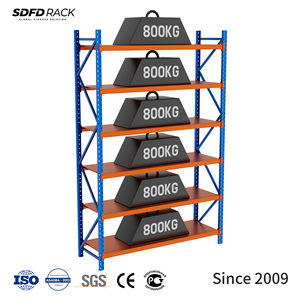
Hot Selling 800kg Adjustable Metal Racking Custom 4 5 6 Layer Selective Pallet Racking System Heavy Duty Warehouse Pallet Racks
View Technical Specs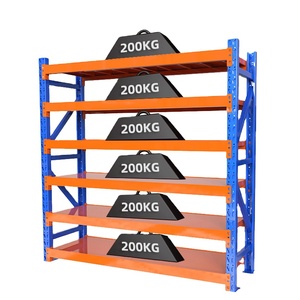
200kg/Layer Adjustable Sheving Industrial Metal Steel Logistics Boltless Storage Stacking & Shelves Unit System Warehouse Racks
View Technical Specs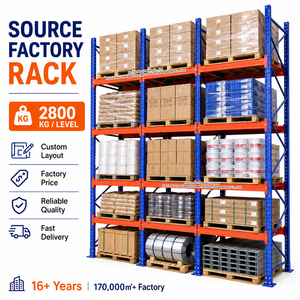
2800KG 5 Levels High Bay Industrial Pallet Racking Heavy Duty Warehouse Rack System
View Technical Specs
Industrial Warehouse Storage Rack Adjustable Custom 800-3000kg/Level Load Capacity Heavy Duty Selective Pallet Racking System
View Technical Specs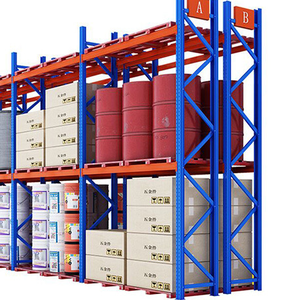
Metal Pallet Racking Warehouse Storage Pallet Racking System Heavy Duty Shelves Rack Unit for Goods Storage
View Technical Specs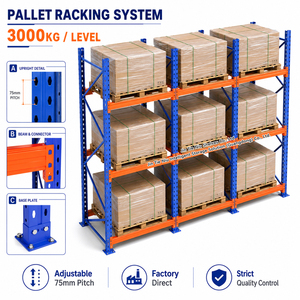
3 Pallet Levels Heavy Duty Steel Warehouse Rack Selective Pallet Racking System 3000KG
View Technical Specs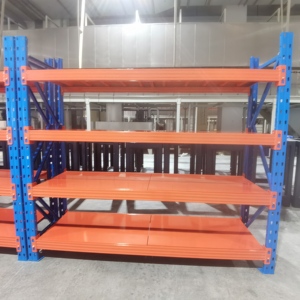
Heavy-Duty 2 Ton Capacity Adjustable Corrosion Protection 5-Layer Storage Rack for E-commerce Premium Cold Rolled Steel Shelf
View Technical Specs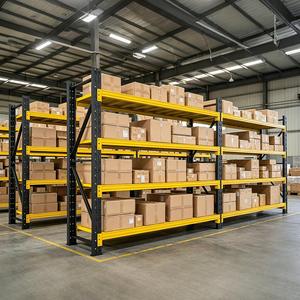
Factory Direct Racking Adjustable Metal Boltless Shelf and Racks Long Span 4-Layer Warehouse Storage Medium Duty Steel Rack
View Technical SpecsIndustrial Shelving & Pallet Racking: Material Science and FEA Structural Optimization
Modern material handling and enterprise warehousing demand far more than basic steel assembly; they require precision-engineered structural systems capable of enduring dynamic loads, mechanical stress from high-throughput material movement, and geological challenges such as high-seismic accelerations. As a global OEM/ODM manufacturer, our industrial shelving units and high-bay selective pallet racking systems are constructed utilizing premium cold-rolled structural steel grades, primarily Q235B and Q355B (equivalent to ASTM A36 and ASTM A572 Grade 50 respectively).
The structural calculation of upright frames, load beams, and rack accessories undergoes rigorous Finite Element Analysis (FEA) modeling. Through FEA software simulation, our engineering team evaluates stress distribution under static load, impact dynamics from material handling equipment (MHE), and torsional forces caused by asymmetric loading. By determining precise buckling limits and deflection boundaries ($L/200$ standard for beam loading), we ensure maximum structural resilience while optimizing steel mass, saving logistics costs for overseas procurement partners.
All racking systems exported to seismic-prone geographies (such as the Pacific Ring of Fire, Latin American trade corridors, and Mediterranean seismic regions) are designed in full alignment with ANSI MH16.1, EN 16681, and local construction codes such as NEC-SE-DS. Upright baseplates are custom-calculated with expanded surface areas, anchor embedment depth ratios, and heavy-duty floor anchoring designed to absorb peak ground acceleration without dynamic sway collapse.
Structural Metallurgy and Anti-Corrosion Surface Engineering
To resist harsh atmospheric conditions in coastal logistics hubs, agricultural packaging sheds, or cold storage facilities, surface treatment technology plays a decisive role in long-term ROI. We employ a multi-stage automated pre-treatment and electrostatic powder-coating process:
Degreasing & Phosphating
Continuous 7-stage chemical washing removes mill oils and establishes a iron-phosphate conversion layer for micro-mechanical paint adhesion.
Epoxy-Polyester Coating
Thermosetting polymer resins applied at 60-90 microns thick provide extreme impact resistance, UV stability, and scratch tolerance.
Hot-Dip Galvanizing (HDG)
For high-humidity, salt-laden coastal regions or sub-zero freezer applications, components are batch-galvanized according to ASTM A123 / ISO 1461 standards.
Technical Specification Matrix: Standard Heavy-Duty Pallet Racking
| System Parameter | Selective Racking (Standard) | High-Bay Heavy Duty | Boltless Medium-Duty Shelving |
|---|---|---|---|
| Steel Grade | Q235B Cold-Rolled Steel | Q355B High-Tensile Structural Steel | SPCC Cold-Rolled Sheet Steel |
| Load Capacity / Level | 800 kg - 2,000 kg | 2,000 kg - 4,500 kg | 150 kg - 500 kg |
| Upright Pitch Adjustment | 50mm / 75mm Pitch | 75mm / 76.2mm (3-inch) Pitch | 38mm / 50mm Boltless Slot |
| Safety Factor ($\gamma_m$) | 1.50 : 1 | 1.65 : 1 (Seismic Rated) | 1.40 : 1 |
| Surface Finish Standard | AkzoNobel Powder Coat (60μm) | Powder Coat or Hot-Dip Galvanized | Electrostatic Epoxy Coating |
| Compliance Certification | ISO 9001, CE, FEM 10.2.02 | ANSI MH16.1, EN 15512, RMI | CE, ISO 14001, RoHS |
Tailored Manufacturing Framework: From Concept CAD to Scaled Global Export
As a specialized OEM (Original Equipment Manufacturer) and ODM (Original Design Manufacturer), we partner directly with global distributors, logistics system integrators, general contractors, and corporate end-users. We bridge the gap between architectural intent and physical structural delivery through a fully integrated engineering lifecycle.
1. Architectural CAD & BIM Modeling
Our engineering office produces full 3D CAD models, structural calculations, and Building Information Modeling (BIM) revit files to seamlessly integrate with wider warehouse construction plans.
2. Custom Profile Roll-Forming
With 18 automated cold-roll forming lines, we roll specialized column profiles featuring up to 13-fold bending structures to maximize stiffness and structural moments of inertia.
3. Robotic Laser Welding
Beam connectors and baseplate assemblies are welded utilizing multi-axis robotic laser welding arms, ensuring zero welding defects, uniform bead geometry, and structural fatigue resistance.
Customization Variables Available for OEM Partners
Whether you require standard dimensions or highly customized store fixtures, our production infrastructure accommodates complex technical specs:
- Beam Types: Box beams, Step beams, Tubular beams, and Heavy-duty interlocking P-beams for timber decks or wire mesh decking integration.
- Pitch Geometry: Standard 50mm, 75mm, 76.2mm (3-inch), and metric 38mm custom perforation configurations for universal compatibility with existing rack installations.
- Color Matching: Precision color-matching via RAL and Pantone matching systems, providing seamless branded visual identity across commercial retail bays or contract logistics fleets.
- Private Labeling & Packaging: Custom laser-etched logo branding on upright protection guards, branded load rating plates, barcoded piece-part labels, and sea-freight reinforced bundle packing.
Future of Industrial Storage: Automation Integration & Smart Warehousing (2025–2030)
The global material handling equipment (MHE) and industrial racking sector is undergoing a rapid paradigm shift toward automation, spatial optimization, and digital supply chain integration. Enterprise buyers and global logistics leaders must adapt their capital procurement strategies to accommodate several key technological shifts over the coming decade:
1. AS/RS and AGV/AMR Interface Compatibility
Traditional static pallet racking systems are rapidly evolving into hybrid structural grids designed to operate in tandem with Automated Storage and Retrieval Systems (AS/RS), Automated Guided Vehicles (AGVs), and Autonomous Mobile Robots (AMRs). Modern OEM rack manufacturing requires micro-level installation tolerances—often within $\pm 1.5\text{mm}$ across a 100-meter aisle—to allow optical sensors on robotic pickers to navigate without positioning faults.
2. Cold-Chain Logistics Expansion & Corrosion Management
With global cold-chain trade accelerating across seafood, agricultural produce, and pharmaceutical biopharmaceuticals, warehouse racking installed inside sub-zero environments (down to $-30^\circ\text{C}$) faces intense thermal cycling and condensation-induced corrosion. High-spec pre-galvanized profiles and hot-dip galvanizing per ASTM A123 are replacing standard powder coating in coastal ports, cold storage fulfillment complexes, and high-humidity maritime trade hubs.
3. Verticality and High-Bay Density Optimization
Rising industrial land acquisition costs have driven warehouse architectural blueprints upward rather than outward. High-bay selective racking reaching heights of 15 to 35 meters requires ultra-flat slab floor preparation, high-stiffness structural steel framing, and strict deflection tolerances under full load capacity to safeguard operational uptime and forklift driver safety.
Why Global Logistics Operators & OEM Buyers Trust Our Platform
Building a resilient warehouse infrastructure requires an accountable manufacturing partner who oversees the entire lifecycle from preliminary spatial layout through international ocean freight logistics and final commissioning.
Engineering First Approach
Every layout quote ships with fully verified structural drawings, capacity ratings, anchor embedment specs, and official load signage ready for local authority building inspections.
End-to-End Export Logistics
We manage steel raw material hedging, high-cube container load optimization (saving up to 15% in freight volume), and custom ocean-going wooden pallet bundling.
Geographic & Coastal Expertise
From high-salinity port locations like Guayaquil, Manta, and Panama, to high-altitude inland industrial capitals like Quito, Cuenca, and Bogota, our systems are engineered for diverse climate and altitude demands.
Industrial Shelving & Racking Procurement FAQ
Direct technical answers to the most crucial questions asked by procurement managers, structural engineers, and logistics directors prior to placing OEM orders.
Do you design pallet racking specifically for high seismic acceleration zones?
Yes. Every racking system engineered in our facility undergoes seismic calculation according to local and international codes including ANSI MH16.1, EN 16681, and local construction norms (such as NEC-SE-DS). We adjust baseplate dimensions, anchor bolt diameters, column section modulus, and top-tier bracing based on the specific seismic zone parameters of your site.
Which protective steel finish is recommended for humid or coastal logistics centers?
For coastal facilities exposed to salt-laden humid air (such as port distribution centers), we strongly recommend Hot-Dip Galvanizing (HDG) per ASTM A123, which provides a metallurgically bonded zinc barrier. For enclosed climate-controlled distribution centers, our 7-stage phosphating pre-treatment followed by AkzoNobel epoxy-polyester powder coating (60-90 microns) delivers exceptional corrosion and impact resistance.
What essential data is required to generate a complete OEM rack engineering design?
To produce accurate structural drawings and load calculations, we require: (1) Warehouse floor plan layout with clear height under roof joists or sprinklers; (2) Pallet dimensions including overall height and total load weight per pallet; (3) Forklift/MHE operational specifications (minimum aisle turning radius and maximum lift height); (4) Desired SKU counts and rotation methodology (FIFO vs. LIFO); (5) Project site location for seismic load assessment.
What standard quality assurance protocols are conducted prior to container loading?
Our quality control department conducts full lot traceability testing: (1) Spectrographic raw material chemical composition checks; (2) Yield stress ($f_y$) and tensile strength testing on raw steel coils; (3) Micro-caliper powder coat thickness measurement; (4) Cross-hatch paint adhesion testing (ISO 2409 / ASTM D3359); (5) Full assembly fitment tests on beam connectors and safety locks before final sea-freight packaging.
Can your manufacturing lines produce custom pitch hole spacing for legacy systems?
Yes. Our automated CNC punching heads can be programmed to match custom hole patterns, including 50mm, 75mm, 76.2mm (3-inch), and legacy 2-inch pitch centers. This enables seamless replacement components, vertical frame extensions, or beam additions for pre-existing storage systems in your facility.
What is the typical production lead time for full container load (FCL) OEM orders?
Standard lead time for 1 to 5 40ft High Cube (40HC) containers is typically 20 to 25 calendar days from final engineering CAD sign-off. For high-volume projects requiring custom tooling or specialized hot-dip galvanizing, lead times range between 30 and 35 days.
Transform Your Storage Efficiency & Structural Safety
Partner directly with a certified OEM/ODM industrial shelving units manufacturer. Submit your warehouse floor plan or structural requirements to our engineering team today for a comprehensive feasibility review and competitive factory-direct quote.
Inquire Now