Heavy-Duty Industrial Racking & Storage Solutions
Engineered for extreme structural capacity, compliance with ANSI MH16.1 & FEM 10.2.02 standards, and high-density warehouse optimization.
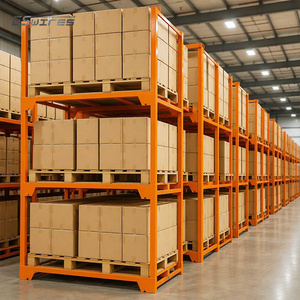
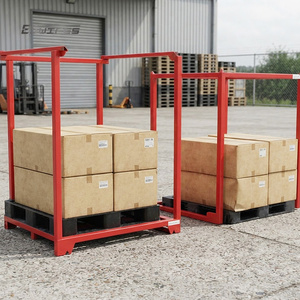
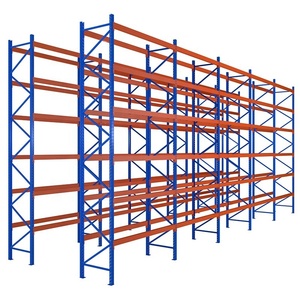
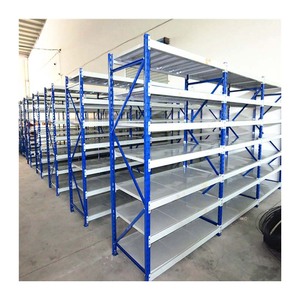
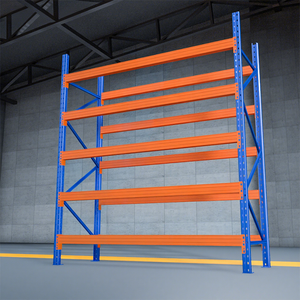
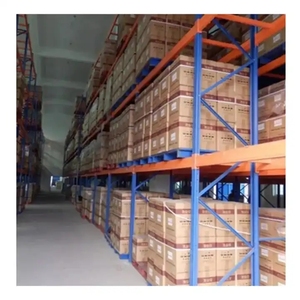
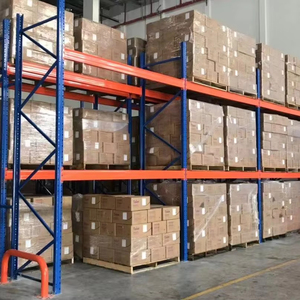
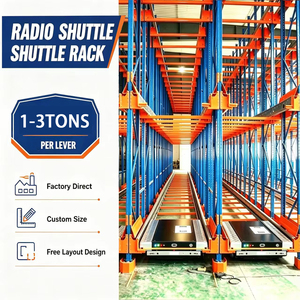
Executive Engineering Overview: OEM Custom Industrial Storage Solutions
Unlocking Maximum Floor Space Utilization, Structural Integrity, and Load-Bearing Efficiency Across Global Supply Chains.
In modern industrial warehousing, material handling efficiency is directly proportional to structural rack engineering. As a premier custom OEM industrial warehouse racking exporter and wholesaler, our manufacturing methodology integrates high-yield structural metallurgy, advanced cold-roll forming, continuous inline perforations, and automated robotic welding. Standard off-the-shelf shelving systems consistently fail to optimize volumetric warehouse density or address location-specific seismic dynamic loading. Our custom OEM engineering framework bridges this gap by offering tailored steel storage configurations designed to strictly adhere to international design standards, including the American ANSI MH16.1 (Specification for the Design, Testing and Utilization of Industrial Steel Storage Racks), European EN 15512 / FEM 10.2.02, and Australian AS 4084-2012 specifications.
Information Gain Analysis: Metallurgical & Structural Superiority
The core structural integrity of industrial selective pallet racking, radio shuttle systems, and heavy-duty cantilever racks depends on steel material composition and structural section modulus. We deploy prime-grade Q355B (equivalent to S355JR / ASTM A572 Grade 50) structural steel with a yield strength ($\sigma_y$) exceeding $355\text{ MPa}$ for high-bay upright frames, combined with cold-formed Q235B steel for light-to-medium beam structures. Compared to low-grade commercial mild steels, our Q355B structural sections deliver a 28% increase in ultimate tensile strength, enabling thinner wall profiles without compromising load-carrying capacity, reducing total deadweight transport costs for global wholesale buyers.
Finite Element Analysis (FEA)
Every OEM racking design undergoes 3D ANSYS FEA simulation to evaluate torsional-flexural buckling modes, plastic deformation under extreme live loads, and nodal strain distribution under 1.95x safety factor thresholds.
Seismic Dynamic Modeling
Custom engineered baseplate anchor configurations and heavy upright bracing profiles calculated according to US FEMA 460 and European EN 16681 seismic zone standards to withstand ground motion spectral accelerations.
Corrosion Protective Finishes
Architectural-grade electrostatic epoxy-polyester powder coating (80–110 microns) passing 1,000-hour ISO 9227 salt spray testing, or hot-dip galvanizing (ISO 1461) for extreme cold-storage & high-humidity environments.
Industrial Storage Structural Specification Benchmark
Technical comparison across core heavy-duty racking configurations manufactured for B2B wholesale distribution.
| Racking System Type | Primary Steel Grade | Upright Profile (mm) | Max Bay Load Capacity | Safety Factor Ratio | Primary Industrial Application |
|---|---|---|---|---|---|
| Heavy-Duty Selective Pallet Rack | Q355B / Q235B Cold-Formed | 80×60, 90×70, 100×70, 120×95 | Up to 25,000 kg / Bay | 1.95 : 1 (ANSI MH16.1) | 3PL Warehousing, FMCG, Distribution Hubs |
| Semi-Automated Radio Shuttle System | Q355B High-Tensile Steel | 90×70, 100×70, 120×95 | Up to 1,500 kg / Pallet Position | 2.00 : 1 (EN 15512) | Cold Storage (-30°C), Food & Beverage, High Density |
| Drive-In / Drive-Through Racking | Q235B Structural Grade | 90×70, 100×70, 120×95 | Up to 12,000 kg / Bay | 1.95 : 1 (FEM 10.2.02) | Homogeneous SKU Batch Storage, Seasonal Goods |
| Heavy-Duty Cantilever Arm Racking | Hot-Rolled H-Beam / Q355B | C200×80, C250×90, H-Section | Up to 6,000 kg / Column Arm | 2.00 : 1 (AS 4084) | Steel Pipe, Timber, Aluminum Profiles, Long Loads |
| Nestable Portable Stacking Frame (Nestainer) | Q235B Welded Structural Tube | 50×50×2.5, 60×60×3.0 Tube | Up to 1,500 kg / Unit (4 High) | 2.10 : 1 (Internal Destructive) | Flexible Seasonal Warehousing, Bulk Packaging |
Future Global Procurement Trends in Industrial Racking Systems
Strategic intralogistics insights for enterprise supply chain leaders, warehouse architects, and B2B rack distributors.
1. Transition from Passive Racking to Automated Intralogistics (AS/RS & AGV/AMR Interfaces)
Industrial warehousing is undergoing a rapid paradigm shift toward full automation. Modern racking infrastructure is no longer merely static steel work; it operates as an active structural frame for Automated Storage and Retrieval Systems (AS/RS), Autonomous Mobile Robots (AMR), and Pallet Shuttles. Modern procurement requirements mandate extremely tight manufacturing tolerances (plumbness tolerances within $\pm 1\text{ mm}$ per $3\text{ meters}$ of height) to ensure precise laser navigation for robotic cranes and shuttle guidance. OEM manufacturers must integrate high-precision roll-forming and CNC laser beam processing to eliminate structural drift in high-bay clad buildings exceeding 30 meters in vertical height.
2. Structural Health Monitoring (SHM) & IoT Sensor Integration
Next-generation enterprise warehouses are adopting IoT-enabled racking components. Embedded strain gauges, piezoelectric impact sensors, and tilt transducers attached to critical upright columns provide real-time telemetry regarding forklift collisions, dynamic overloading, and floor subsidence. Procurement trends show a 40% year-over-year increase in demand for smart-enabled rack designs that send automated structural alerts directly to Warehouse Management Systems (WMS), mitigating catastrophic rack collapse hazards before micro-fractures propagate through upright columns.
3. Low-Carbon Green Steel Manufacturing & Decarbonization
Global enterprise buyers are prioritizing environmental sustainability metrics under Scope 3 emission targets. Racking procurement strategies now weigh the carbon footprint of steel production. Leading OEM exporters are transitioning toward Electric Arc Furnace (EAF) steel sourcing, utilizing recycled scrap metal powered by renewable energy grids. Furthermore, solvent-free heavy metal-free powder coatings with zero Volatile Organic Compounds (VOCs) are becoming mandatory in European, North American, and Australasian distribution network bids.
4. Cold-Chain Resiliency & Sub-Zero Metallurgical Stability
With the expansion of global biopharmaceuticals, frozen foods, and temperature-sensitive fresh produce supply chains, sub-zero cold storage warehouses (-25°C to -30°C) represent a critical growth sector. At freezing temperatures, standard low-carbon steel experiences ductile-to-brittle transition, increasing susceptibility to sudden shear failure under impact. Modern procurement specifications dictate fine-grained, micro-alloyed steel formulations enriched with Manganese and Titanium to maintainCharpy V-notch impact energy absorption down to -40°C, ensuring structural ductile failure modes under stress.
Technological Innovations in Storage System Design
How advanced cold-formed engineering and surface chemistry extend product lifecycles and increase safety factors.
The engineering evolution of industrial racking revolves around maximizing the load-to-weight ratio. Traditional hot-rolled structural sections, while robust, present unnecessary structural mass, increasing freight logistics costs for global B2B importers. Cold-formed thin-walled steel technology has revolutionized structural efficiency through complex multi-flange profile geometry.
A. Advanced Multi-Rib Upright Column Profiles
Modern cold-forming roll lines convert flat steel coils into intricate upright profiles featuring up to 12 distinct bending orientation folds. These internal stiffening ribs significantly elevate the critical elastic buckling load ($P_{cr}$) of open-section columns. By strategically shifting cross-sectional area away from the neutral axis, the radius of gyration ($r$) is maximized without increasing material thickness. This mechanical advantage allows our custom OEM uprights to resist column buckling under combined axial compression and flexural bending moments caused by pallet eccentric loading.
B. Precision Beam-to-Column Hook Connectors
The beam-column connection represents the primary dynamic joint in a pallet rack structure. Our proprietary connector brackets utilize heavy-gauge, multi-tooth stamped alloy hooks engineered to wedge tightly into teardrop or omega upright perforations under gravity load. This self-locking taper effect creates a high rotational stiffness joint ($K_i$), transferring moment forces from horizontal box beams into vertical uprights. Integrated spring-loaded safety locks prevent accidental beam displacement caused by upward forklift driver errors, meeting strict OSHA and EN 15512 safety directives.
C. High-Durability Thermosetting Coatings
Surface treatment technology plays a decisive role in long-term operational asset life. For standard dry ambient distribution centers, our dual-stage pre-treatment wash incorporates zinc-phosphate conversion coating prior to electrostatic powder deposition. For high-corrosion agricultural, chemical, or humid coastal installations, hot-dip galvanizing immerses fabricated components into $450^\circ\text{C}$ molten zinc, creating a metallurgical iron-zinc alloy layer that provides galvanic sacrificial protection against surface oxidation even when scratched.
Comprehensive B2B Procurement FAQ
Expert technical answers to technical, engineering, shipping, and wholesale customization inquiries.
Global Wholesale Manufacturing & OEM Advantage
Why Fortune 500 logistics operators, 3PL integrators, and industrial equipment wholesalers partner with our factory.
Complete End-to-End Export Management
From initial engineering site survey interpretation and structural calculation reports to high-precision roll-forming, automated powder coating, container load planning, and customs documentation—we handle every stage in-house.
Advanced Automated Fabrication Lines
Our manufacturing floor features multi-station automated continuous cold roll-forming lines, inline punch presses, robotic 3D welding cells, and automated continuous powder coating loops capable of processing over 200 metric tons of finished steel per day.
Rigorous Structural Quality Audits
We perform strict raw material chemical composition spectroscopy, ultrasonic weld testing, coating thickness micrometer checks, and full dimensional tolerance verification before granting factory gate release pass certificates.
Ready to Upgrade Your Warehouse Infrastructure or Expand Your B2B Wholesale Distribution?
Connect directly with our senior structural racking engineering team. Receive complimentary CAD floorplan optimization layouts, FEA structural stress reports, and direct factory-direct wholesale pricing tailored to your exact operational requirements.