Engineered Warehouse Pallet Racking & Industrial Shelving Solutions
Discover our OEM custom-manufactured high-capacity rack architectures. Precision-milled using certified high-tensile structural steel, fully compliant with international ANSI MH16.1, FEM 10.2.02, and EN 16681 structural safety codes.
Why Top Global Logistics Providers Partner With Our Manufacturing Facilities
As a dedicated OEM industrial pallet racking systems factory and global supplier, we merge advanced metallurgical engineering, rigorous finite element analysis (FEA), and site-specific environmental adaptations to safeguard high-density industrial storage systems worldwide.
Seismic Structural Verification
Every custom storage layout undergoes comprehensive dynamic seismic evaluation. Engineered specifically to withstand severe peak ground acceleration (PGA), our racking systems comply with international standards such as ANSI MH16.1, EN 16681, and NEC-SE-DS. We integrate heavy-duty seismic baseplates, reinforced upright gussets, and high-tensile concrete anchor arrays tailored to your local site geotechnics.
Coastal Anti-Corrosion Finishing
For operations located in coastal, highly humid, or chemical environments—such as marine port terminals in Guayaquil, Manta, or tropical distribution centers—we supply advanced surface treatments. Options include Hot-Dip Galvanizing (HDG) to ISO 1461 and thermosetting epoxy-polyester electrostatic powder coatings engineered to exceed 1,000 hours of salt spray testing (ASTM B117).
End-to-End Turnkey Execution
From initial site surveys, slab load assessment, and CAD/BIM operational modeling to component stamping, ocean transport, and professional field erection, we serve as your single point of accountability. Our qualified site engineering crews manage installation, post-load certification, safety inspection, and long-term rack lifecycle maintenance globally.
Structural OEM Racking System Technical Comparison
Compare our primary industrial racking system topologies to determine optimal volumetric density, SKU selectivity, and material handling equipment compatibility for your facility.
| Racking System Type | Volumetric Density | Pallet Selectivity | Structural Steel Grade | Typical Forklift & MHE Requirement | Primary Industrial Application |
|---|---|---|---|---|---|
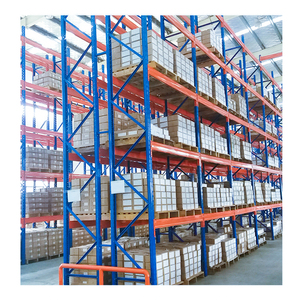
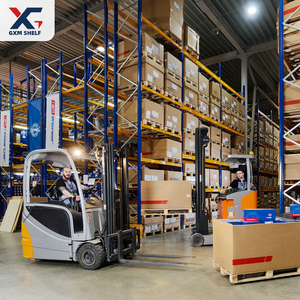
| Selective Pallet Racking | Medium (40% - 50%) | 100% Immediate | Q235B / Q355B Cold-Rolled | Standard Counterbalance / Reach Truck | High-SKU Retail, FMCG Distribution, General Logistics |
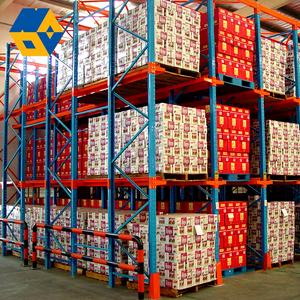
| Drive-In / Drive-Thru System | Ultra-High (75% - 85%) | Low (LIFO / FIFO) | Q355B High-Tensile Structural | Sit-down Counterbalance (Narrow Chassis) | Cold Storage (-30°C), Food & Beverage Bulk Stock |
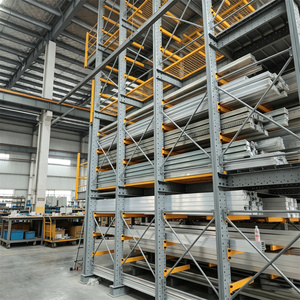
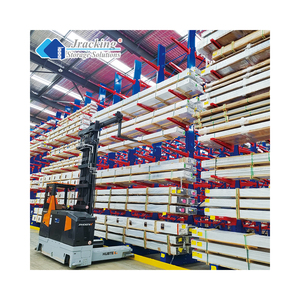
| Heavy-Duty Cantilever Rack | High (Unobstructed) | 100% Linear | Q235B / Hot-Rolled H-Beam | Side-Loader / Multi-directional Forklift | Steel Pipe, Aluminum Extrusions, Rebar, Lumber |
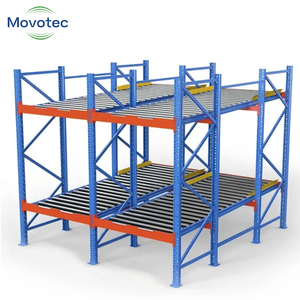
| Gravity Roller Flow Rack | Very High (70% - 80%) | High (Strict FIFO) | Q235B + Precision Steel Rollers | Standard Reach Truck / Stacker | Perishable Goods, Pharmaceuticals, Date-Sensitive Stock |
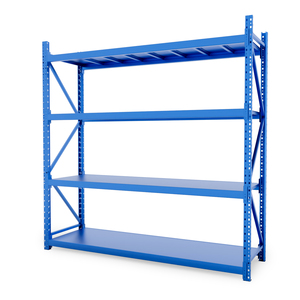
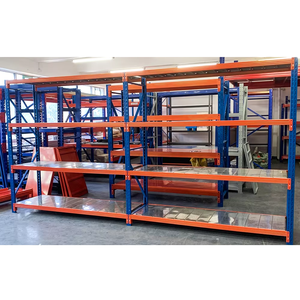
| Medium-Duty Boltless Shelving | Medium (Manual Pick) | 100% Manual Access | Cold-Rolled Sheet Metal | Manual Hand Picking / AGV Carts | E-commerce Spare Parts, Maintenance Hardware, Workshops |
From Blueprint to Load-Tested Structural Steel Infrastructure
Our OEM custom rack manufacturing workflow guarantees structural compliance, extreme load integrity, and precise spatial alignment tailored to your facility's exact physical footprint.
Phase 1: Finite Element Analysis (FEA) & CAD Modeling
We analyze live loads, dead loads, wind forces (for outdoor cantilever racks), and dynamic seismic flex. Using advanced 3D CAD and FEA structural engineering software, our engineers simulate stress concentrations, beam deflection ratios ($L/240$), and upright column buckling tolerances under maximum design payloads before steel production begins.
Phase 2: Precision Roll-Forming & Robotic Welding
Our automated production facilities feature continuous multi-stage cold roll-forming lines that profile steel coils into rigid omega-shaped upright posts (70mm–120mm profiles). Beam connectors and safety lock pins are joined using high-precision robotic arc welding, ensuring continuous penetration welds and zero mechanical weak points.
Phase 3: Surface Pre-treatment & Anti-Corrosion Finishing
Steel members undergo a 7-stage chemical pre-treatment wash including degreasing, rust removal, zinc phosphating, and pure water rinsing. The structural components are subsequently electrostatically coated with durable, non-toxic epoxy-polyester powder and heat-cured at 200°C for superior scratch and chemical resistance.
Phase 4: Global Export Packaging & Field Assembly Support
Upright frames and box beams are wrapped in heavy-duty protective air-cushion film and steel-strapped onto custom timber or metal pallets to prevent transit damage during ocean freight. Detailed assembly schematics, component identification tags, and floor anchor torque specifications are shipped with every container.
Future Strategic Procurement Trends in Warehouse Storage Systems
As modern warehousing pivots toward high-density automation and decarbonized material handling, OEM structural rack engineering is evolving rapidly to meet next-generation supply chain requirements.
1. AS/RS & AMR Automation Readiness
Traditional static pallet storage is rapidly transitioning into dynamic, automated environments. Modern OEM racking systems must be manufactured with extreme structural mill tolerances (±0.5mm) to accommodate Automated Storage and Retrieval Systems (AS/RS), pallet shuttles, and Autonomous Mobile Robots (AMRs). Standardized guide rails, sensor positioning brackets, and rack-integrated busbar mounts are becoming mandatory features for modern industrial facilities.
2. Eco-Friendly & Low-Carbon Steel Production
Global logistics providers face aggressive Scope 3 emissions targets. Sustainable procurement now prioritizes OEM factories that source prime steel manufactured in electric arc furnaces (EAF) powered by renewable energy. Furthermore, the adoption of lead-free, low-VOC TGIC-free thermosetting powder coatings ensures full compliance with international REACH and RoHS environmental standards without compromising corrosion resistance.
3. IoT-Enabled Structural Health Monitoring
Safety compliance is migrating toward real-time structural intelligence. Future heavy-duty racking installations incorporate IoT strain-gauge sensors and wireless tilt meters attached to critical upright columns. These smart monitoring nodes detect forklift impact events, measure cumulative structural strain, and alert warehouse operations managers before dangerous frame deflection or cataclysmic rack collapse can occur.
Frequently Asked Technical Questions
In-depth technical guidance directly from our factory engineering team addressing critical structural design, material selection, and procurement logistics.
How do you verify racking structural capacity under dynamic seismic forces?
Which steel grade and finish should be chosen for high-humidity coastal or cold storage facilities?
What critical engineering input parameters are required to generate an OEM custom rack quote?
1. Building architectural plan highlighting clear height under trusses/sprinklers, column grid spacing, and floor slab thickness/reinforcement.
2. Pallet footprint details: Width $\times$ Depth $\times$ Height (including cargo overhang) and maximum design weight per loaded pallet.
3. Material handling equipment (MHE) specifications: Forklift model, minimum operating aisle width (AST), and maximum fork reach height.
4. Environmental factors: Operating temperature range, indoor/outdoor placement, and geographic location for seismic seismic zoning.
How do safety locks and beam connector design prevent accidental dislodgement?
What is the allowable beam deflection ratio for heavy-duty industrial pallet racking?
Do you offer factory-direct OEM branding, customized beam colors, and custom dimensions?
How are gravity flow racks controlled to prevent excessive pallet velocity?
What post-installation safety inspection and maintenance support do you provide?
Optimize Your Warehouse Volumetric Efficiency Today
Partner directly with an established OEM industrial pallet racking manufacturer. Contact our engineering team now for customized CAD layouts, structural FEA calculations, and direct factory pricing on high-capacity industrial storage solutions.