Industrial Heavy-Duty Pallet Racking Systems
Direct-from-factory wholesale storage engineering compliant with ISO9001, FEM 10.2.02, RMI, and ANSI MH16.1 structural safety standards.
1. Global Supply Chain Dynamics & China’s Racking Manufacturing Dominance
Modern international logistics and global supply chain ecosystems demand unprecedented efficiency, safety, and volumetric utilization within industrial distribution centers. As global freight costs fluctuate and warehouse real estate costs per square meter rise, warehouse logistics directors are shifting from conventional static storage toward engineered, high-density heavy-duty steel pallet rack systems. China has established itself as the premier manufacturing superpower for industrial storage racking systems, producing over 60% of the world's structural racking steel components. This dominance is anchored in complete supply chain integration: direct access to high-yield cold-rolled steel mills (Q235B, Q355B grades), advanced continuous roll-forming automated production lines, robotic laser welding, and eco-friendly electrostatic powder-coating surface treatment complexes.
Procuring directly from verified OEM/ODM China pallet rack manufacturers offers strategic commercial and structural advantages to international buyers, enterprise distributors, third-party logistics (3PL) providers, and fulfillment hub operators. By eliminating multi-tier regional distribution markups, global enterprise buyers achieve substantial capital expenditure (CapEx) savings without compromising on structural integrity, seismic safety compliance, or international testing certifications such as EN 15512, FEM 10.2.02, RMI (Rack Manufacturers Institute), and AS4084-2012 standards.
Key Engineering Insight: Cold-rolled structural steel (Q355B grade) utilized in premium Chinese heavy-duty racking provides a yield strength exceeding 355 MPa, delivering superior load-bearing safety margins and elastic recovery under cyclic forklift loading conditions compared to standard structural angle irons.
Technical Standards & Certification Compliance Matrix
When enterprise engineering teams evaluate China wholesale racking exporters, compliance with internationally recognized structural design codes is non-negotiable. Qualified Chinese manufacturers conduct rigorous finite element analysis (FEA) modeling to simulate rack frame behavior under static loads, dynamic impact forces, horizontal beam deflection limits ($L/200$), and site-specific seismic accelerations ($S_{DS}$ coefficients).
RMI & ANSI MH16.1 (USA)
Strict structural design criteria governing column perforations, base plate anchoring load distributions, torsional buckling resistance, and beam-to-column connector lock testing across North American logistics networks.
FEM 10.2.02 & EN 15512 (EU)
European design codes setting precise tolerances for global linear elastic analysis, structural imperfection factors, upright stiffness values, and safety factor calculations for automated storage systems.
AS4084-2012 (Australasia)
Demanding verification procedures for steel storage racking installations in Australia and New Zealand, focusing on seismic movement tolerances, beam deflection safety pins, and base plate concrete anchor shear checks.
2. Structural Systems Architecture & Engineering Breakdown
Selecting the optimal structural racking configuration depends on SKU density, turnover velocity, pallet dimensions, clear warehouse height, floor slab load capacity, and material handling equipment (reach trucks, VNA turret trucks, AGVs). The technical matrix below compares primary warehouse racking architectures produced by China OEM exporters.
| Racking Architecture | Storage Density | Pallet Selectivity | Max Load per Level | Ideal Handling Equipment | Primary Industrial Application |
|---|---|---|---|---|---|
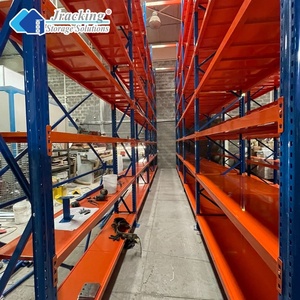
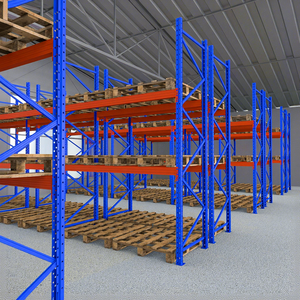
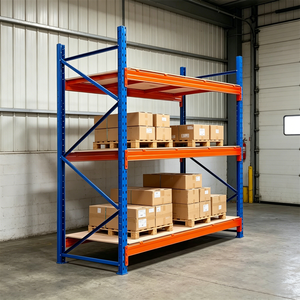
| Selective Pallet Racking | Standard (40-50%) | 100% Immediate Access | 1,000 kg – 4,500 kg | Counterbalance & Reach Trucks | General Distribution, FMCG, E-Commerce Hubs |
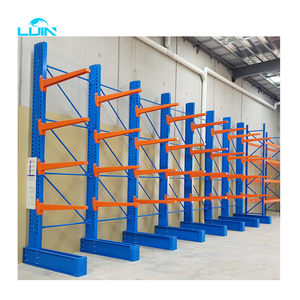
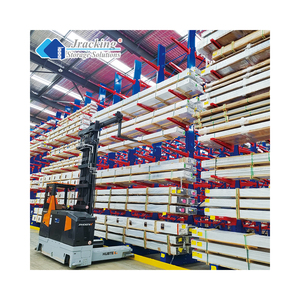
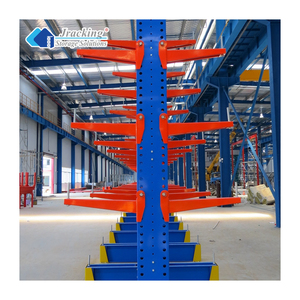
| Heavy-Duty Cantilever Racking | High (Linear) | 100% Unobstructed Access | 500 kg – 3,000 kg / Arm | Side Loaders & Overhead Cranes | Steel Pipes, Lumber, Aluminum Profiles, Tubing |
| Drive-In / Drive-Thru Racking | Very High (75-85%) | Low (LIFO / FIFO) | 1,000 kg – 1,800 kg | Standard Reach Forklifts | Cold Storage, Seasonal Stock, Bulk Uniform SKUs |
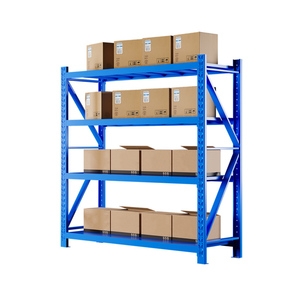
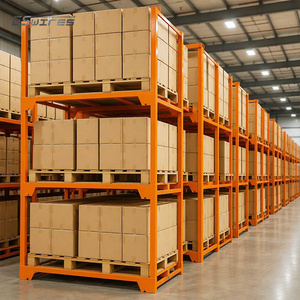
| Portable Nestainer & Stacking Racks | Flexible Dynamic | Moderate (Stackable 4-high) | 1,000 kg – 2,000 kg | Forklift & Pallet Jacks | Tyre Warehouses, Agricultural Export, Temporary Hubs |
| Radio Shuttle & AS/RS Systems | Maximum (85-95%) | Automated Batch Access | 1,500 kg / Pallet Position | Robotic Shuttles & Automated Stacker Cranes | Pharmaceutical Cold Chain, Automated Mega-Hubs |
Custom engineering is vital for long-term operational resilience. Premium Chinese exporters utilize cold-formed 16-stage continuous roll-forming lines to produce upright frames with specialized omega or teardrop punched profiles. Upright sections range from 80mm to 140mm face widths, with material thicknesses from 1.5mm up to 3.0mm, allowing racking structures to reach vertical heights of over 30 meters in automated high-bay warehouse applications.
3. Advanced Manufacturing Processes & Quality Control Standards
The operational lifespan and safe weight limits of wholesale steel pallet racking rely entirely on raw material integrity and surface treatment longevity. Leading Chinese racking plants enforce a 7-stage quality assurance protocol throughout production:
Steel Coil Testing
Every batch of primary cold-rolled steel coils undergoes chemical spectrographic analysis and tensile strength testing to ensure yield limits match engineering calculations before roll-forming.
Robotic Laser Welding
Beam connectors and structural arm joints are joined via fully automated Panasonic multi-axis robotic welding stations, guaranteeing zero weld porosity and uniform penetration.
16-Stage Surface Pretreatment
Prior to coating, steel components undergo hot degreasing, acid pickling, zinc-phosphate conversion, and deionized water rinsing to prevent subterranean rust migration.
Electrostatic Powder Coating vs Hot-Dip Galvanizing
For standard distribution centers, electrostatic epoxy-polyester powder coating (cured at 180°C – 200°C) provides a durable, impact-resistant finish in standard RAL color schemes (RAL 5015 Blue, RAL 2004 Orange, RAL 7035 Grey). However, for coastal distribution hubs, high-humidity environments, or sub-zero food cold stores (-30°C), **Hot-Dip Galvanizing (HDG)** under ISO 1461 standards is recommended. HDG applies a zinc coating thickness of 60–85 microns, offering over 30 years of sacrificial anti-corrosion protection against moisture and salt-laden air.
4. Future Sourcing Trends & Industrial Storage Innovations (2025–2035)
The global industrial warehousing sector is undergoing rapid transformation driven by automation, sustainability mandates, and real-time inventory visibility requirements. Enterprise procurement managers sourcing wholesale racking systems from China must factor the following technological trends into their long-term facility designs:
Automation-Ready Rack Structures
Integration of ultra-precise manufacturing tolerances (±0.5mm beam pitch alignment) required for Autonomous Mobile Robots (AMR), Automated Guided Vehicles (AGV), and Vertical Lift Modules (VLM).
Green Steel & Low-Carbon Racking
Transition toward recycled electric arc furnace (EAF) steel and zero-emission powder coatings to comply with European Carbon Border Adjustment Mechanism (CBAM) regulations and ESG reporting mandates.
Rack-Clad Building Technology
Eliminating separate building columns by utilizing high-bay racking frameworks as the load-bearing skeleton for building roofs and side wall cladding, saving up to 25% in overall civil construction costs.
5. Enterprise Factory Capabilities & Engineering Advantages
Partnering directly with established China storage system manufacturers delivers a complete end-to-end engineering solution. Rather than providing off-the-shelf product catalogs, our engineering team works with your logistics planning data, DWG floor plans, and site specifications to maximize operational throughput.
Turnkey Export Services: From initial 3D CAD modeling, slab-punching shear load calculations, and seismic anchoring engineering to export packing optimization, shipping container loading, and site installation supervision.
Key operational capabilities include custom color matching, specialized wire mesh deck sizing, pallet safety bars, structural column protectors (rubber or steel upright guards), and heavy-duty mezzanine rack-supported floor design. All shipments include knockdown packaging designed for maximum 40ft High Cube (HQ) shipping container cube utilization, reducing international ocean freight costs per pallet position to historical lows.
Frequently Asked Questions: Global B2B Procurement
Technical guidance for supply chain directors, warehouse managers, and structural engineers.
How do Chinese racking manufacturers handle seismic design considerations?
Every industrial warehouse project is evaluated based on its geographical location, peak ground acceleration (PGA), and site soil classification under local codes (such as NEC-SE-DS, ANSI MH16.1, or EN 16681). Engineers calculate seismic overturning moments and specify enlarged base plates, heavy-duty floor anchors (wedge or chemical anchors), custom horizontal/diagonal bracing patterns, and high-yield Q355B steel to absorb dynamic energy without structural failure during seismic events.
What is the minimum concrete slab specification required for heavy-duty pallet racking?
Standard heavy-duty pallet racking requires a reinforced concrete slab with a minimum thickness of 150mm to 200mm and a compressive strength rating of at least C25/C30 (25 to 30 MPa). The floor slab must be level to within 3mm over a 3-meter straight edge. For High-Bay or VNA (Very Narrow Aisle) systems, super-flat floor classifications (FM1/FM2 under TR34 guidelines) are mandatory to prevent forklift tilt at elevated picking heights.
When should I select hot-dip galvanized racking over powder-coated finishes?
Powder coating is ideal for indoor, ambient, climate-controlled distribution centers. Hot-Dip Galvanizing (HDG) should be specified for: 1) Outdoor storage yards, 2) Food cold storage facilities operating below -20°C where condensation cycles occur, 3) Coastal or high-humidity tropical distribution hubs (e.g., ports in Ecuador, Southeast Asia, or Middle East), and 4) Chemical storage facilities exposed to corrosive vapors.
What information is needed to receive a complete CAD rack layout and price quote?
To deliver an optimized layout and engineering quotation, please provide: 1) Warehouse floor plan (DWG or PDF) with building dimensions, clear height under trusses, column locations, dock doors, and obstruction points; 2) Pallet specifications (Width x Depth x Height, plus maximum weight per loaded pallet); 3) Type and model of existing or planned forklifts (determines minimum aisle width and maximum lift height); 4) Total SKU count and required stock rotation method (FIFO or LIFO).
How are wholesale steel racking components packaged for ocean freight?
Components are bundle-packed using protective wooden skids, heavy-duty steel strapping, edge corner protectors, and moisture-proof plastic wrap. Beams are stacked face-to-face to prevent paint abrasion, while upright frames are bundled in flat-pack knockdown (KD) configurations to maximize 40ft HQ container weight and volume limits. Small accessories (base plates, safety pins, bolts, shims) are packed in reinforced steel-banded wooden crates.
Can Chinese exporters provide structural calculations for municipal permit approvals?
Yes. Certified engineering teams provide comprehensive structural calculation books detailing load capacity charts, column buckling calculations, beam deflection curves, seismic anchorage shear analysis, and base plate pressure distributions. These documents can be submitted to local building authorities, structural consultants, or insurance underwriters for facility permits.