Featured Industrial Pallet Racking & Automated Systems
Engineered for heavy load capacity, optimal cubic utilization, and rigorous seismic safety across global logistics hubs, cold storage facilities, and high-bay distribution centers.
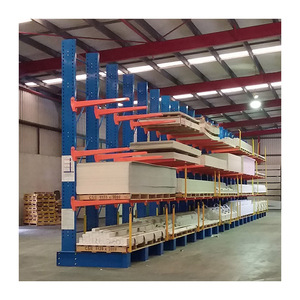
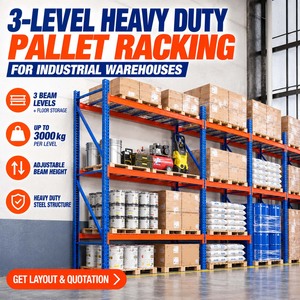
3-Level Heavy Duty Pallet Racking System for Industrial Warehouses
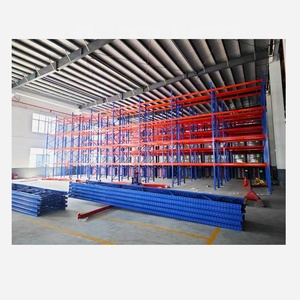
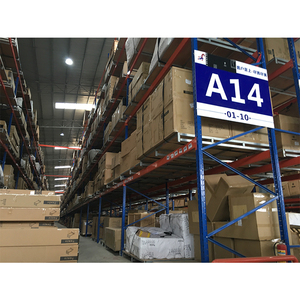
Industrial Storage Rack Heavy Duty Steel Pallet Rack System for Warehouse Organization
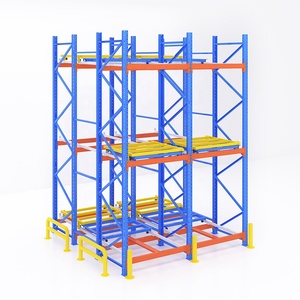
Pallet Live Rack Push Back Pallet Rack System
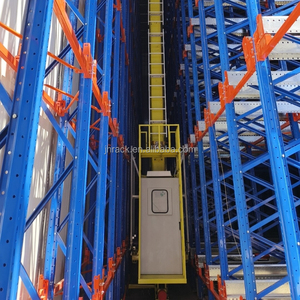
Executive Summary: Global Supply Chain Evolution & China Storage Manufacturing Leadership
In modern industrial logistics, warehouse infrastructure serves as the structural backbone of supply chain resilience. As global trade volumes expand and floor space costs skyrocket, international logistics providers, distribution center operators, and heavy manufacturing facilities are prioritizing volume optimization, load integrity, and structural reliability. China has established itself as the global epicenter for industrial pallet racking manufacturing, delivering unparalleled economies of scale, precision roll-forming technology, advanced surface metallurgy, and deep compliance with international structural codes.
This technical white paper offers an exhaustive evaluation of heavy-duty industrial steel storage systems produced by top-tier Chinese original equipment manufacturers (OEMs) and exporters. Tailored for enterprise procurement heads, structural engineers, supply chain directors, and warehouse operations managers, this guide examines structural design parameters, steel metallurgy, anti-corrosion science, seismic compliance, automated radio shuttle technology, and long-term total cost of ownership (TCO).
Structural Engineering Standards & Material Science in China Steel Manufacturing
The performance of heavy-duty industrial pallet racking depends fundamentally on raw material quality, cold roll-forming precision, and structural design validation. Leading Chinese manufacturers leverage state-of-the-art continuous automated roll-forming lines fed by prime structural steel coils sourced directly from top-tier state-owned mills like Baosteel, Shougang Group, and Ansteel.
1. Metallurgy & Steel Yield Strength (Q235B vs. Q355B)
Industrial storage systems rely primarily on cold-formed structural steel profiles. The selection of structural steel grade directly impacts load capacity, beam deflection, and total steel mass:
- Q235B Cold-Rolled Carbon Steel: Equivalent to ASTM A36 or EN10025 S235JR, offering a minimum yield strength ($R_e$) of 235 MPa and tensile strength ($R_m$) of 370–500 MPa. Ideal for standard selective pallet racking beams, light-to-medium shelf decking, and non-seismic warehouse applications with uniform distributed loads (UDL) under 2,000 kg per beam level.
- Q355B High-Yield Alloy Steel: Equivalent to ASTM A572 Grade 50 or EN10025 S355JR, featuring a minimum yield strength of 355 MPa and tensile strength of 470–630 MPa. Specified for heavy-duty upright frames, high-bay AS/RS rack-supported structures, drive-in racking uprights, and dynamic push-back systems carrying up to 4,500 kg per level or operating under severe seismic acceleration forces.
2. Upright Column Engineering & Punching Geometries
The column profile is engineered to resist axial compression, torsional buckling, and flexural bending. Advanced Chinese manufacturers produce upright profiles with 8 to 14 cold-bent rib folds along the column perimeter. These multi-fold profile geometries significantly elevate the moment of inertia ($I_x, I_y$) and radius of gyration ($r$), allowing reduced wall thickness without sacrificing buckling resistance.
Key column profile dimensions include 80mm, 90mm, 100mm, 120mm, and 140mm face widths, with steel gauge thicknesses ranging from 1.8mm to 3.0mm. Hole pitch geometries are precision-punched at 50mm, 75mm, or 76.2mm (3 inches) continuous pitch intervals using CNC multi-station punch presses to ensure accurate beam hook engagement and tight connection tolerances.
3. Beam Connector Lock & Deflection Mechanics
Heavy-duty box beams are fabricated by seam-welding two interlocking C-section channels. Connectors utilize 3 to 5 claw hooks forged from heavy-gauge structural plate that grip the upright column taper. Under international FEM and ANSI codes, structural safety requires beam deflection under full rated load to not exceed 1/200th of the clear span length ($L/200$). Every beam assembly must feature automatic safety lock pins that resist accidental vertical dislodgement caused by forklift operator errors or material handling equipment upward impact forces exceeding 5,000 N.
Comparative Technical Matrix: Pallet Racking Structural Profiles
| Racking System Type | Steel Grade Spec | Upright Profile (mm) | Load Capacity Range | Structural Safety Factor | Primary Application Environment |
|---|---|---|---|---|---|
| Selective Pallet Racks | Q235B / Q355B | 80×60 to 100×70 | 1,000 – 3,500 kg / Level | 1.5 : 1 (ANSI / FEM) | General Logistics, E-commerce, SKU Distribution |
| Radio Shuttle High-Density | Q355B Structural | 90×70 to 120×95 | 1,500 – 2,000 kg / Pallet | 1.65 : 1 (Seismic) | Cold Storage (-30°C), Food & Beverage, FMCG |
| Drive-In / Drive-Thru | Q355B High-Yield | 100×70 to 120×95 | 1,000 – 1,800 kg / Pallet | 1.6 : 1 | Bulk Batch Goods, Seasonal Harvest Storage |
| Heavy-Duty Cantilever | Q355B / H-Beam | 140×90 to 300×300 H | 500 – 3,000 kg / Arm | 1.8 : 1 | Pipes, Steel Tubing, Timber, Aluminum Profiles |
| Automated AS/RS High-Bay | Q355B Precision Cold-Formed | 120×95 to 140×120 | Up to 4,500 kg / Bay | 1.65 : 1 (EN 15512) | Smart Manufacturing, Automated Mega-Hubs |
Enterprise Advantages: Advanced Metallurgy, Anti-Corrosion & Seismic Design
To successfully compete in demanding international procurement markets—including North America, South America, Europe, Australia, and the Middle East—top Chinese manufacturers integrate key technological strengths across their production lines:
Seismic Hazard Design (NEC / IBC / EN)
Engineered using Finite Element Analysis (FEA) computer modeling to withstand spectral acceleration forces in dynamic seismic zones. Structural footplates, heavy-duty floor anchors, and cross-aisle tie bracings are calculated to absorb lateral earthquake shear forces without joint shear failure.
Coastal & Cold-Chain Metallurgy
For high-humidity tropical ports (e.g., Guayaquil, Manta, Dubai) or freezing sub-zero cold rooms (-30°C), components undergo Hot-Dip Galvanizing (HDG) per ISO 1461 (60–80 μm zinc depth) or thermosetting epoxy-polyester electrostatic powder coating (80–100 μm depth) to prevent oxidation.
Automated Robotic Production Lines
Utilization of continuous automated roll-forming machines, laser tube cutting cells, and ABB 6-axis robotic welding stations ensures 100% full-penetration weld seams on beam connectors, maintaining consistent joint rigidity and structural safety factors.
Rigorous Quality Assurance & ISO Compliance
Full traceability from mill test certificates (MTC EN 10204 3.1) down to individual production batches. Tensile strength tests, weld ultrasonic flaw detection, coating thickness measurements, and load-to-destruction testing are conducted in accredited in-house testing labs.
Container Freight Density & Export Packaging
Components are bundled with heavy-duty plastic strapping, corrugated corner protectors, and steel skid bases optimized for 40ft High Cube (40HC) ocean shipping containers, protecting surface finishes and maximizing container volume payload utilization.
Turnkey CAD / BIM Engineering Support
Dedicated structural design teams provide 2D CAD floor layouts, 3D Building Information Modeling (BIM) structural files, precise concrete slab load distribution calculations, and detailed installation assembly manuals for fast site handover.
Future Procurement Trends in Industrial Storage Racking (2025–2030)
As industrial real estate costs rise globally, warehouse procurement strategies are shifting from basic static rack expansion toward dynamic, automated, and software-integrated storage systems. Enterprise buyers sourcing from China must align their technical procurement criteria with several key emerging trends:
1. The Transition from Static Storage to Radio Shuttle & AS/RS Systems
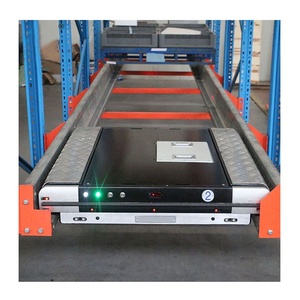
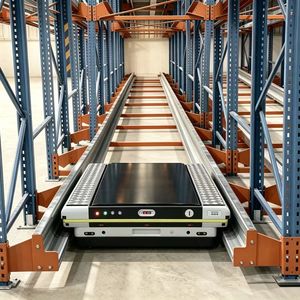
Traditional selective pallet racking provides 100% SKU accessibility but yields low storage density (floor area utilization around 35–40%). In response to land cost pressures, global procurement is rapidly shifting toward semi-automated two-way and four-way Radio Shuttle systems, as well as fully automated Storage and Retrieval Systems (AS/RS). Radio shuttle systems increase floor density up to 80% by eliminating forklift aisles inside storage blocks. Automated shuttle carts transport pallets along specialized rack rails, governed by RF remote control or integrated Warehouse Management Software (WMS).
2. Green Steel Sourcing & Carbon Footprint Compliance
Multinational logistics firms and ESG-conscious buyers increasingly evaluate the embedded carbon footprint of imported steel structures. Premier Chinese manufacturers are transitioning to electric arc furnace (EAF) steel coils, utilizing solar-powered powder coating lines, and adopting closed-loop eco-friendly chemical phosphating processes to minimize VOC emissions and industrial wastewater. Carbon border adjustments (such as the EU's CBAM) will make verified low-carbon steel production a crucial procurement differentiator.
3. Structural Health Monitoring via Embedded IoT Sensors
Next-generation high-bay racking installations are evolving into smart structural assets. By integrating wireless strain-gauge sensors, micro-tilt indicators, and impact-detecting accelerometers directly into heavy-duty upright columns, warehouse operations can monitor rack stress in real-time. This technology alerts facilities teams to structural overloading, forklift collision shocks, or seismic floor shifting before catastrophic rack collapse occurs.
Product Development Trends: Modular Engineering & High-Density Integration
R&D departments within Chinese rack manufacturing factories are driving critical design innovations to enhance modularity, reduce installation labor costs, and withstand aggressive industrial environments:
- Boltless Hybrid Assembly Systems: Advanced diagonal and horizontal frame bracing now feature self-locking snap-fit geometries and high-tensile torque bolts that cut field installation time by up to 30% while retaining full frame rigidity.
- Cold-Storage Optimized Alloy Powders: Specialized epoxy-polyester powder formulations are engineered to maintain impact ductility down to -30°C without micro-cracking or flaking during thermal cycling.
- Integrated Guide Rail Profiles for AMR / AGV Robots: Floor racking uprights and bottom load beams are designed with integrated high-precision laser-guided AGV wheel guides, enabling seamlessly automated autonomous mobile robot operations.
Frequently Asked Questions for B2B Importers & Engineers
Detailed technical answers regarding structural codes, custom OEM manufacturing, ocean shipping, seismic calculations, and site installation safety.
What structural design codes do China wholesale pallet rack manufacturers follow for overseas projects? +
How is rack load capacity verified, and what safety factor is engineered into the beams and uprights? +
What surface treatment option should be selected for cold storage (-30°C) or humid coastal environments? +
What floor concrete slab specifications are required before anchoring heavy-duty pallet racking? +
How are wholesale orders packaged and loaded into ocean containers to prevent shipping damage? +
Can Chinese manufacturers produce OEM custom pitch sizes and custom brand color schemes? +
What minimum information is required to receive a comprehensive CAD layout design and quotation? +
Ready to Optimize Your Warehouse Storage Capacity?
Consult with our senior structural racking engineers today. Get a customized 2D/3D CAD layout, seismic load calculation, and direct factory wholesale quotation within 24 hours.