Featured Industrial Cantilever Racking Systems
Explore our export-grade, structural steel cantilever racks designed for pipe, timber, tubing, and heavy metal profile logistics.
1. Technical Whitepaper: Structural Cantilever Architecture & Load Engineering
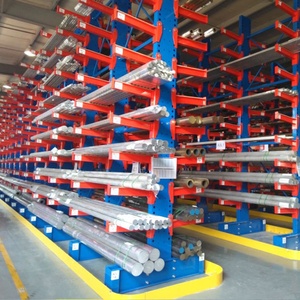
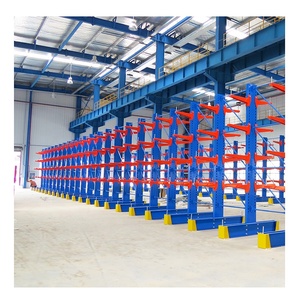
Cantilever racking systems represent the pinnacle of specialized material handling engineering designed specifically to address the physical handling constraints of long, bulky, non-standardized linear inventory. Traditional pallet racking relies on front upright vertical frame barriers that block continuous horizontal loading, rendering them ineffective for items such as steel pipes, aluminum extrusions, timber packs, plastic tubing, heavy gypsum boards, and metal plates. China's manufacturing ecosystem has evolved into the world's leading hub for structural steel racking fabrication, combining high-tensile hot-rolled Q235B and Q355B profile columns with robotic welding precision to supply heavy-duty cantilever systems globally.
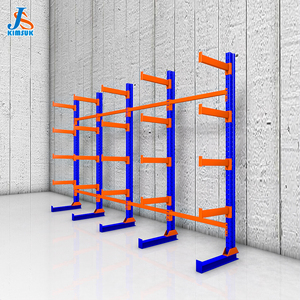
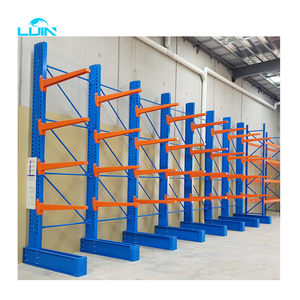
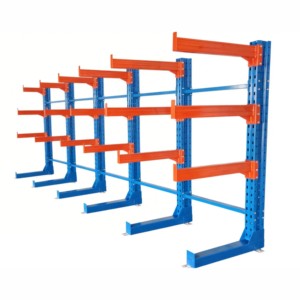
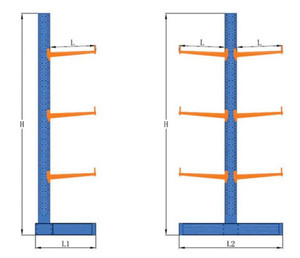
A cantilever system's structural integrity depends on the math governing cantilevered beam deflection, column moment distribution, and anchor bolt shear performance. The assembly comprises four core structural components:
- Vertical Columns (Uprights): Tapered or uniform structural steel sections designed to absorb bending moments ($M = F \times L$) generated by loaded arms while withstanding vertical axial compression loads.
- Heavy-Duty Bases: Anchored directly into concrete foundations using high-shear chemical anchors or mechanical expansion bolts, extending horizontally to equalize gravity centers and prevent overturning moments.
- Cantilever Load-Bearing Arms: Straight, inclined, or telescoping steel members attached to columns via heavy pivot pins or high-grade 8.8 structural bolts, adjustable on 100mm or 140mm pitch centers.
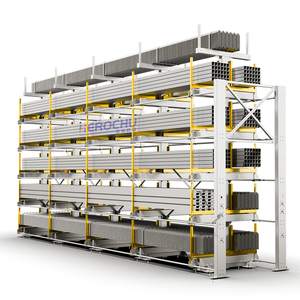
- X-Bracing & Horizontal Spacer Sets: Structural cross-bracing frameworks that unite vertical columns into rigid, vibration-resistant longitudinal structures capable of resisting lateral seismic forces and wind shear in outdoor installations.
Moment Capacity & Deflection
Designed under ANSI MH16.1 and FEM 10.2.09 criteria, restricting maximum arm tip deflection under full static load to less than $L/180$ to guarantee smooth material placement.
Seismic Hazard Optimization
Structural base plates engineered to meet zone-specific peak ground acceleration (PGA) metrics, fully compliant with international building codes (IBC) and local standards like NEC-SE-DS.
Protective Surface Engineering
Hot-Dip Galvanizing (HDG) per ISO 1461 for corrosive, coastal, or sub-zero environment durability, and high-adhesion thermosetting epoxy powder coating for clean indoor distribution centers.
2. Heavy-Duty Cantilever Racking Selection & Application Matrix
Selecting the optimal cantilever rack configuration requires analyzing load weight distributions, material deflection characteristics, handling equipment clearance, and space efficiency requirements. Below is an engineering overview of common industrial configurations offered by leading Chinese manufacturers:
| Cantilever System Category | Structural Profile Type | Load Capacity Range | Primary Industrial Application | Optimal Handling Equipment |
|---|---|---|---|---|
| Structural I-Beam Cantilever | Hot-Rolled IPE / H-Beam Structural Steel | 1,000 kg – 6,000 kg / arm | Heavy steel plates, bundles of rebar, large timber logs, industrial casting dies. | Heavy Sit-Down Forklifts, Overhead Bridge Cranes |
| Roll-Formed Light/Medium Cantilever | Cold-Formed C/C+ Steel Sections | 200 kg – 800 kg / arm | PVC piping, light aluminum extrusions, plastic conduits, carpet rolls, furniture. | Standard Reach Trucks, Side-Loaders, Manual Stackers |
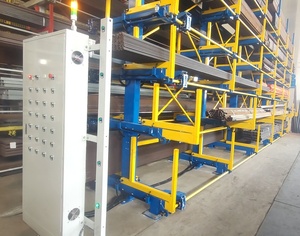
| Mechanical Crank-Out (Roll-Out) | Heavy Structural Steel with Gear Assemblies | 1,000 kg – 4,000 kg / level | High-value tooling, short pipe bundles, machinery parts, bar stock in tight spaces. | 100% Overhead Crane Access (Zero Forklift Aisle Required) |
| Automated Electric Telescopic | Motorized Linear Actuator / Structural Steel | 2,000 kg – 5,000 kg / level | High-density automated production lines, automated raw material buffers. | Integrated AS/RS Crane Systems, PLC Automated Shuttles |
| Foldable Arm Safety Cantilever | Pin-Pivoted Foldable Structural Steel Arms | 500 kg – 3,000 kg / arm | Tight aisle facilities, risk reduction against accidental forklift boom collisions. | Combilift Multi-Directional Trucks, Side Loaders |
Technical Component Deep Dive: Structural Safety Mechanisms
High-capacity cantilever storage requires strict structural safety controls. Leading Chinese OEM factories incorporate key structural features:
- Pivot Arm Connection Pins: Replacing rigid welded arm connections with hinged pin-and-clevis mounts allows the arm to pivot upwards and sideways if struck by a forklift fork or bundle load, preventing catastrophic column deformation or structural collapse.
- Removable End Pipe Stops: Socketed vertical stop pins placed at arm ends prevent round items, like steel pipes and conduits, from rolling off the arm tip under seismic disturbance or load shift.
- Continuous Column Base Anchoring: Extended heavy-gage bases bolted to structural concrete slabs using chemical adhesive anchors distribute overturning shear stresses across a wider footprint, preventing slab punch-through or fatigue cracking.
3. Future Sourcing & Engineering Trends in Cantilever Racking (2025–2030)
As global supply chains demand higher space utilization, faster SKU retrieval, and strict ESG compliance, Chinese cantilever rack manufacturers are transforming traditional static storage into automated, sustainable infrastructure. Key emerging technology trends shaping B2B procurement strategies include:
1. High-Density Cantilever AS/RS Automation
Traditional cantilever racks require wide aisles for side-loaders or multi-directional forklifts. Modern facilities are deploying Automated Storage and Retrieval Systems (AS/RS) integrated directly with electric roll-out cantilever structures. Automated cranes equipped with telescopic forks extract 6-meter steel bundles autonomously, cutting aisle space by up to 50% while boosting picking speed threefold.
2. Decarbonization & Green Steel Manufacturing
Global procurement teams must report Scope 3 supply chain emissions. Premier Chinese manufacturers are transitioning to Electric Arc Furnace (EAF) steel production powered by renewable energy grids and low-VOC eco-friendly powder coating technologies. Sourcing structural steel with verified Environmental Product Declarations (EPD) simplifies carbon tax compliance under EU CBAM rules.
3. Smart Structural Health Monitoring (SHM)
Integrating Wireless IoT Strain Gauges and Piezoelectric Sensors directly into critical cantilever arm-to-column joint connections provides real-time monitoring of overload deflections, structural fatigue, and impact shocks. Operations managers receive automated mobile alerts before physical material failure occurs, ensuring zero workplace downtime.
4. Quality Control, Material Science & Factory Manufacturing Standards
Ensuring absolute structural reliability when storing multi-ton steel loads overhead requires strict quality assurance at every manufacturing stage. Chinese cantilever racking factories utilize modern metallurgy and robotic manufacturing workflows compliant with international structural codes:
A. Raw Material Selection & Mill Test Traceability
High-grade structural steel forms the core of every load-bearing rack. Qualified factories source prime-grade Q235B (yield strength $\ge 235\text{ MPa}$) and Q355B (yield strength $\ge 355\text{ MPa}$, equivalent to European S355JR / ASTM A572 Grade 50) steel plates and H-beams directly from Tier-1 state steel mills. Every shipment includes EN 10204 3.1 Mill Test Certificates (MTC) verifying precise chemical composition (Carbon, Manganese, Silicon limits) and mechanical yield, tensile, and elongation properties.
B. Precision Robotic Welding & Non-Destructive Testing (NDT)
Cantilever arms and base brackets endure heavy dynamic bending forces. Welding operations use 6-axis robotic welding cells running Gas Metal Arc Welding (GMAW / MIG) with argon-rich shielding gas mixtures to achieve 100% full-penetration welds without spatter, porosity, or undercut defects. Critical load-bearing joints undergo periodic Non-Destructive Testing (NDT), including:
- Ultrasonic Flaw Detection (UT): Inspects internal weld root integrity on thick structural base-to-column connection plates.
- Magnetic Particle Inspection (MPI): Detects surface and sub-surface micro-fissures around high-stress arm bracket welds.
C. Corrosion Defense: Hot-Dip Galvanizing vs. Electrostatic Powder Coating
Surface treatment selection must match the target operating environment:
Thermosetting Epoxy Powder Coating
Applied via automatic electrostatic guns at 60–80 microns thickness, then cured in 200°C baking ovens. Ideal for indoor warehouses, offering scratch resistance and customized corporate color matching (RAL classic palette).
Hot-Dip Galvanizing (ISO 1461)
Structural steel components are fully immersed in a molten zinc bath at 450°C, forming a metallurgically bonded zinc-iron alloy layer (70–100 microns thick). Delivers 30+ years of maintenance-free rust protection in humid coastal port environments (e.g., Guayaquil, Manta, Machala) and outdoor steel yards.
5. Comprehensive B2B Procurement & Technical FAQ
Find authoritative answers to technical engineering, structural compliance, customization options, and international shipping logistics when sourcing wholesale cantilever racking from China.
How do engineers calculate the maximum allowable load capacity for cantilever arms?
What is the structural difference between Cold-Formed and Hot-Rolled Cantilever Racks?
Can cantilever racking systems be designed to meet local seismic codes (e.g., NEC-SE-DS / IBC)?
What design inputs are required to receive an accurate structural quotation?
How do mechanical Crank-Out (Roll-Out) cantilever racks operate?
How are long structural cantilever columns packaged for 40ft HQ ocean container shipping?
What surface finish should be selected for high-humidity or coastal storage environments?
What post-installation structural inspections and maintenance are recommended?
6. Direct Manufacturer Capabilities & Factory Advantages
Partnering directly with a premier Chinese cantilever racking manufacturer provides enterprise logistics operators, structural integrators, and industrial distributors with significant strategic advantages:
Full OEM/ODM Customization
Custom structural engineering capabilities allow precise matching of arm lengths, column heights (up to 15+ meters), vertical pitch adjustments, structural capacities, and specialized colors (RAL matched) tailored to your warehouse layout.
Certified Quality Management
Manufacturing operations are certified under ISO 9001:2015 Quality Management Systems, ISO 14001 Environmental Management, and CE structural execution standards (EN 1090-1 / EN 15512), ensuring complete legal and safety compliance.
Direct Factory Sourcing Economics
Eliminate intermediary trading margins by dealing directly with the manufacturing factory. Benefit from integrated raw steel procurement scale, high-speed automated production, and optimized ocean freight loading strategies.
Request a Custom Engineering Design & Wholesale Factory Quote
Connect directly with our senior structural design team. Send us your floor plan, material storage specs, or load requirements, and we will deliver a full CAD layout and competitive factory quote within 24 hours.