Enterprise Product Recommendations
Heavy-duty warehouse racking solutions manufactured under ISO 9001:2015, EN 15512, and ANSI MH16.1 structural compliance standards.
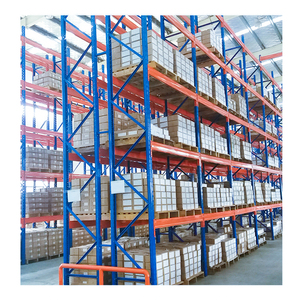
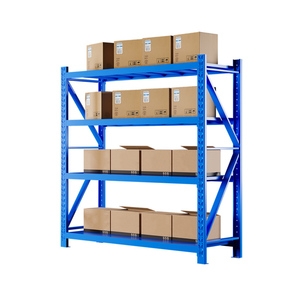
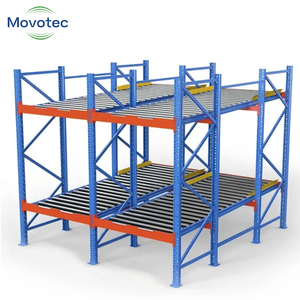
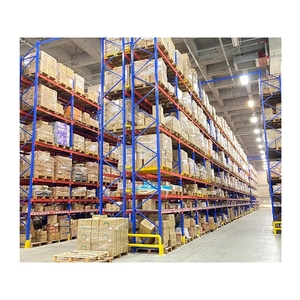
Manufacturing Strengths & Engineering Integrity
Why Tier-1 global logistics hubs and industrial buyers partner directly with China's leading Push-Back Racks manufacturers.
Structural Steel Metallurgy
Utilizing high-tensile Q235B and Q355B structural steel certified under cold-rolled coil standards. Frame uprights and beam profiles undergo finite element analysis (FEA) to ensure zero plastic deformation under maximum working limits.
Telescoping Nested Cart Tech
Our push-back rack systems utilize precision-engineered low-profile nested carts sliding on inclined structural rails. Friction coefficient is engineered to ≤0.018, guaranteeing uniform, non-jamming push and return dynamics.
Seismic & Safety Compliance
Built-in seismic anti-dislodgement locks, heavy-duty floor baseplate anchors, and integrated impact guards protect structural columns against accidental forklift collisions, conforming with EN 16681 and RMI standards.
Technical White Paper: Optimizing Warehouse Density with China OEM Push-Back Racking Systems
In modern industrial warehousing, the trade-off between storage density and pallet selectivity remains a crucial design bottleneck. Selective pallet racking offers 100% immediate selectivity but sacrifices floor footprint utilization (often retaining only 35-40% cube efficiency). Conversely, drive-in racking maximizes density but introduces severe operational risks, including slow loading cycles, high forklift damage rates, and single-SKU lane constraints. Modern high-density push-back racking systems engineered by premier China factories bridge this strategic gap.
1. Kinematic Mechanics of Push-Back Racks
Push-back racking systems operate on a Last-In, First-Out (LIFO) inventory control principle across inclined structural steel rails (typically angled at 3 to 5 degrees). The system employs a series of nested, telescoping carts that move along heavy-duty flow tracks. When the first pallet is placed on the top cart by a standard counterbalanced or reach forklift, it sits ready for storage. When the second pallet is loaded, the forklift operator gently pushes the first pallet backward, exposing the nested secondary cart.
This mechanics allows up to 2 to 6 pallets deep per lane. When unloading, gravity smoothly moves the remaining nested carts forward to the aisle face at a controlled speed, eliminating the requirement for forklifts to enter structural rack channels. This simple mechanical shift reduces rack collision incidents by up to 85% compared to traditional drive-in systems.
2. Precision Engineering: Structural Tolerances & Roll-Forming Standards
As a global OEM supplier, manufacturing reliability hinges on exact metallurgical control and cold-roll-forming accuracy. Key structural parameters for our industrial push-back systems include:
- Steel Tensile Yield: Minimum yield strength of 235 MPa (Q235B) to 355 MPa (Q355B) cold-rolled structural profile steel.
- Nesting Clearance: Vertical profile clearance between nested steel carts optimized to under 55mm to preserve vertical clear height in low-ceiling or cold-chain facilities.
- Bearing Durability: Machined steel wheels equipped with sealed, maintenance-free precision ball bearings rated for operating ambient conditions from -30°C in cold storage up to +50°C in high-humidity industrial environments.
- Surface Finish: Automated continuous electrostatic epoxy-polyester powder coating (thickness 80-110 μm) offering high salt-spray resistance (>500 hours ASTM B117 standard).
3. Technical Comparison: High-Density Industrial Racking Systems
To assist procurement managers, warehouse automation architects, and logistics heads in making data-backed structural investments, the following matrix analyzes performance trade-offs:
| Storage System Type | Volumetric Efficiency | Selectivity Level | Forklift Damage Risk | Throughput Speed | Capital Investment (ROI) |
|---|---|---|---|---|---|
| Push-Back Rack System | 75% – 85% | Medium (LIFO per lane) | Very Low (No rack entry) | High (Fast cycles) | Optimal (2–3 Year Payback) |
| Selective Pallet Racking | 35% – 45% | 100% (High) | Moderate | Very High | Low Initial / High Footprint Cost |
| Drive-In Racks | 65% – 75% | Low (LIFO per block) | High (Forklift inside rack) | Slow | Moderate / High Maintenance |
| Automated Radio Shuttle | 85% – 90% | Medium (Programmed) | Extremely Low | Very High | High Initial Tech CAPEX |
Future Procurement & Strategic Trends (2026–2030)
Key market vectors shaping the future of industrial push racks manufacturing, sustainable supply chains, and warehouse engineering.
AGV & Autonomous Integration
Modern push-back racking systems are evolving to interface directly with Automated Guided Vehicles (AGVs) and Autonomous Mobile Robots (AMRs). Custom push-back carts feature magnetic alignment sensors and mechanical dampeners to ensure robot forks land pallets with sub-millimeter precision.
Green Steel & Low-Carbon Coating
Global ESG mandates require suppliers to reduce carbon emissions across structural steel supply chains. Leading Chinese manufacturers now utilize hydrogen-reduced green steel coils and zero-VOC water-emulsion powder coatings, helping international buyers achieve LEED certified facilities.
Cold-Chain Logistics Surge
With global food and pharma cold chains expanding, demand for high-density, anti-corrosive push racks for sub-zero (-30°C) environments is escalating. Pre-galvanized structural steel and cold-resistant synthetic wheel bearings are rapidly replacing standard painted components.
Industrial Procurement FAQ
In-depth answers to common structural design, installation, and custom OEM questions asked by global enterprise buyers.
What makes China factories ideal partners for custom OEM push-back rack manufacturing?
+
How does a Push-Back Rack system prevent cart binding or pallet jams during operation?
+
What information is required to receive an accurate CAD engineering design and quote?
+
Can Push-Back Racking be installed in high-seismic active zones?
+
What is the typical production lead time and international shipping setup?
+
Transform Your Warehouse Storage Density Today
Consult with our senior structural racking engineers to design a custom, high-density push-back racking solution engineered precisely for your load specifications and operational workflow.