1. Global Supply Dynamics & The Value Proposition of Chinese Racking Manufacturers
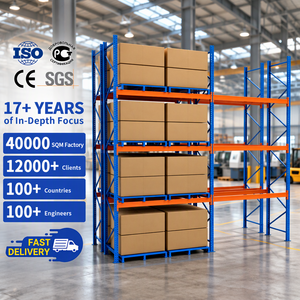
In the contemporary global logistics landscape, storage density, operational safety, and structural longevity determine the financial efficiency of modern distribution centers. China has established itself as the global hub for industrial rack manufacturing, synthesizing mature steel supply chains, cutting-edge automated roll-forming technology, and deep structural engineering expertise.
Procuring industrial racking from top-tier Chinese manufacturers yields clear competitive advantages for multi-national supply chain operators:
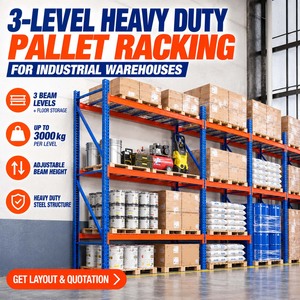
- Structural Steel Grade Superiority: Access to high-tensile Q355B cold-rolled steel (yield strength $\ge 355\text{ MPa}$) allows for slimmer, lighter profile geometries capable of carrying heavier bay loads ($1,000\text{ kg}$ to $4,000\text{ kg}$ per level) while reducing net freight volume.
- Precision Roll-Forming Technology: Automated multi-stage continuous roll-forming lines guarantee uniform beam section profiles and teardrop/omega upright slots with tight tolerances ($\le 0.5\text{ mm}$ variance across 12-meter columns).
- Cost-to-Performance Optimization: Capital expenditures (CAPEX) per pallet position are reduced by $30\%\text{ to }45\%$ compared to Western European or North American domestic rack fabricators, without compromising structural safety standards.
2. Technological Development Trends in Pallet Racking Systems
The industrial storage industry is undergoing a paradigm shift driven by automation, material science innovations, and real-time structural health monitoring. As intra-logistics costs rise, warehouse developers are moving away from traditional static racking toward dynamic, automated systems.
A. Integration with Automated Storage and Retrieval Systems (AS/RS)
Modern pallet rack structures serve as the physical backbone for AS/RS crane systems, Shuttle Car installations, and Autonomous Mobile Robots (AMRs). High-bay clad-rack buildings—where the racking system supports the building cladding itself—reach heights above 40 meters. These installations demand strict verticality tolerances ($\pm 1\text{ mm per }10\text{ meters}$) and precise beam deflection control under max load ($L/200$ limits).
B. Advanced Corrosion Resistance: Zinc-Aluminum-Magnesium (ZAM) Coatings
For aggressive environments such as cold-chain seafood storage, chemical handling, and coastal logistics facilities (e.g., Guayaquil, Manta, or Southeast Asian ports), traditional powder coating can succumb to moisture creep at scratch points. Leading Chinese suppliers now utilize advanced ZAM sheet steel and hot-dip galvanizing, offering self-healing edge corrosion protection that extends rack structural lifespans past 25 years.
C. Dynamic Damping & Seismic Safety Innovations
In high seismic hazard zones (Pacific Ring of Fire), conventional rigid anchoring can suffer brittle shear failure during high ground acceleration events. Modern racking engineering integrates friction-damped beam-to-upright connectors, widened structural baseplates with double anchor bolts, and heavy-duty diagonal horizontal bracing trusses that absorb kinetic shock energy.
3. Industrial Pallet Racking Systems Comparison Matrix
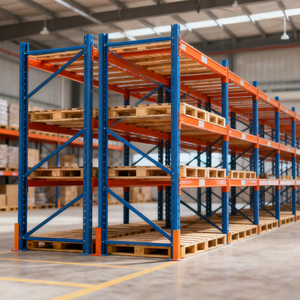
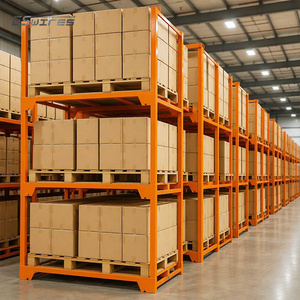
Selecting the optimal pallet racking configuration requires balancing volume density, SKU selectivity, forklift accessibility, and total system cost. The matrix below summarizes key engineering criteria:
| Racking System Type | Storage Density | Pallet Selectivity | Stock Rotation | Max Load / Level | Target Application |
|---|---|---|---|---|---|
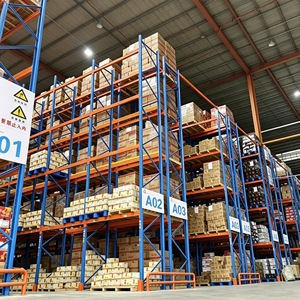
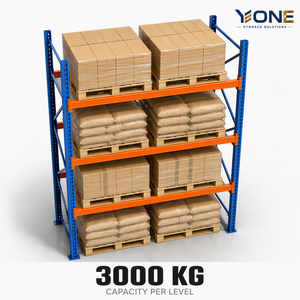
| Selective Pallet Racks | Standard | 100% Direct Access | FIFO / LIFO | 1,000 – 4,000 kg | FMCG, Multi-SKU Distribution Centers |
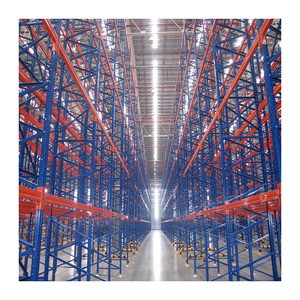
| Double-Deep Racking | Medium-High | 50% Direct Access | LIFO | 1,500 – 3,000 kg | High-volume SKUs with specialized reach trucks |
| Drive-In / Drive-Thru | High (75%+) | Low (Per Lane) | LIFO (Drive-In) | 1,000 – 2,000 kg | Cold Storage, Seasonal Bulk Items |
| Radio Shuttle System | Ultra-High | Medium (Per Lane) | FIFO / LIFO | 1,500 kg / shuttle | Automated Cold Storage & High-Throughput Buffers |
| Cantilever Racking | Specialized | 100% (Long Loads) | N/A | 500 – 3,000 kg / arm | Steel Pipe, Rebar, Timber & Profile Storage |
| Mezzanine Racking | Multi-Tier | 100% (Manual Pick) | FIFO | 300 – 1,000 kg / m² | E-commerce Picking & Automotive Parts Storage |
4. Future Strategic Procurement Trends (2025–2030)
Enterprise procurement teams must move beyond simple "cost-per-kilogram" comparisons to evaluate structural suppliers based on Total Lifecycle Value (TLV), ESG environmental compliance, and long-term risk management.
1. Total Cost of Ownership (TCO) Procurement Evaluation
Low upfront racking purchase prices can quickly be negated by costly site assembly errors, structural failures, or early corrosion damage. Procurement strategies now prioritize structural engineering certification, weld quality inspection reports (UT/MT testing), and post-installation replacement part availability.
2. Factory Acceptance Testing (FAT) & Quality Audits
Global buyers are establishing rigorous FAT protocols with Chinese manufacturing partners, including raw steel chemical analysis, tensile strength verification, beam deflection testing under 1.5x overload, and coating cross-hatch adhesion testing prior to container loading.
3. Sustainability & Green Steel Manufacturing
Environmental standards are driving the adoption of eco-friendly powder coating chemistry (VOC-free formulas), zero-discharge steel washing lines, and solar-powered manufacturing plants. Chinese tier-1 suppliers are issuing Product Carbon Footprint (PCF) reports to assist international clients with Scope 3 carbon reduction goals.