Heavy-Duty Warehouse Racking & Industrial Storage Systems
Direct-from-factory certified structural racking systems engineered with premium cold-rolled Q235B/Q355B steel, modular beam connections, and seismic compliance for global industrial applications.
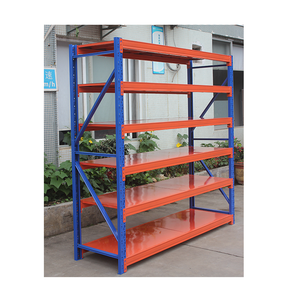
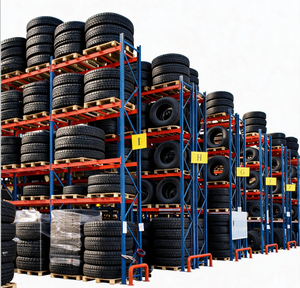
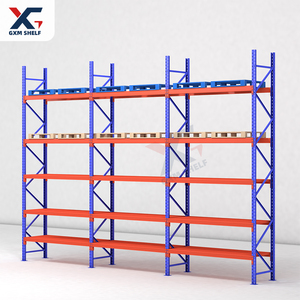
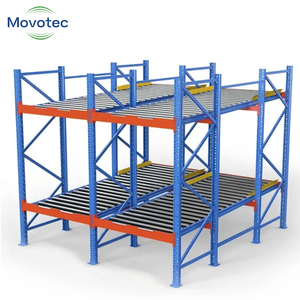
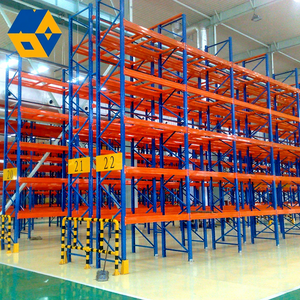
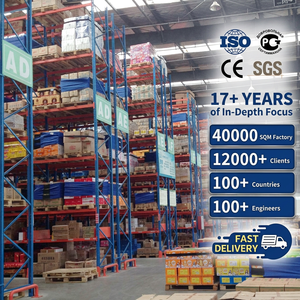
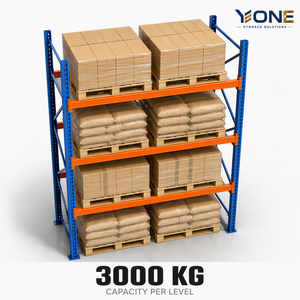
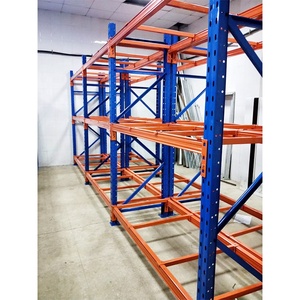
Executive White Paper: Engineering Standards & Sourcing Strategy from China's Leading Racking Manufacturers
In modern industrial logistics, warehouse infrastructure represents a vital capital asset that dictates operational throughput, structural safety, cubic volumetric efficiency, and long-term total cost of ownership (TCO). As global supply chains adjust to automated material handling, rapid SKU diversification, and severe seismic regulations, selecting qualified China warehouse storage shelving factories and exporters has evolved from basic price procurement into a rigorous engineering partnership.
China's industrial steel fabrication ecosystem currently produces over 60% of the world’s heavy-duty cold-formed structural racking components. Leading manufacturing facilities utilize advanced cold-roll forming production lines, automated robotic welding cells, and electrostatic epoxy powder-coating technology. This infrastructure allows top-tier Chinese exporters to deliver systems fully compliant with global engineering codes including FEM 10.2.02 (European Federation of Materials Handling), EN 15512, RMI (Rack Manufacturers Institute ANSI MH16.1), and AS 4084-2012 (Australian Standard for Steel Storage Racking).
High-capacity selective and high-bay racking systems require precise metallurgical standards. Standard shelf components utilize Q235B cold-rolled steel (yield strength $\sigma_y \ge 235 \text{ MPa}$). However, heavy-duty upright frames exceeding 10 meters in height or subject to seismic lateral loads utilize structural Q355B alloy steel ($\sigma_y \ge 355 \text{ MPa}$), providing a 51% increase in yield strength to prevent inelastic buckling under structural limit states.
Comprehensive Material Handling & Structural Solutions
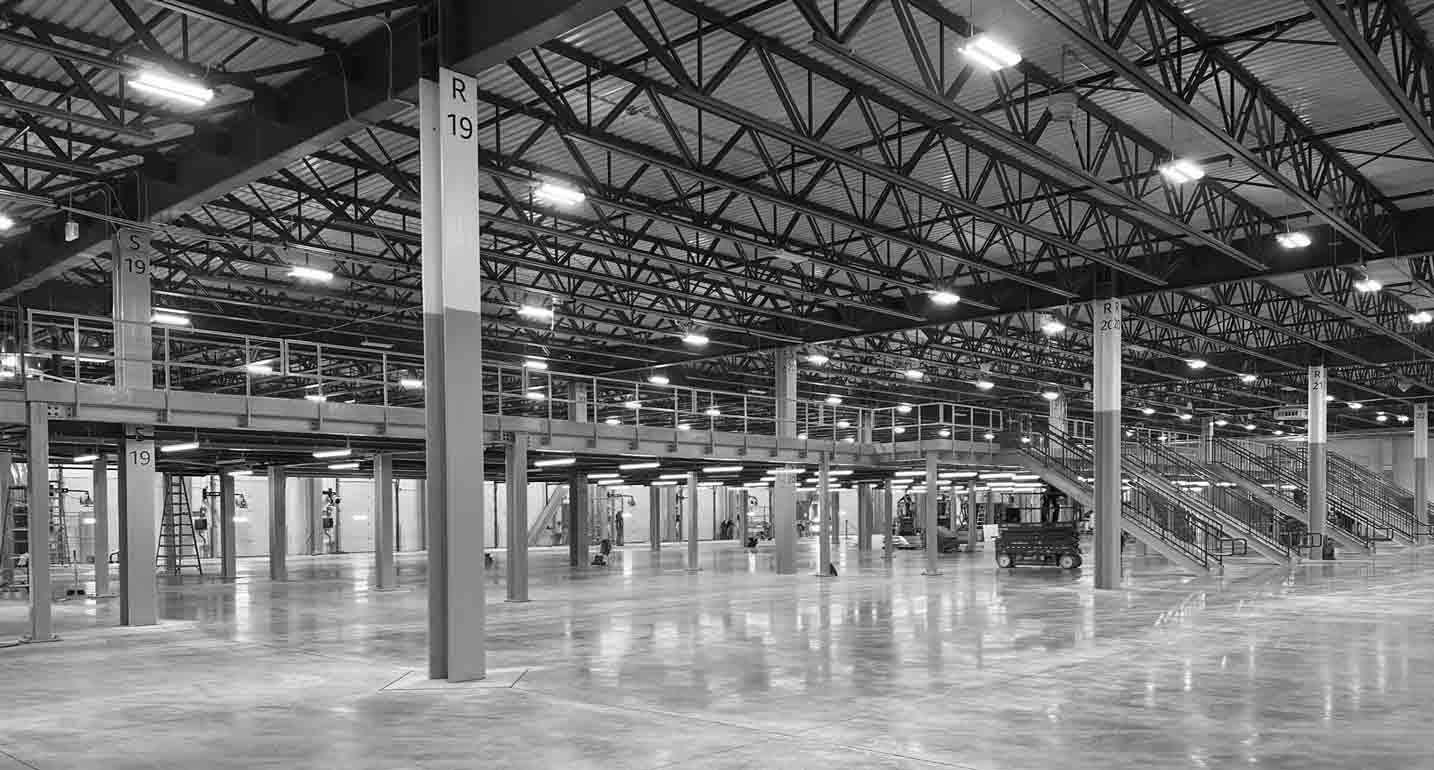
Sourcing industrial shelving from premier Chinese exporters provides integrated structural design. Modern manufacturing extends beyond standalone rack components to deliver complete warehouse ecosystems, seamlessly combining structural steel pallet racks, industrial mezzanine platforms, conveyor systems, and packaging equipment.
By engineering the storage structure alongside floor slab load distributions, forklift turning radius clearances, and localized environmental hazards (such as coastal humidity or seismic acceleration zones), Chinese export engineers provide turnkey documentation packages suitable for international building permit approvals and insurance compliance.
Enterprise Manufacturing & Structural Engineering Advantages
Our manufacturing framework integrates material science, automated cold-roll forming precision, and certified quality controls to guarantee zero-defect industrial storage infrastructure.
Continuous Cold-Roll Precision
Utilizing multi-stage automated roll-forming machines with CNC punch indexing ensures hole-pitch accuracy within $\pm 0.1 \text{ mm}$ across 12-meter continuous upright profiles, ensuring exact beam locking and zero structural stress concentrations.
Seismic Design Verification
Engineered structural calculations aligned with NEC-SE-DS, IBC 2024, and ANSI MH16.1. Every project includes finite element structural modeling (FEM) to verify base plate anchoring, upright bracing ratios, and dynamic earthquake load absorption.
Coastal Anti-Corrosion Finishing
Advanced surface preparation featuring 6-stage chemical pre-treatment and degreasing, followed by thermo-setting epoxy-polyester powder coating ($80\text{--}120\ \mu\text{m}$) or Hot-Dip Galvanizing (HDG per ISO 1461) to resist high salinity and humidity environments.
Full Mill Certificate Traceability
100% prime structural coil steel directly sourced from tier-one steel mills (Baosteel, Shougang). Every batch is accompanied by EN 10204 3.1 Mill Test Certificates detailing yield strength, tensile strength, and chemical elongation properties.
Modular Boltless Beam Assembly
Patented 3 or 4-hook beam connector brackets stamped from heavy-gauge structural steel plates with safety retention pins. Design eliminates accidental dislodgement from forklift impact while expediting field installation velocity.
Turnkey Global Export Packaging
Custom knocked-down (CKD) bundle packaging utilizing steel frame cradles, corrugated edge protectors, and heavy-duty moisture-proof plastic wrapping to prevent freight damage during multi-modal ocean transportation.
AS/RS & Automated Shuttle Racking Integration
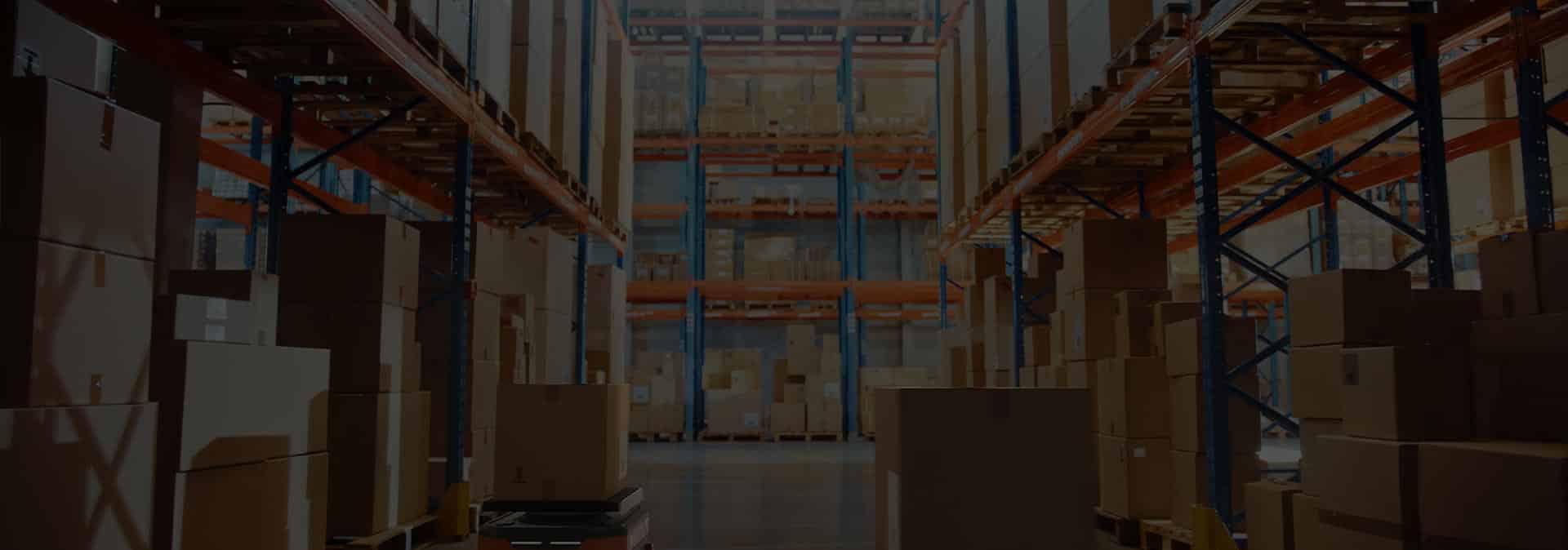
As global logistics shifts toward high-density automation, leading Chinese exporters have pioneered precision manufacturing for Automated Storage and Retrieval Systems (AS/RS) and Radio Shuttle Racking. These systems demand manufacturing tolerances as tight as $\pm 1.5 \text{ mm}$ across overall rack structure height, requiring specialized laser alignment and ultra-flat guide rails.
Integrating motorized shuttle carts into cold storage facilities or pharmaceutical distribution centers maximizes volumetric utilization by up to 85% while dramatically reducing operational labor costs and thermal energy losses.
Strategic Industry Insights: Future Procurement & Technological Trends
The global warehouse shelving market is experiencing a structural paradigm shift driven by e-commerce acceleration, automated material handling integration, and stringent green building decarbonization requirements. Enterprise procurement teams must evaluate several key macro trends when selecting manufacturing partners in China:
1. High-Tensile Micro-Alloyed Cold-Formed Profiles
Traditional structural racking relied heavily on thick, heavy hot-rolled channels. Modern engineering utilizes high-strength, thin-walled cold-formed steel sections made from micro-alloyed steel grades (e.g., Q355B, Q460). Advanced cold-roll forming shapes stiffening ribs into upright columns and box beams, increasing section modulus ($Z_x$) while reducing raw steel weight by 15% to 22%. This metallurgical advancement directly lowers international ocean freight tariffs without sacrificing structural load-bearing capacity.
2. Transition to Modular & Hybrid Storage Infrastructure
Modern fulfillment operations require adaptable layouts. Procurement trends indicate a shift toward multi-tier racking mezzanines combined with boltless longspan shelving and selective pallet positions within the same facility footprint. Leading factories provide standardized, modular punched hole patterns (50mm or 75mm pitch), enabling fast vertical beam adjustment as SKU dimensional profiles change over time.
3. Eco-Friendly Powder Coating & Carbon Neutral Manufacturing
ESG (Environmental, Social, and Governance) compliance is now a standard requirement in international tender contracts. Tier-one Chinese manufacturers have replaced solvent-based paint systems with zero-VOC (Volatile Organic Compound) electrostatic powder coating lines. Waste heat recovery systems on curing ovens and solar-assisted factory roofs further reduce the embedded carbon footprint per ton of manufactured structural steel racking.
4. Smart Rack Structural Health Monitoring (IoT Integration)
Future-focused industrial storage facilities are integrating IoT strain-gauge sensor nodes directly onto high-risk upright columns. These sensor networks monitor dynamic forklift impacts, structural deflection spikes, and cumulative stress fatigue in real time. Chinese engineering teams collaborate with international systems integrators to build digital twin models of warehouse racking arrays, preventing catastrophic structural collapse through predictive maintenance alerts.
Technical System Specification & Selection Matrix
To assist facility engineers and purchasing directors in selecting optimal storage architectures, the following matrix compares structural parameters across core industrial racking systems:
| Racking System Type | Volumetric Density | Pallet Selectivity | Max Load per Level | Deflection Limit ($\delta$) | Ideal Industry Application |
|---|---|---|---|---|---|
| Selective Pallet Racking | Moderate (40-50%) | 100% Direct Access | Up to 4,500 kg | $L / 200$ | FMCG, 3PL Warehouses, Mixed SKU Logistics |
| Double-Deep Racking | High (60-65%) | 50% Immediate Access | Up to 3,200 kg | $L / 200$ | Cold Storage, Bulk Finished Goods Storage |
| Drive-In / Drive-Thru | Very High (75-85%) | Low (LIFO / FIFO) | Up to 1,800 kg/pallet | $L / 250$ | Seasonal Produce, Beverage, Uniform SKUs |
| Gravity Roller Flow | Ultra High (80-90%) | FIFO Strict Control | Up to 1,500 kg/pallet | $L / 250$ | Perishable Foods, Pharmaceuticals, Dairy |
| Radio Shuttle System | Maximum (85-92%) | Automated LIFO/FIFO | Up to 2,000 kg/pallet | $L / 300$ | Automated Cold Chain, High-Throughput Hubs |
| Cantilever Heavy Racking | Variable Density | 100% Long Goods | Up to 6,000 kg/arm | $L / 180$ | Steel Pipe, Aluminum Extrusions, Timber |
*Note: Deflection limit $\delta$ refers to maximum allowable structural beam deflection under full static load according to FEM 10.2.02 standards, where $L$ represents clear beam length.

Frequently Asked Questions: Global Procurement & Engineering Compliance
Direct technical answers to common questions asked by industrial procurement directors, structural consultants, and warehouse managers regarding Chinese storage shelving exports.
How do Chinese racking manufacturers ensure structural safety under dynamic seismic conditions? +
Seismic compliance requires engineering verification of frame ductility and moment-resisting beam-to-column connections. Leading Chinese factories utilize 3D Structural Finite Element Analysis (FEA) software to model peak ground acceleration (PGA) scenarios matching local structural codes, such as the US International Building Code (IBC 2024), European Eurocode 8, or South American NEC-SE-DS standards. Base plate thickness is frequently enlarged, anchor bolt embedment depths are calculated based on concrete slab compressive strength ($\ge 25 \text{ MPa}$), and heavy-duty diagonal frame bracing patterns are added to absorb dynamic lateral shear forces.
What steel grade certification should be specified in international racking purchase contracts? +
Buyers should specify prime structural cold-rolled steel conforming to standard Chinese GB/T codes mapped to international equivalents. Standard load components should utilize Q235B (equivalent to EN 10025 S235JR or ASTM A36). High-load capacity upright columns or structural long-span profiles should specify Q355B (equivalent to S355JR or ASTM A572 Grade 50). Ensure contract terms mandate mill test certificates (EN 10204 3.1) verifying chemical composition (Carbon, Manganese, Silicon) and mechanical tensile performance for every production heat lot.
Which surface finish is recommended for high-humidity coastal or cold storage facilities? +
For standard indoor, climate-controlled distribution centers, a 80 to 120 micron electrostatic epoxy-polyester powder coating provides excellent scratch resistance and aesthetics. However, for coastal facilities subject to marine salt-air humidity or cold-storage facilities with condensing moisture, Hot-Dip Galvanizing (HDG per ISO 1461) or pre-galvanized structural steel coils (Z275 coating weight) are recommended. HDG applies a metallurgical zinc-iron alloy barrier ($>65\ \mu\text{m}$ thickness) that provides cathodic self-healing protection against corrosion for over 20 years.
What documentation is required to verify load capacity and structural compliance? +
A certified export package includes: (1) General Arrangement CAD drawings with clear dimensions and elevation profiles; (2) Structural load calculations signed by a qualified structural engineer detailing beam deflection ratios ($L/200$) and upright frame safety factors ($\gamma \ge 1.5$); (3) Material test certificates; (4) Certified Load Signage plaques for installation at the end of every rack aisle as required by EN 15635 and OSHA standards.
How is container space loading optimized to reduce international ocean shipping costs? +
Industrial pallet racking is shipped fully Knocked-Down (CKD). Upright frames are shipped un-assembled (columns, diagonals, and base plates bundled separately) or fully welded depending on destination labor costs. Beams are nested head-to-tail in custom steel cradles. By utilizing specialized 3D container packing software, tier-one exporters achieve volumetric container loading efficiencies exceeding 95% in standard 40-foot High Cube (40'HC) sea containers, packing up to 24 to 26 metric tons per container.
What are the typical lead times for custom manufactured racking orders from China? +
Standard production lead time for custom engineered orders ranging from 100 to 1,000 pallet positions is approximately 15 to 25 calendar days following engineering drawing approval and deposit receipt. Large-scale distribution center projects (over 10,000 pallet positions) are typically manufactured in phased shipping schedules across 30 to 45 days. Transit time varies by ocean destination (e.g., 14--20 days to US West Coast, 25--35 days to European or Latin American ports).
How do factories handle quality control and field installation assistance overseas? +
Quality assurance includes automated ultrasonic weld inspection on beam end-connectors, salt spray fog testing (ASTM B117), and random sample destructive load testing using hydraulic pressure rigs. For field installation, exporters provide detailed 3D step-by-step assembly guides, video manuals, and remote engineering oversight via video conferencing. For major installations, factories can dispatch senior installation engineers on-site to supervise local assembly crews.
Turnkey Global Procurement & Engineering Workflow
Our standardized engineering workflow ensures seamless project execution from initial warehouse floor plan analysis to final site handover:
Site Data & Briefing
Review floor plan DWG files, clear height under joists, slab compressive strength, forklift specs, and SKU pallet profiles.
CAD Layout & FEA
Generate optimized layout drawings, structural finite element modeling, seismic load verification, and bill of materials (BOM).
Precision Fabrication
Automated cold-rolling of upright profiles, CNC punching, robotic beam welding, chemical pre-treatment, and powder coating.
Quality Inspection
Full batch dimension verification, coating thickness testing ($\mu\text{m}$ gauge), weld testing, and pre-shipment assembly trial.
CKD Export Shipping
Knocked-down bundle packaging in steel cradles, sea-worthy moisture barrier wrapping, and ocean freight container loading.
Assembly & Handover
On-site or remote engineering support for leveling, anchor torque verification, safety pin lock-in, and load signage placement.
Request Your Custom Warehouse Layout & Engineering Quote Today
Connect directly with our senior structural racking engineering team. Send your building floor plan, clear height details, and load requirements to receive a complimentary CAD design, structural calculation review, and competitive factory-direct quote.