Global Structural Racking Engineering & Manufacturing Leadership
As a premier tier-one manufacturer and global wholesaler of high-density logistics storage systems, we deliver CE Certified Warehouse Pallet Racking Systems engineered for rigorous industrial demands. Operating under ISO 9001:2015 quality management and ISO 14001:2015 environmental protocols, our structural designs strictly comply with European Standard EN 15512, FEM 10.2.02, and ANSI MH16.1 specifications.
Modern supply chain infrastructure demands zero-defect structural integrity, adaptable layout scalability, and complete compliance with international occupational safety mandates. Whether you are expanding a regional distribution hub or fitting out an automated, high-bay cold storage facility, our heavy-duty selective, teardrop, and specialized storage racks provide verified load capacities, superior corrosion protection, and optimal volumetric efficiency.
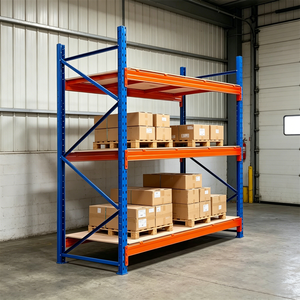
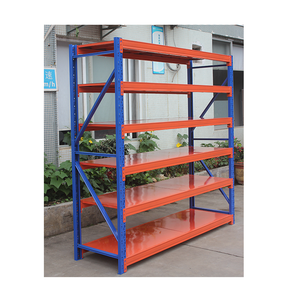
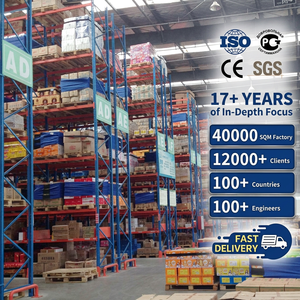
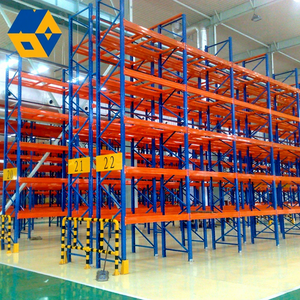
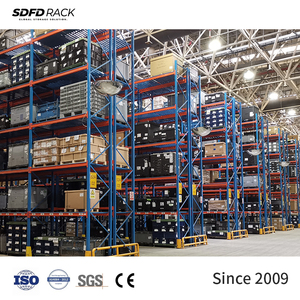
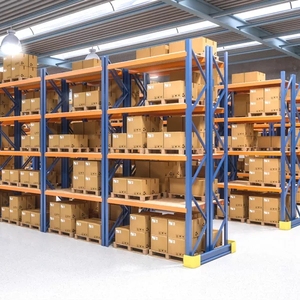
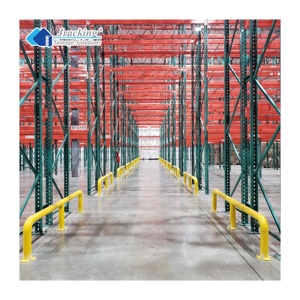
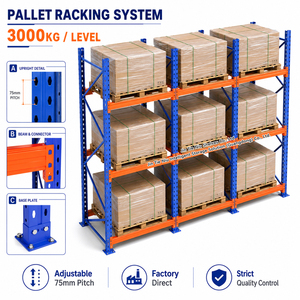
Featured Heavy-Duty Industrial Pallet Racking Products
Explore our engineering-certified product line. All systems are fully customizable regarding height, depth, structural gauge, and beam loading parameters.
Structural Engineering & CE Compliance Standards
Industrial racking is a structural load-bearing infrastructure that must strictly satisfy rigorous mechanical safety thresholds under both static and dynamic forces. The CE marking on warehouse pallet racks signifies full compliance with the EU Regulation 305/2011 (Construction Products Regulation - CPR) and EN 1090-1 execution standards for structural steelwork.
Every upright profile and load-bearing beam undergoes finite element analysis (FEA) and physical limit testing to establish certified safety factors of 1.5 against yield strength, ensuring stable performance under asymmetrical loading conditions.
Manufactured using prime Q235B and Q355B (equivalent to SS400 / S355JR) cold-rolled structural steel coils. Continuous multi-pass roll forming ensures dimensional tolerances down to ±0.5mm across extended vertical lengths.
Horizontal load beams are precision-engineered so that maximum vertical deflection under full design load never exceeds L/200 (where L is beam span length), protecting automated material handling equipment from clearance issues.
Mechanical Properties & Metallurgy of Load Beams
Pallet racking beams utilize advanced box-beam or step-beam geometries formed by interlocking two C-sections or seam-welding cold-formed profiles. Beam connectors feature 3 to 5 claw hooks designed to engage precision-punched upright slots, transferring vertical shear forces directly to the column axis while creating rigid frame joints resistant to rotational deflection.
Every connection assembly includes safety locking pins engineered to withstand an upward dislodgement force exceeding 5 kN, preventing accidental beam displacement caused by operator error during material handling operations.
Seismic Engineering & Coastal Surface Finishing
Global supply chain nodes are frequently situated near ports or regions with active seismic conditions. Structural design must account for dynamic horizontal acceleration forces as well as aggressive coastal atmospheric corrosion.
Calculated in accordance with regional seismic codes (such as NEC-SE-DS in Latin America or ANSI MH16.1 in North America). Enhanced footplates, heavy-duty floor anchor studs, and horizontal bracing counteract lateral shear stresses.
Automated 9-stage pre-treatment featuring iron-phosphate conversion coating followed by electrostatic application of thermosetting epoxy-polyester powder (60-80 microns thickness) baked at 200°C for exceptional impact and wear resistance.
For high-humidity port facilities, outdoor staging yards, and sub-zero cold storage operations (-30°C), hot-dip galvanizing produces a metallurgical zinc-iron alloy coating with salt spray resistance exceeding 1,000 hours (ASTM B117).
Warehouse Storage System Technical Comparison
Selecting the optimal structural layout requires balancing volumetric storage density against absolute individual SKU accessibility. The decision matrix below outlines the performance trade-offs across common pallet rack configurations.
| Racking Configuration | Storage Density Index | SKU Accessibility | Stock Rotation Model | Typical Industrial Application |
|---|---|---|---|---|
| Selective Pallet Racking | Moderate (40% - 50%) | 100% Immediate | FIFO (First-In, First-Out) | High-SKU distribution, FMCG logistics, multi-product fulfillment hubs. |
| Double-Deep Racking | High (60% - 65%) | 50% Immediate | LIFO (Last-In, First-Out) | Cold storage, bulk beverage, uniform batch manufacturing. |
| Drive-In / Drive-Thru | Very High (75% - 85%) | Low (per aisle lane) | LIFO / FIFO | High-density frozen seafood, agricultural exports, seasonal storage. |
| Push-Back Racks | High (65% - 75%) | Moderate (per lane) | LIFO | Medium-turnover fast moving items, staging areas behind loading docks. |
| Pallet Flow (Gravity) | Maximum (80% - 90%) | Moderate (per lane) | Strict FIFO | Pharmaceuticals, perishable food processing, high-throughput buffers. |
| Radio Shuttle Racking | Maximum (85% - 92%) | Controlled Automated | FIFO or LIFO | Automated high-density cold chains, high-volume manufacturing buffers. |
Future Procurement Trends in Warehouse Racking (2025–2030)
The global warehousing sector is undergoing a rapid transition toward digital integration, automated material handling, and stringent sustainability reporting. Procurement strategies are moving beyond baseline unit cost per pallet location to focus on Total Cost of Ownership (TCO) and structural adaptability.
1. Seamless Compatibility with AS/RS and AMR Robotics
As logistics operators adopt Automated Storage and Retrieval Systems (AS/RS) and Autonomous Mobile Robots (AMRs), racking fabrication tolerances are held to strict millimetric precision. Structural alignment must comply with FEM 10.2.09 guidelines for automated crane interfaces. Key parameters include reduced rack sway margins, integrated optical reflector mounts, and precise rack beam leveling tolerances to ensure seamless robotic end-effector engagement.
2. Real-Time IoT Structural Health Monitoring
Accidental forklift collisions pose a persistent structural hazard. Next-generation racking infrastructure incorporates low-power IoT impact sensors and strain gauges mounted directly on critical upright bases. These networked devices wirelessly transmit real-time alerts when collision thresholds are exceeded, enabling immediate safety audits before structural failure can occur.
3. Decarbonization & Eco-Certified Green Steel Procurement
Under international ESG mandates, corporate procurement teams prioritize environmental product declarations (EPD). Utilizing electric arc furnace (EAF) steel produced with high recycled content significantly reduces embodied carbon metrics. Furthermore, solvent-free powder coatings eliminate volatile organic compounds (VOCs) during the manufacturing process.
Why Procurement Leaders Partner With Our Enterprise Division
We combine specialized structural engineering with end-to-end manufacturing and worldwide field service capabilities. From single facilities to extensive multi-site regional rollouts, our turn-key operational model eliminates project management risk.
Our in-house structural engineering teams conduct comprehensive site evaluations, structural capacity calculations, and concrete floor slab integrity analyses before issuing stamped CAD/BIM drawings.
From ultrasonic weld inspections to destructive load sampling and coating thickness gauges, every production batch is thoroughly verified against certified mill test reports (MTRs).
Our certified field assembly teams execute complete installation, anchoring, alignment, and post-installation load labeling in full compliance with local workplace safety legislation.
Whether deploying solutions in high-humidity coastal zones (such as Guayaquil, Manta, or coastal export hubs) requiring heavy galvanizing, or installing in earthquake-prone highland zones requiring reinforced baseplates, our customized structural options guarantee total peace of mind.
Frequently Asked Questions (Procurement & Engineering)
Answers to technical, regulatory, and commercial queries from warehouse managers, structural engineers, and supply chain directors.
What specific structural certifications do your pallet racking systems hold?
Our racking systems are fully CE certified in accordance with European CPR 305/2011 regulations and EN 1090-1 execution standards. Structural static design follows EN 15512 rules, while seismic configurations comply with EN 16681 and ANSI MH16.1 standards. Factory manufacturing processes hold ISO 9001:2015 and ISO 14001:2015 accreditations.
How do you verify if an existing warehouse floor slab can support the proposed rack loads?
During the design phase, our engineering team evaluates the point load (expressed in kN per footplate) imposed by the rack columns. We compare these point loads and anchor pull-out forces against your facility's concrete floor specifications (compressive strength, slab thickness, steel reinforcement mesh, and soil sub-base bearing capacity). Where necessary, we specify larger baseplates or additional anchor studs to distribute load safely.
Which surface finish should be selected for cold storage vs. coastal warehouses?
For standard dry, climate-controlled warehouses, our high-durability electrostatic epoxy-polyester powder coating (60–80 microns) offers excellent abrasion and impact resistance. For cold storage facilities (-30°C) with active condensation risks, or coastal port facilities subject to high humidity and salt air, we recommend hot-dip galvanizing (ISO 1461) or pre-galvanized components to deliver long-term corrosion immunity.
What parameters are required to generate an initial engineered racking layout?
To produce an accurate engineering proposal, we require: (1) Facility CAD drawings showing clear height under eaves, building columns, dock doors, and sprinkler clearance; (2) Pallet dimensions (Width x Depth x Height including cargo overhang) and maximum gross pallet weight; (3) Operating forklift type, maximum lift height, and minimum right-angle aisle turning radius; (4) Total SKU count and required throughput dynamics.
Do you offer customized column profiles and beam clip configurations?
Yes. As an OEM/ODM manufacturer, we offer variable upright width profiles (ranging from 80mm to 120mm+), steel thickness gauges (1.5mm to 3.0mm+), and connector claw arrangements tailored to project specs. We also supply standard teardrop pitch configurations (50.8mm / 2-inch pitch) compatible with traditional North American teardrop systems.
What post-installation rack inspection and safety protocols do you recommend?
In accordance with EN 15635 standards, racking structures must undergo regular visual inspections by trained site staff, alongside an annual audit by a qualified rack inspector. We supply load plaque signage for every rack row detailing maximum uniform distributed load (UDL) capacities, and provide replacement components (uprights, beams, frame bracing, post protectors) to resolve structural damage promptly.
What are your typical manufacturing lead times and international delivery terms?
Standard production lead time ranges from 14 to 25 days depending on project tonnage and surface finishing options. We ship globally under FOB, CIF, DDP, or DAP Incoterms, handling container loading optimizations to maximize freight volume efficiency and prevent shipping damage.