CE Certified Pallet Racking Portfolio
Engineered for maximum structural stability, space utilization, and safety compliance across heavy industrial, cold storage, and logistics operations.
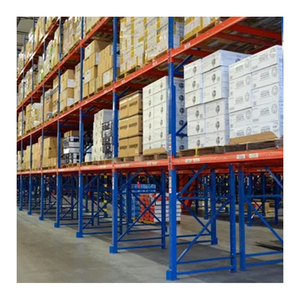 CE Certified
Industrial Warehouse Steel Pallet Storage Rack Beam Racking
- Finish: Electrostatic Powder Coating
- Beam Pitch: 50mm / 75mm Adjustable
- Steel Grade: Q235B / Q355B High-Tensile
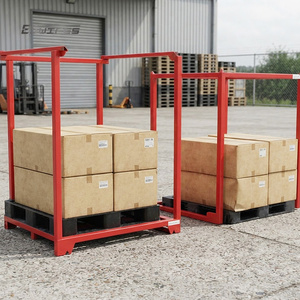 Nestable
Heavy Duty Detachable Steel Welded Pallet Stacker Rack
- Load Capacity: 1000 - 2000 kg/unit
- Design: Detachable & Nestable
- Application: Bulk Cargo & Seasonal Storage
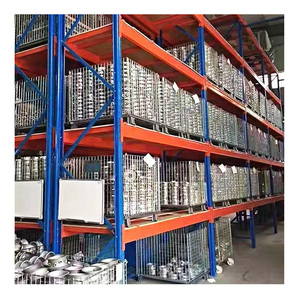 High Density
Heavy Duty Narrow Aisle Selective Warehouse Racking System
- Aisle Width: 1.5m - 1.8m VNA
- Direct Access: 100% SKU Selectivity
- Max Height: Up to 15 Meters
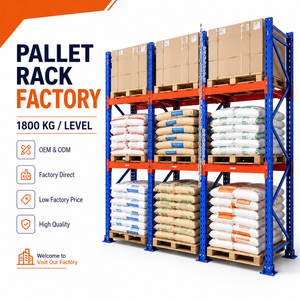 1800KG / Level
1800KG Heavy Duty Beam Pallet Rack 3-Level Shelving
- Level Capacity: 1800 KG per level
- Beams: Box Beam / Step Beam
- Safety Factor: 1.55 Engineering Standard
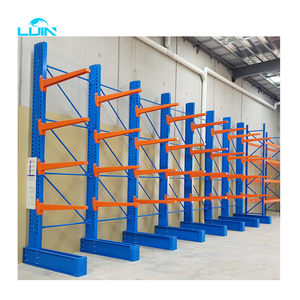 Long Loads
Factory Price Cantilever Heavy Duty Steel Storage Rack
- Target Cargo: Pipes, Timber, Rebar
- Arm Load: Up to 1500 kg/arm
- Configuration: Single & Double Sided
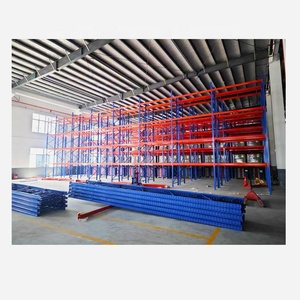 Double Deep
 Adjustable Pallet Storage Rack Heavy Duty
- Storage Density: +30% vs Standard Selective
- Operation: Deep-reach pantograph forklift
- Structure: Dual-entry beam profiles
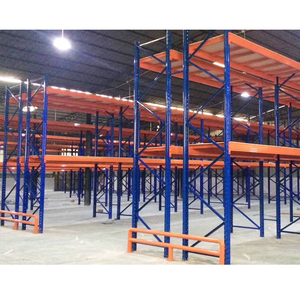 Hybrid System
Heavy Duty Metal & Wood Pallet Combination Racks
- Decking Options: Wire Mesh, Steel, Plywood
- Frame Profile: 80x60 / 90x70 / 100x70mm
- Surface: Durable anti-corrosion finish
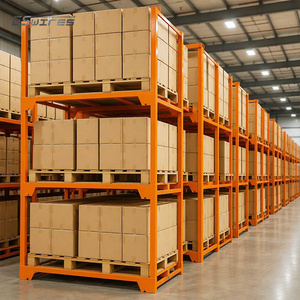 Modular Nestainer
Heavy Duty Nestainer Portable Steel Pallet Stacking Frames
- Stacking: Up to 4-5 units high
- Flexibility: Rapid warehouse layout shifts
- Footprint Efficiency: 80% space saving empty
Engineering Authority: The Architectural Imperatives of CE Certified Pallet Racking
In high-density industrial warehousing, structural integrity is not merely a matter of operational throughput—it is a critical life-safety parameter. As primary manufacturers and OEM factories specializing in CE Certified Warehouse Pallet Racking Systems, our manufacturing paradigm centers on rigid structural engineering, high-yield cold-rolled steel metallurgy, and empirical testing in accordance with European Norm EN 15512:2020 and FEM 10.2.02 guidelines.
Modern intra-logistics facilities demand racking structural configurations capable of sustaining static, dynamic, and seismic forces without catastrophic inelastic deformation. Factory-engineered pallet racking systems achieve this through specialized structural profiles, including continuous cold-formed omega-section uprights and multi-hook connector beams that distribute load shear forces uniformly across frame columns.
Metallurgical Sourcing & Structural Design Rigor
The foundation of enterprise-grade racking systems resides in raw material specifications. We source certified hot-rolled coil steel—primarily Q235B and Q355B grades—which undergo continuous precision cold-roll forming to create upright columns with optimized section modulus. Upright profiles feature complex multi-ribbed geometries (such as 80x60, 90x70, 100x70, and 120x95mm variations) designed to elevate torsional stiffness and buckling resistance under heavy axial compression.
Cold-Roll Section Modulus
Multi-ribbed upright cross-sections engineered to prevent lateral-torsional buckling under concentrated point load pressures.
Seismic Ductility
Anchoring base plates and frame bracing arrays calculated for high ground acceleration zones (ANSI MH16.1 & EN 16681).
Anti-Corrosion Powder Finish
Automated 9-stage pre-treatment wash and electrostatic epoxy-polyester powder baking (60-80μm) for long-term corrosion prevention.
CE Certification (EN 15512:2020) Verification Framework
Obtaining and maintaining CE certification requires stringent independent laboratory testing and Factory Production Control (FPC) audits. Standard commercial racking lacks the rigorous structural validation required by modern European safety standards. Under EN 15512, steel pallet racking undergoes real-world destructive testing to determine actual load capacities, connection stiffness, and base plate shear performance.
| Structural Assessment Factor | Standard Commercial Racking | CE Certified EN 15512 Engineering |
|---|---|---|
| Steel Grade Verification | Unverified Commercial Quality Steel | Certified Q235B / Q355B with Mill Test Certificates (MTC) |
| Beam Connection Stiffness | Empirical Guesswork / Unchecked Hooking | Rotational Stiffness & Shear Testing (FEM 10.2.02) |
| Safety Factor Margin | 1.30 - 1.40 (Variable) | Strict Minimum 1.55 Ultimate Limit State (ULS) |
| Deflection Tolerances | L/150 or non-standard bending | Strict Beam Deflection Limit ≤ L/200 under full design load |
| Traceability & Load Signage | Minimal or Absent | Mandatory OEM Load Statics Signage on all rack bays |
Optimizing Warehouse Topography: System Selection Guide
Matching the correct racking topology to your inventory throughput dynamic is crucial for maximizing ROI and space utilization. Below is an engineering analysis of system selections for enterprise logistics directors:
1. Selective Pallet Racking (100% SKU Accessibility)
Ideal for facilities handling high-variety SKUs requiring immediate direct access to every pallet position. Utilizing standardized load beams adjustable on 50mm or 75mm increments, selective systems seamlessly accommodate standard Euro-pallets (800x1200mm) and Industrial pallets (1000x1200mm). Compatible with standard counterbalance and reach trucks without requiring specialized material handling equipment.
2. Very Narrow Aisle (VNA) Systems
When vertical cube utilization takes priority over aisle width, VNA systems reduce aisle clearance from standard 3.2-3.5 meters down to 1.5 - 1.8 meters. Operating up to 15 meters in clear height, VNA racking utilizes guided turret trucks or wire-guided AGVs to achieve ultra-high density while retaining 100% selective accessibility.
3. Double-Deep & High-Density Stacking
By storing pallets two deep on modified twin-beam arrays, Double-Deep racking eliminates 50% of operating aisles compared to single selective layouts. Combined with specialized pantograph reach trucks, this configuration increases pallet density by up to 30% for medium-throughput distribution hubs with identical SKU batches.
4. Cantilever Systems for Heavy Long Cargo
Eliminating front vertical columns, Cantilever racks utilize heavy-duty central columns with cold-formed or hot-rolled structural arms. Designed specifically for timber, steel tubing, aluminum profiles, and PVC piping, cantilever arms are engineered with taper angles to prevent cargo roll-off and maintain structural stiffness under offset center loads.
Future Industry Trends in Industrial Storage Engineering
The industrial storage sector is undergoing a rapid transition toward intelligent, automated, and carbon-neutral logistics infrastructure. Understanding these emerging trends enables procurement teams to future-proof their facility investments.
1. Integration with AS/RS and AGV Fleet Automation
Manual forklift operations are increasingly supplemented or replaced by Automated Storage and Retrieval Systems (AS/RS) and Autonomous Mobile Robots (AMRs). Future-ready pallet racking must adhere to ultra-precise manufacturing tolerances (millimetric beam deflection limits) to ensure automated shuttle cranes and robotic grippers can locate and retrieve pallets without sensor fault triggering.
2. IoT Structural Health & Load Monitoring Sensors
Next-generation CE certified pallet racking systems are incorporating embedded IoT strain gauges and collision impact sensors within lower upright post protectors. These real-time diagnostics transmit telemetry to Warehouse Management Systems (WMS), alerting safety managers to structural deflection spikes, accidental forklift strikes, or localized overloading before structural fatigue occurs.
3. High-Corrosion Resistance for Cold Chain & Coastal Warehousing
As global cold-chain logistics expand for pharmaceuticals and fresh perishables, anti-corrosion finishes are evolving. Continuous hot-dip galvanizing (HDG) per ISO 1461 standards provides sub-zero moisture and condensation resistance, preventing subterranean oxidation in harsh sub-zero cold rooms (-30°C) and coastal marine environments.
4. Green Steel Sourcing and Decarbonized Manufacturing
Enterprise buyers are tracking Scope 3 embodied carbon emissions across their supply chains. Leading racking factories are transitioning to hydrogen-reduced green steel and energy-efficient automated robotic welding cells, significantly reducing the carbon footprint of factory fabrication while maintaining structural yields.
Strategic Procurement Trends: Factory Direct Sourcing & TCO Optimization
Global logistics managers are fundamentally shifting how industrial storage equipment is specified, audited, and procured. Shifting away from localized brokers toward direct manufacturer partnerships delivers major strategic advantages:
1. Total Cost of Ownership (TCO) Compression: Procuring directly from factory production lines removes multi-tiered distributor markups, reducing capital expenditure (CapEx) by 20% to 35% without compromising steel mass or safety factors.
2. Custom Parametric Engineering: Factory engineering teams utilize advanced Finite Element Analysis (FEA) software to model structural loads against client-specific floor slab load-bearing limits, localized seismic coefficients, and ceiling clear heights—delivering customized rack configurations rather than rigid catalog dimensions.
3. Supply Chain Traceability & Quality Control: Factory direct partnerships guarantee access to raw material Mill Test Certificates (MTC), ultrasonic weld inspections, and factory powder coat thickness verification reports, essential for passing municipal building codes and insurance audits.
Frequently Asked Technical Questions (Procurement & Engineering)
How do you ensure pallet racking structural safety in seismic active zones?
What structural documentation is supplied with CE certified racking?
Which steel surface finish is best suited for coastal or humid warehouse sites?
What structural inputs are required to receive an accurate structural racking proposal?
What is the structural deflection threshold allowed for heavy-duty pallet racking beams?
What lead times are typical for enterprise factory production and international delivery?
Factory Infrastructure & Technical Engineering Strengths
As an established global manufacturer, our production hub integrates automated cold-roll forming lines, high-precision laser cutting centers, robotic welding stations, and an environmentally compliant multi-stage powder coating line. We partner with warehouse operators, logistics contractors, and structural engineers worldwide to deliver robust material handling infrastructure.
- Automated Production Rigor: Continuous roll-forming machines guarantee dimensional tolerance consistency across every frame column and beam connection hook.
- Structural Weld Verification: Automatic multi-pass robotic welding ensures full penetration welds on beam connector brackets, subjected to routine non-destructive testing (NDT).
- Comprehensive Quality Audit: Every production batch undergoes raw steel tensile testing, paint cross-hatch adhesion checks, and anchor load pull-out testing prior to ocean export packaging.
- End-to-End Project Execution: From preliminary architectural space planning and FEA structural design to sea freight container loading and field installation guidance, we deliver a seamless engineering journey.