Precision-Engineered Industrial Storage Systems
Manufactured with high-tensile Q235B & Q355B steel, compliant with CE, EN 15512, and ANSI MH16.1 structural standards.
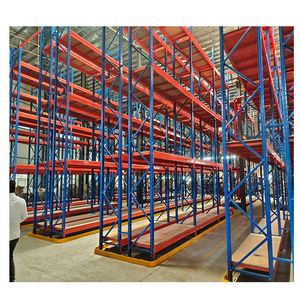
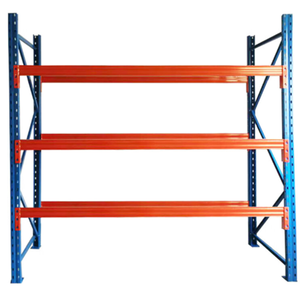
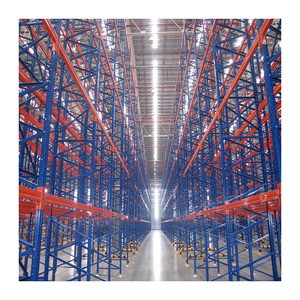
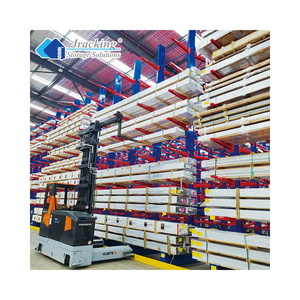
Structural Authority & Factory OEM Manufacturing
Combining heavy storage engineering with seismic risk mitigation, specialized coastal corrosion finishes, and full turnkey execution.
Seismic-Engineered Layouts
Every racking system installed in active seismic zones (such as South America's Pacific Ring of Fire) is analyzed according to the Ecuadorian Construction Standard (NEC-SE-DS) alongside ANSI MH16.1 and EN 16681 specs. Concrete slab integrity, anchor bolt shear forces, and frame sway are fully verified.
Coastal C5-M Anti-Corrosion Finishes
For warehouses operating in humid coastal regions or cold storage facilities, we engineer hot-dip galvanized steel components and high-durability epoxy-polyester powder coatings. Our finished structures resist airborne salt spray, chemical humidity, and extreme moisture degradation.
Full Turnkey Engineering & Inspection
We do not merely supply steel; we deliver end-to-end structural responsibility. From initial CAD 3D layout design and slab loading calculations to certified installation, rack impact protection, and ongoing lifecycle safety inspections per EN 15635 standards.
Engineering Standards & Structural Integrity in Modern Industrial Shelving
In modern industrial logistics, the selection of heavy-duty industrial shelving and pallet racking systems represents one of the most critical structural and capital decisions for supply chain infrastructure. Industrial storage racks are no longer simple steel shelves; they are complex static and dynamic load-bearing engineering structures subjected to immense vertical loads, horizontal forklift impact forces, and severe seismic accelerations.
1. Metallurgy, Yield Strength & Cold-Roll Forming Precision
The core structural performance of industrial racking begins with metallurgy. High-grade industrial storage systems utilize structural steel grades such as Q235B (yield strength ≥ 235 MPa) and Q355B (yield strength ≥ 355 MPa). Cold-roll forming technology converts steel strips into continuous, highly optimized structural profile geometry—such as teardrop upright columns, Omega profiles, and box beams.
Advanced profile engineering ensures maximum moment of inertia ($I$) and section modulus ($Z$), minimizing structural deflection under heavy pallet loads. Beams are designed to strictly abide by the European EN 15512 or American ANSI MH16.1 deflection limits, ensuring deflection ($\delta$) never exceeds $L/200$ under full nominal working load.
2. Seismic Resiliency & Base Plate Anchor Dynamics
Warehouses located near coastal fault zones require comprehensive seismic calculations. Under sudden seismic excitation, unbraced rack structures experience excessive lateral sway, frame buckling, and shedding of palletized inventory.
Our engineering team performs structural finite element analysis (FEA) to verify baseplate thickness, anchor bolt shear/pullout capacity, and diagonal frame bracing configurations. Seismic-proof base plates utilize heavy gauge structural steel anchored directly into reinforced concrete floor slabs using high-performance chemical or mechanical expansion anchors. This layout guarantees ductile energy dissipation during seismic activity while mitigating catastrophic rack collapse.
3. Advanced Surface Treatments for Harsh Atmospheric Conditions
Corrosion severely compromises structural steel thickness over time, reducing load capacity and causing premature structural failure. Depending on the operational ambient environment, specialized anti-corrosion finishes are deployed:
- Electrostatic Powder Coating: Thermosetting epoxy-polyester powder cured at 180°C–200°C creates an impermeable, scratch-resistant barrier ideal for ambient indoor logistics centers.
- Hot-Dip Galvanization (HDG): Steel components immersed in molten zinc at 450°C form a multi-layer zinc-iron alloy coating (coating thickness 60–85 µm). HDG offers self-healing cathodic protection suited for cold storage freezers (-30°C), coastal port warehouses, and chemical processing plants.
Structural Racking Systems Technical Matrix
Engineered comparison across storage density, load capacity, accessibility, and structural performance.
| Racking Architecture | Primary Steel Grade | Selectivity / Access | Max Load per Level | Seismic Resistance | Optimal Application |
|---|---|---|---|---|---|
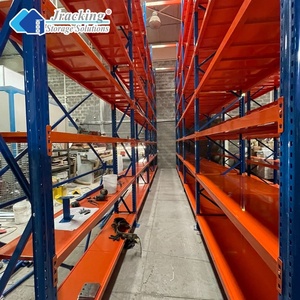
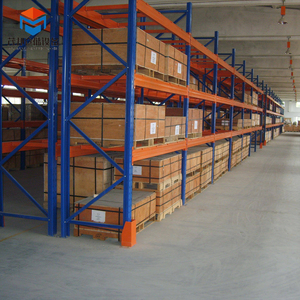
| Selective Pallet Racking | Q235B / Q355B Cold Rolled | 100% Direct Access | 1,000 kg – 4,500 kg | Very High (With Bracing) | High SKU diversity, retail distribution, general warehousing. |
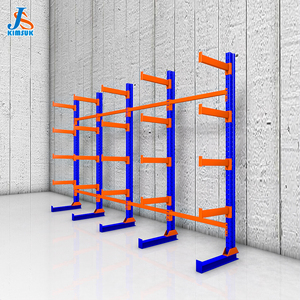
| Electric Telescopic Cantilever | Q355B Structural I-Beam | Direct Crane / Forklift Access | 2,000 kg – 8,000 kg/arm | Engineered Custom Base | Long steel pipes, aluminum profiles, lumber, and heavy extrusions. |
| Drive-In / Drive-Thru Racking | Q235B High-Tensile Steel | LIFO / FIFO Bulk Access | 1,000 kg – 1,500 kg/pallet | High (Requires Top Bracing) | Cold storage, seasonal high-volume homogeneous goods. |
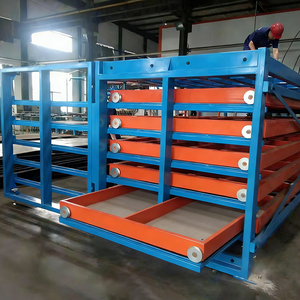
| Heavy Sheet Metal Drawer System | Q235B / Structural Steel | 100% Drawer Extension | 1,000 kg – 3,000 kg/drawer | Standard Floor Anchored | Heavy stamping dies, injection molds, industrial sheet metal. |
| Automated Shuttle Racking (AS/RS) | Q355B High-Precision Steel | Automated System Access | 1,500 kg/pallet position | Ultra-High Integrated Frame | High-density automated facilities, e-commerce mega-hubs. |
Future Technological & Procurement Trends in Industrial Storage (2025–2030)
As global supply chains shift toward automation, spatial efficiency, and total lifecycle accountability, warehouse procurement managers must re-evaluate industrial storage acquisitions. Choosing an industrial shelving supplier is no longer a simple transactional purchase based on price per kilogram; it requires evaluating Total Cost of Ownership (TCO), digital integration, and compliance with evolving global safety regulations.
1. Integration with Automated Guided Vehicles (AGVs) & Autonomous Mobile Robots (AMRs)
Traditional static storage is rapidly giving way to dynamic automated ecosystems. Modern pallet racking systems must be engineered with micro-tolerance manufacturing standards to support automated shuttle carts, vertical lift modules (VLMs), and AMR fleets. Alignment tolerances for upright columns and beam levels must meet tight Class 100/300 deflection metrics to prevent automated sensors from misreading rack positions.
2. Digital Twin Engineering & BIM-Compliant Layout Planning
Leading global procurement teams now mandate Building Information Modeling (BIM) compatibility for warehouse equipment. Factory suppliers must provide precise 3D BIM models (.RVT, .IFC) containing full structural metadata, point-load slab forces, and exact spatial clearance boundaries. This digital twin integration allows warehouse engineers to simulate forklift turning radiuses, fire sprinkler clearance, and airflow dynamics prior to physical equipment installation.
3. Shift Toward Sustainable Metallurgy & Closed-Loop Powder Coating
Environmental, Social, and Governance (ESG) criteria are driving procurement guidelines. Future-proof factories deploy low-carbon steel recycling protocols and zero-VOC (Volatile Organic Compounds) electrostatic powder coating processes. Advanced heat-recovery baking ovens and closed-loop chemical pretreatment baths ensure industrial shelving manufacturing minimizes carbon footprint without compromising mechanical strength.
4. Continuous Rack Structural Monitoring & Sensor Integration
Rack damage caused by unrecorded forklift collisions remains the leading cause of catastrophic warehouse structural failures. The industry is moving toward smart rack safety monitoring. Structural uprights are increasingly fitted with wireless IoT impact sensors and strain gauges that log impact energy in real-time, instantly notifying safety supervisors via WMS alerts to inspect damaged uprights according to EN 15635 damage classifications (Green, Amber, Red hazard levels).
Industrial Shelving Procurement & Engineering FAQ
Clear, authoritative technical answers to assist procurement directors, warehouse managers, and structural engineers.
Are your industrial shelving and pallet racking systems CE certified?
Yes. All our industrial shelving, selective pallet racking, cantilever systems, and heavy-duty storage structures strictly comply with European Union CE standards, including EN 1090-1 (Execution of steel structures), EN 15512 (Adjustable pallet racking systems design rules), and ISO 9001:2015 quality control protocols. Complete technical documentation and certificates of conformity are supplied with every order.
How do you verify structural rack design for high seismic hazard zones?
For installations in active seismic areas (e.g., South America, Ring of Fire zones, Asia-Pacific fault lines), our structural engineering department performs finite element dynamic simulation utilizing site-specific ground acceleration parameters ($S_{ds}$, $S_{d1}$). Layouts comply with local codes such as Ecuador’s NEC-SE-DS alongside ANSI MH16.1 and EN 16681, incorporating enlarged footplates and heavy-duty seismic anchors.
What steel grades are used in your manufacturing plant?
We strictly utilize certified high-tensile cold-rolled steel from major mill producers. Structural uprights and beam components utilize Q235B steel (yield strength ≥ 235 MPa) or high-grade Q355B steel (yield strength ≥ 355 MPa) for heavy load profiles. Material test certificates (MTC) per EN 10204 3.1 are provided for full material traceability.
Which surface finish is recommended for cold storage or coastal facilities?
For high humidity, coastal ambient air (Guayaquil, Manta, coastal ports), or sub-zero food freezers (-30°C), we strongly recommend Hot-Dip Galvanized (HDG) steel components. For enclosed, climate-controlled warehouses, our electrostatically applied epoxy-powder coating delivers superior corrosion resistance and impact protection.
What information is required to receive a custom engineering layout and quote?
To prepare an accurate structural quotation and CAD drawing, we require: (1) Warehouse floor layout drawing with clear height under sprinklers/trusses; (2) Pallet dimensions ($W \times D \times H$) including cargo overhang; (3) Maximum load weight per pallet; (4) Forklift truck specifications (minimum aisle requirement and maximum lift height); and (5) Site geographic location for seismic evaluation.
Do you offer OEM / ODM structural manufacturing for global distributors?
Yes. As an established direct manufacturing factory and international supplier, we provide full OEM/ODM manufacturing. We produce custom roll-formed profiles, custom color powder coating matching RAL spec codes, private label branding, and customized exporting packaging tailored to distributor networks worldwide.
What is the typical lead time for production and shipping container loading?
Standard manufacturing lead time is 15 to 25 calendar days from order confirmation and CAD drawing approval, depending on order volume and finish requirements. Complete ocean container loading (20GP / 40HQ) is systematically bundled with protective strapping and corner guards to prevent transit damage.
Request Complete Product Catalog & Technical Specifications
Connect directly with our senior structural engineering team to receive full CAD layouts, seismic load calculations, and competitive OEM factory pricing.