0%

Choosing Pallet Racking in 2026 starts with the work your warehouse must handle, not with a catalog photo. Measure the available floor space, clear height, aisle widths, and the dimensions of your loaded pallets. Note their heaviest realistic weight, too. A rack that fits an empty pallet may not suit a bulky, uneven load.

Then match the system to daily operations. Selective racking offers direct access to each pallet, while higher-density options can reduce access or require specific handling equipment. Consider your forklift type, picking frequency, stock rotation, and plans for future growth. Small details matter. A few centimeters can affect clearance, and a narrow aisle may slow turning or picking. These trade-offs are easy to miss on a floor plan.

Before comparing prices, confirm that the proposed design accounts for load ratings, beam levels, floor conditions, and any site-specific requirements. Ask suppliers to explain their assumptions and provide documentation for the exact configuration—not just a general product sheet. Check that installation, protection, and inspection arrangements are clear, and consult qualified professionals about applicable local standards. Warehouse needs change, so leave room to review the design as inventory and equipment evolve. There is no perfect layout. The best choice is the one that supports safe, reliable work under real operating conditions, even if that means revisiting an early assumption.
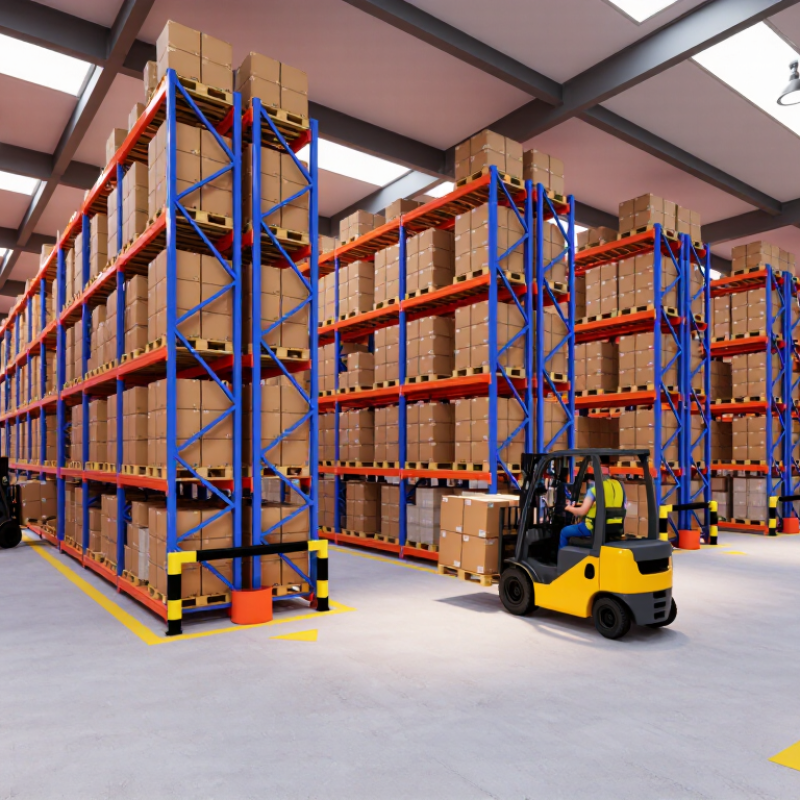
How to Choose the Right Pallet Racking in 2026?

Assess Inventory, Load Profiles, and Handling Equipment

How to Choose the Right Pallet Racking in 2026?

Assess Inventory, Load Profiles, and Handling Equipment

Choosing pallet racking starts with evidence from your stock, not a catalogue picture. Record each pallet’s full dimensions and loaded weight, including uneven or overhanging goods. Separate fast-moving items from reserve stock; they need different access patterns. Small details matter.

Inventory records are useful, but they can be stale. Walk the aisles and check actual pallet condition, product variation, and seasonal peaks. A tidy spreadsheet may hide awkward loads. Mark the heaviest and least stable units, and note whether weight is evenly distributed or concentrated near one edge. These differences affect beam selection and load placement. Have the rack configuration checked against intended loads by a qualified racking professional.

Handling equipment sets practical limits. Confirm truck type, lift height, turning radius, and required aisle width before choosing a layout. A reach truck may work in narrower aisles, while a counterbalance truck usually needs more turning space. Check clearances at floor level and at the highest beam; columns, sprinklers, and dock traffic can complicate the plan. Leave room for inspection and repairs, too. A trial bay may reveal an assumption the spreadsheet missed.

Measure Available Space and Define Storage Goals

Before choosing pallet racking in 2026, measure the building as it exists, not just as the floor plan suggests. Record clear ceiling height, column spacing, door positions, sprinkler lines, lighting, and uneven floor areas. Allow space for forklift turns, pedestrian routes, and picking work. A tape measure helps, but verify critical dimensions against site plans. Small errors add up.

Define what the system must store. Note pallet sizes, product weights, inventory levels, and how often each item moves. Fast-moving goods may need to sit closer to dispatch, while slower stock can use less accessible locations. Consider future changes, too. Plans are never perfect. A growth estimate can be wrong, so avoid filling every available space with racks.

Tips: Measure aisle widths with the actual handling equipment in mind. Check floor condition and confirm rack load requirements with a qualified professional. Mark doors, columns, and travel paths on a simple layout before comparing options. Check it twice. A site visit may reveal details that drawings miss.

Compare Racking Systems for Access, Density, and Workflow

Choosing pallet racking starts with the way inventory moves, not a density target alone. Selective racking gives forklift operators direct access to every pallet. It works well when orders mix many SKUs or change often. Double-deep racking stores pallets farther back, increasing density but reducing immediate access. Operators may need reach trucks, and stock rotation requires care.

Drive-in racking suits larger runs of similar products with fewer pick faces. Pallet-flow racking uses gravity-fed lanes, helping high-volume operations move older stock first. Each option changes travel paths, replenishment time, and equipment needs. A narrow aisle can save floor space, but may slow busy shifts. Dense storage is not automatically efficient. Have a qualified rack designer check load ratings and clearances before installation.

MHI’s 2024 Annual Industry Report, produced with Deloitte, found that 55% of respondents planned to increase supply-chain technology investment over the next two years. That signals growing attention to connected workflows, but software cannot fix a poor rack layout. Compare each design against actual order lines, pallet sizes, lift-truck turning space, and peak-hour replenishment. A week of aisle observations can expose bottlenecks that a spreadsheet misses. The forecast may look tidy; real operations rarely do.

How to Choose the Right Pallet Racking in 2026? — Compare Racking Systems for Access, Density, and Workflow

Racking System Pallet Access Storage Density Stock Rotation Typical Workflow Fit Key Equipment or Operating Need Main Trade-Off
Selective pallet racking Direct access to each pallet position Low to medium; aisles are needed between rack rows Flexible; supports FIFO or LIFO depending on warehouse procedures Many SKUs, mixed products, frequent picking, and unpredictable replenishment Commonly operated with counterbalance or reach trucks; aisle width depends on the truck and load Easy access and simple inventory control, but uses more floor area for aisles
Double-deep racking Two pallet positions deep; rear pallets are accessed after front pallets Medium to high compared with selective racking Usually LIFO within each lane; careful slotting helps manage the rear position Moderate SKU variety with multiple pallets per SKU Requires a double-deep reach truck or another suitable extended-reach solution Reduces aisle requirements, but not every pallet is directly accessible
Drive-in / drive-through racking Forklift enters storage lanes; access to individual pallets within a lane is limited High; multiple pallets can be stored deep in each lane Drive-in is typically LIFO; drive-through can support FIFO when loaded and unloaded from opposite ends Large quantities of the same SKU, such as seasonal or batch inventory Forklift operators drive into rack lanes; loads and lane layout must be managed consistently High storage density, but fewer accessible SKU locations and more demanding truck operation
Push-back racking Several pallets deep per lane; the front pallet is retrieved first High; multiple-depth storage reduces the number of access aisles LIFO within each lane High-volume storage where pallets are grouped by SKU and frequent lane changes are limited Forklift places and retrieves pallets using carts or inclined rails within the lane Good throughput for grouped inventory, but rear pallets are not directly accessible
Pallet-flow racking Loading and picking take place at opposite ends of a flow lane High; deep lanes store multiple pallets in a compact footprint FIFO by design, as pallets move toward the picking face Fast-moving, date-sensitive, or batch-controlled inventory with predictable replenishment Uses gravity-driven roller or wheel lanes; flow components and pallet condition need suitable maintenance Supports organized rotation and high pick rates, but is less flexible for irregular pallets or slow-moving SKUs
Mobile pallet racking Direct access is available at the aisle opened for picking High; movable rack rows reduce the number of permanently open aisles Flexible; rotation depends on the selected storage and retrieval process Low-to-moderate pick frequency where space is constrained and access can be scheduled Powered or manually assisted moving bases, suitable floor conditions, and aisle-safety controls Improves space use, but only a limited number of aisles may be open at one time
Automated storage and retrieval system (AS/RS) System-controlled access to stored loads; operators retrieve goods at designated workstations Potentially very high; layout can use dense storage and building height Can be configured for FIFO or LIFO according to system design and inventory rules High-throughput, repetitive operations with stable processes and suitable load standards Automated cranes or shuttles, controls, integration, and planned technical support Can reduce manual travel, but requires greater planning, investment, and operational integration

Selection note: Density, capacity, aisle dimensions, and throughput depend on building geometry, pallet size and condition, load weight, handling equipment, and local safety requirements. Have the rack layout and specified loads reviewed by a qualified racking designer before installation.

Check Capacity Ratings, Safety Standards, and Adaptability

How to Choose the Right Pallet Racking in 2026?

Check Capacity Ratings, Safety Standards, and Adaptability

Choosing pallet racking starts with the loads it must support, not just the available floor space. Check both beam capacity and total bay capacity, using the load details supplied by the rack manufacturer. A pallet of dense parts can look modest yet place heavy stress on a beam. Confirm whether ratings assume evenly distributed loads; concentrated loads may need a different setup. Small details matter.

Next, check safety requirements that apply in your location and facility. Look for clear load plaques, secure connections, suitable anchors, and protection at exposed uprights. A qualified racking professional can help assess the floor slab and anchoring needs, especially in older buildings. Keep forklift turning space and sprinkler clearance in the plan. A rack that fits on paper may still be awkward to use.

Plan for change, too. Adjustable beam levels can accommodate different pallet heights, while compatible components may make later reconfiguration easier. But flexibility is not automatic: new layouts can alter load paths and require fresh capacity checks. Leave room to grow. I would still question a plan that uses every inch of floor space; it may save space today but make daily picking slower. Before buying, compare current inventory with likely changes, and keep inspection records so damage or loose connections do not go unnoticed.

Compare Costs, Suppliers, Installation, and Maintenance Needs

Choosing pallet racking starts with the costs behind the quoted price. Compare steel, beams, guards, delivery, and installation as separate line items. A low bid may exclude floor preparation or adjustments after a site visit. Ask suppliers to confirm the rack’s capacity for your actual pallet weights and sizes. Small differences matter.

Check how each supplier measures the space and handles changing requirements. Request drawings, load information, installation references, and a clear list of what the quote includes. A warehouse with uneven floors or narrow aisles may need a different layout than the initial sketch suggests. That can change the budget. It is easy to overlook.

Installation planning affects daily operations. Confirm who clears the work area, coordinates delivery, and checks the finished system before it is loaded. Ask how long the affected aisles will be unavailable. For maintenance, clarify who inspects for bent uprights, loose components, or impact damage, and how replacement parts are sourced. Keep inspection records and train staff to report visible damage promptly. One imperfect assumption can linger: cheaper upfront does not always mean cheaper to operate. Compare the full cost over the rack’s expected service life, while leaving room for future layout changes.

FAQS

What capacity details should I check before choosing pallet racking?

Check both beam capacity and total bay capacity against your actual pallet weights. Dense parts can look light but strain a beam. Small details matter.

Do capacity ratings always cover uneven pallet loads?

Not necessarily. Confirm whether ratings assume evenly distributed loads. Concentrated loads may need a different setup, so verify the details with a qualified professional.

Which safety features should the racking include?

Look for clear load plaques, secure connections, suitable anchors, and protection around exposed uprights. Keep forklift turning space and sprinkler clearance in the layout.

How can I tell whether the floor and anchors are suitable?

Ask a qualified racking professional to assess the floor slab and anchoring needs. Older buildings may need closer attention. A drawing cannot show everything.

How much room should I leave for future changes?

Adjustable beam levels can fit different pallet heights. Leave some floor space for growth; using every inch may slow daily picking. I would question a plan with no spare room.

What should a supplier’s quote clearly include?

Request separate costs for steel, beams, guards, delivery, and installation. Ask for drawings, load information, and a clear list of included work. Check for floor preparation costs, too.

What should I plan for during installation?

Confirm who clears the work area, coordinates delivery, and checks the finished rack before loading. Ask how long each affected aisle will be unavailable. That can disrupt picking.

What maintenance and inspection practices help keep the system dependable?

Train staff to report bent uprights, loose components, and impact damage promptly. Keep inspection records and clarify how replacement parts are sourced. Damage is easy to miss.

How should I compare the long-term cost of different systems?

Compare the full cost over the expected service life, not only the initial quote. Include installation, maintenance, and future layout changes. Cheaper upfront may not stay cheaper.

Conclusion

Choosing the right Pallet Racking in 2026 starts with understanding what your warehouse needs to store and how those goods move. Assess inventory types, load weights, pallet dimensions, and the handling equipment your team uses. Then measure the available floor area and ceiling height, noting aisles, doors, and other workflow constraints. Clear storage goals—such as faster access, greater capacity, or easier picking—will help guide the decision.

Compare racking options by balancing accessibility, storage density, and operational flow. Confirm that each system’s capacity ratings suit your loads, and consider safety features and future changes to inventory or equipment. Before making a choice, compare the full costs of materials, delivery, installation, and ongoing maintenance. A suitable system should fit both today’s operations and likely future needs, while supporting safe, efficient use of warehouse space.

Elara

Elara

Elara is a dedicated marketing professional with a strong understanding of the company’s products, the needs they address, and the value they bring to customers. Through close collaboration with colleagues across the business, she keeps her knowledge current and turns product details into clear,......